
SOUTHERN ITALY
Day 1: (29 April 2026)
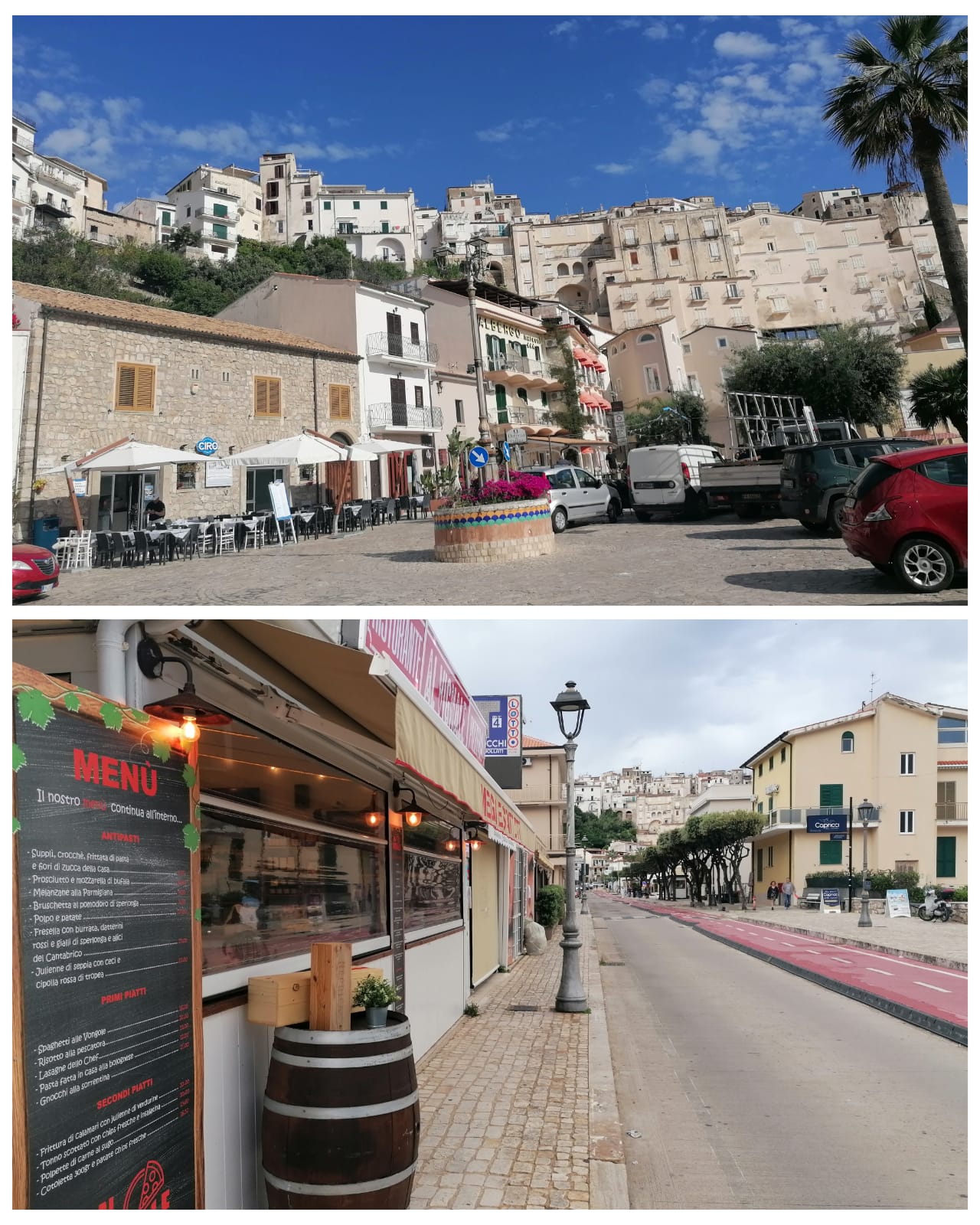
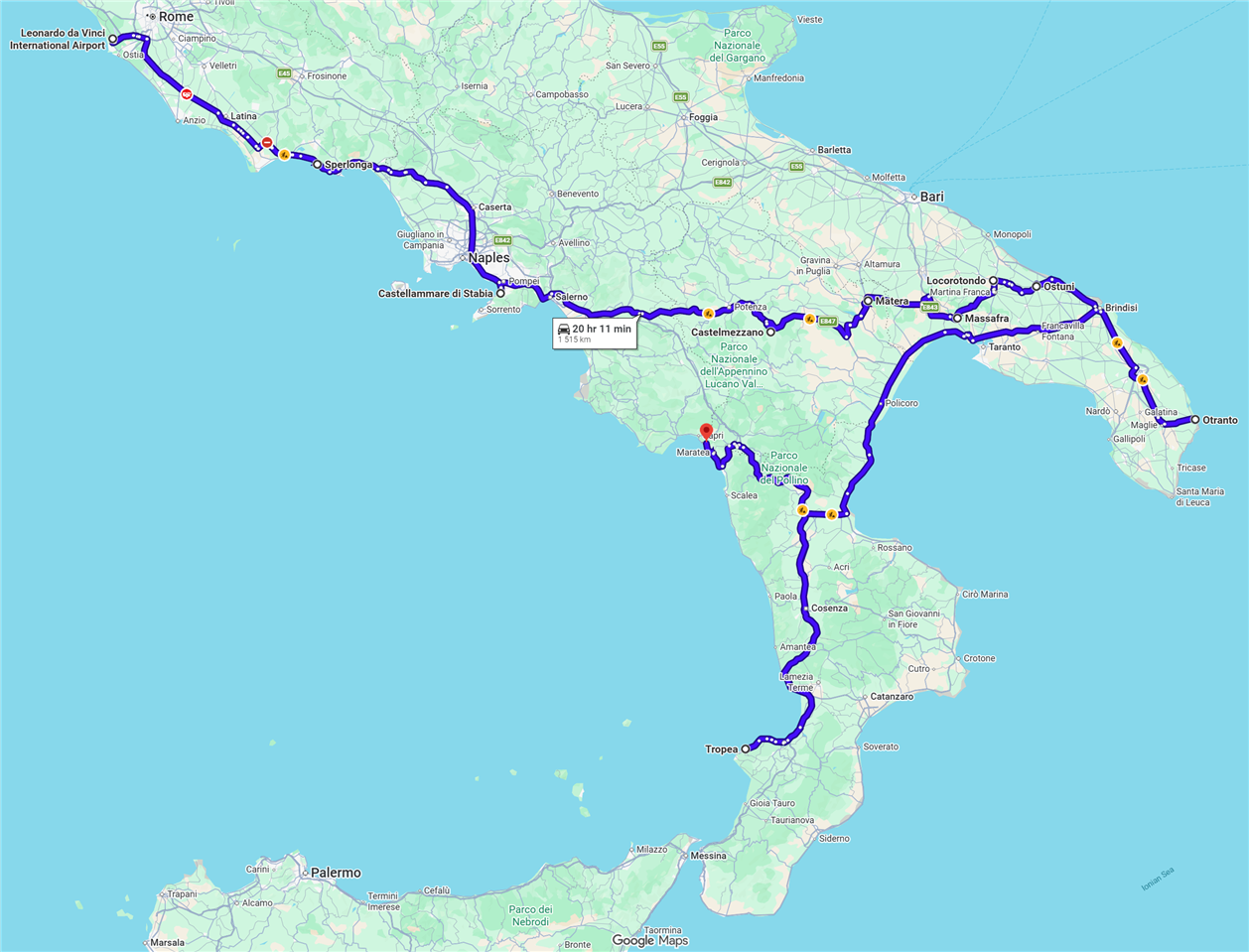
S. ITALY | SPERLONGA (LAZIO): We made landfall on the Tyrrhenian coast halfway between Rome and Naples after a ten-and-a-half-hour flight, four kilometres of footfall and more mileage on the travelator to reach the distant boarding gates of Istanbul’s vast new airport, another two-hour flight to Rome and, finally, a five-hour drive south in our Hyundai i20 rental, which is what it took to cover the last 130 kilometres. “We’ll take the coast road”, we’d said enthusiastically. “Good idea … if you have the time,” said the rental car lady. We missed the nuance.
Brushing past the hip-high grass and corn-like, invasive sorghum that fringe the crumbling verges of the narrow roads of patched tar, past the shuttered, shabby, three-storey apartment blocks reminiscent of a derelict 1970s Sea Point, down suburban streets emptied by the afternoon siesta, and onwards past olive trees and vineyards and signs proclaiming ‘mozzarella di bufala’, we finally arrived in Sperlonga, some 100 kilometres north of Naples. No prizes for guessing what we had for dinner. 🍕 🥂
Dish of the Day
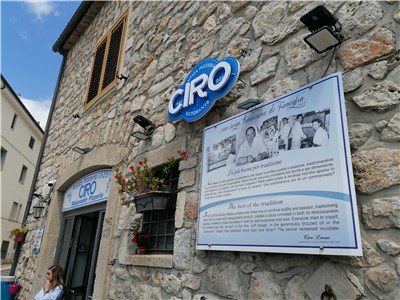
The word ‘pizza’ – from the Italian pinze, (‘pliers, pincers, tongs, forceps’) was first documented in Gaeta in 997 AD. However, pizza, as we know it, emerged in Naples between the 16th and 18th centuries. While the ancient Persians, Greeks, Etruscans and Romans all had their own versions of flat breads with simple toppings, it was the New World tomato brought back by the Spanish Conquistadors from Peru that made pizza possible. The first tomato salsa recipe was devised by a Neopolitan chef, Antonio Latini, in the late 17th century. A popular street food with the poor, pizza entered the mainstream with the opening of the first sit-down pizzeria in 1830. Antica Pizzeria Port’Alba in Old Naples is still going strong today, along with some 134,500 other in-country pizza producers.
Day 2: (30 April 2026)
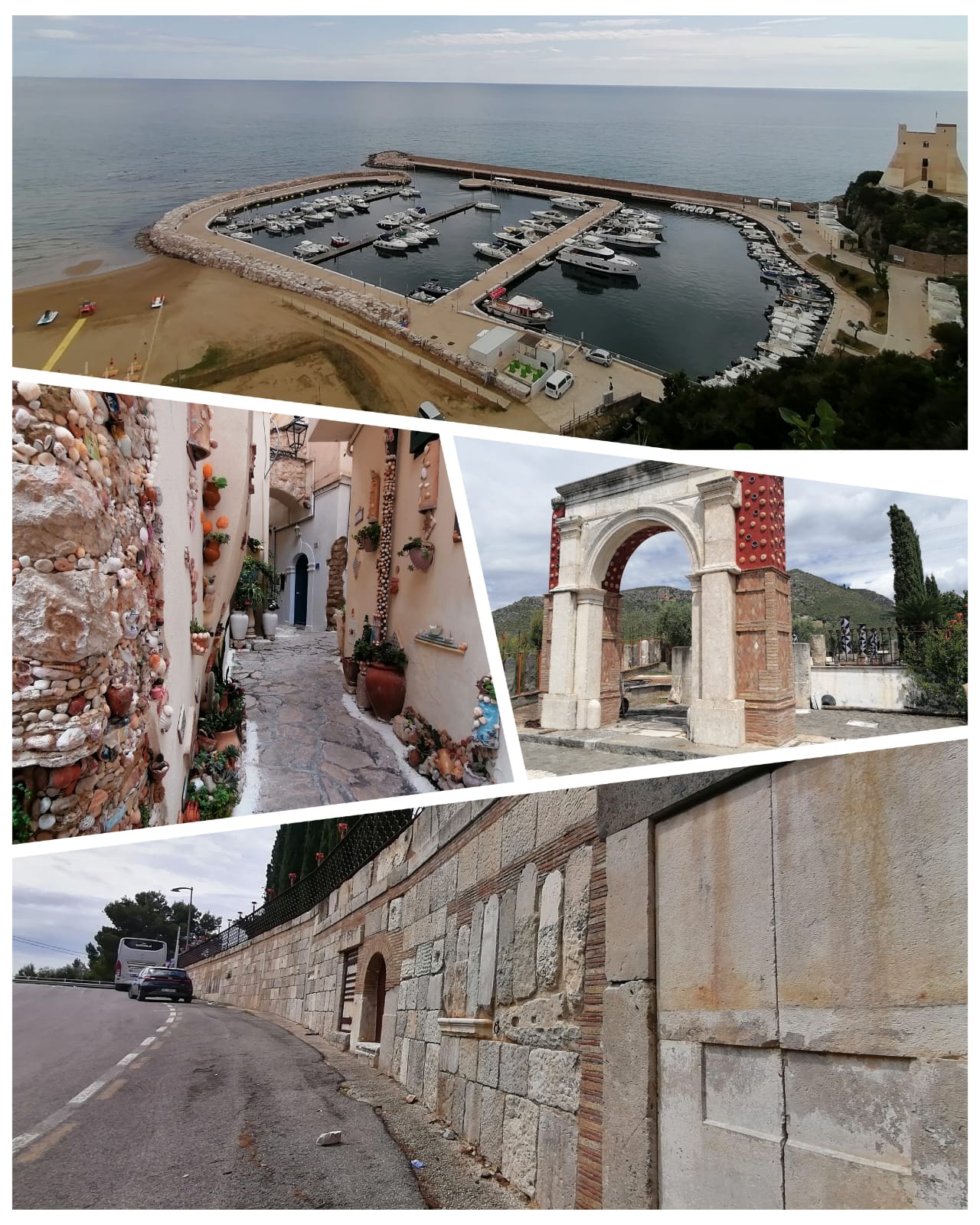
S. ITALY | SPERLONGA: Cooler weather was conducive to a morning hike in the flower-splattered hills behind Sperlonga, clad in remnant forest where wild boar still root among the cork trees. Sperlonga, in the Lazio region, is on the list of most beautiful towns in Italy (Borghi piu belli d’ Italia). Famous for its sea cave where the Roman Emperor Tiberius built a villa, the town’s name comes from the Latin for cave or grotto (sperlunca). Founded in the 6th century on the ruins of the old Roman villas, the town grew into a walled hilltop fortification overlooking the Tyrrhenian Sea, where notable pirates – like Barbarossa (‘Redbeard’), the fearsome Ottoman corsair – plied their trade. The landmark Truglia Tower was erected as a watchtower to warn of their approach.
Day 3: (1 May 2026)
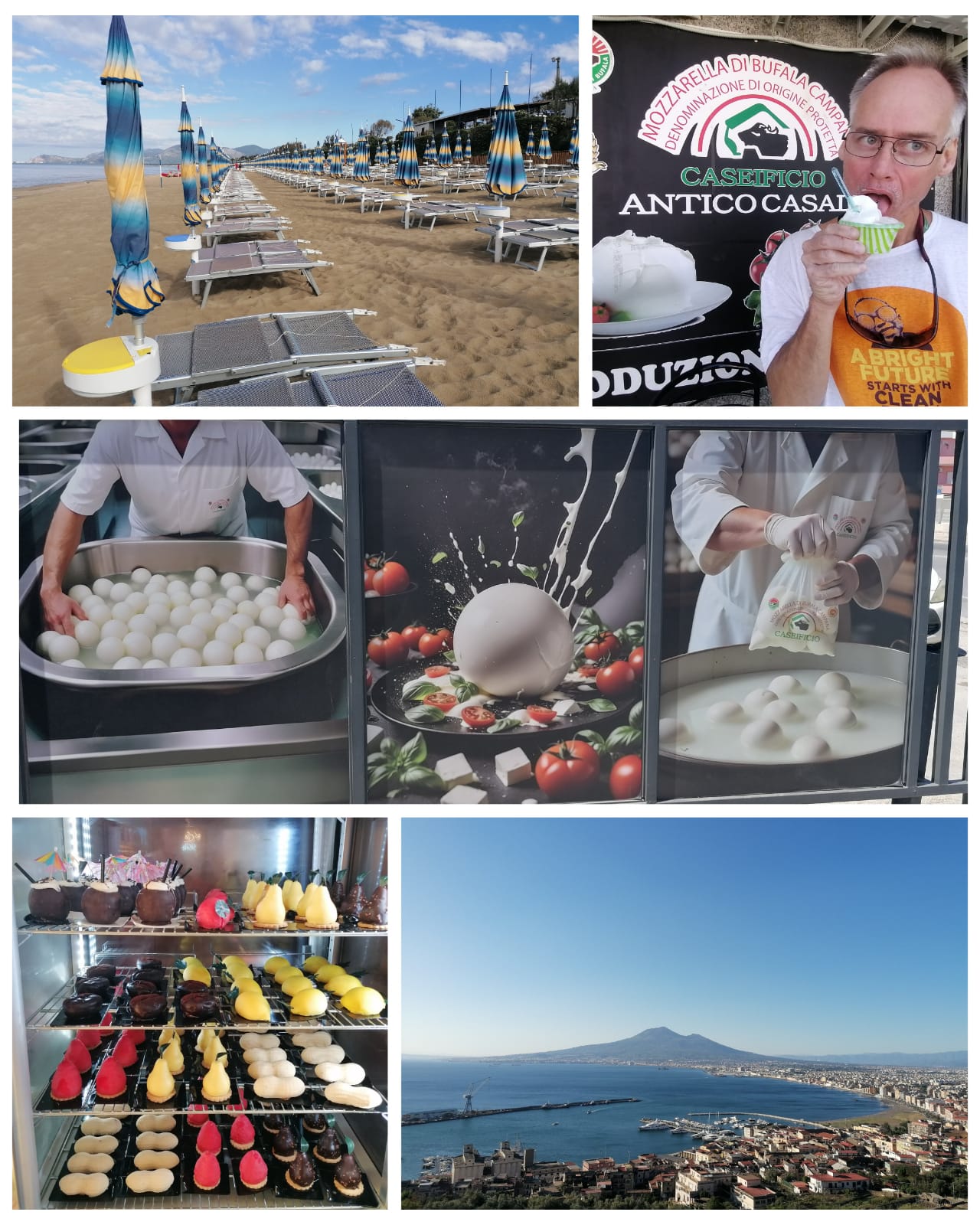
S. ITALY | CASTELLAMMARE DI STABIA (CAMPANIA): The beaches were being smoothed and the umbrellas and sun loungers were being lined up this morning in preparation for the May Day public holiday. Two sunbeds, an ombrellone and parking for €25 was the best deal we came across.
After a dip in the chilly sea, we left Sperlonga at noon bound for a little town called Castellammare di Stabia, in the Campania region, across the bay from Naples. The narrow roads, circuitous routes and fluctuating speed limits resulted in an average speed of 50 kilometres an hour. It took us 3.5 hours to cover the 150 kilometres. Cultivated fields, vines and olive trees hold out against suburban sprawl.
Italy is a nation of artisanal food and wine producers, its gastronomic heritage preserved by regulations that certify products from a specific geographical region using traditional methods (Denominazione di Origine Protetta – DOP). Delis selling a vast variety of cheese, cured meats, marinated olives, artichokes and aubergines are as ubiquitous as pizzerias. A brief stop at a patisserie yielded the crème de la crème of gelato, a panini Napolitano stuffed with salami and two custard-filled sfogliatella. This is mozzarella di bufala country and so we popped in at the shop across the road and left with a gorgonzola di bufala, and a bag of gnocchi.
Antipasti this afternoon on our rooftop terrace came with a view of Mount Vesuvius and the Bay of Naples.
Dish of the Day
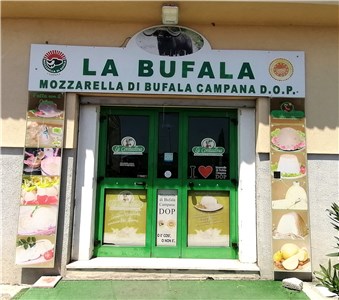
Synonymous with the Campania region, but also produced in parts of Lazio, Molise and Puglia, Mozzarella di bufala, as the name implies, is a cheese ‘cut’ (mozzare) from the milk of the Italian Mediterranean water buffalo (Bubalus bubalis). A stretched curd cheese (pasta filata) like Provolone and Scamorza, it is cut into strips, wire-sliced in a chittara (‘guitar’), dipped in boiling water to force out the whey, then pulled, twisted and knotted by hand and finally immersed in cold water or brine.
Day 4: (2 May 2026)
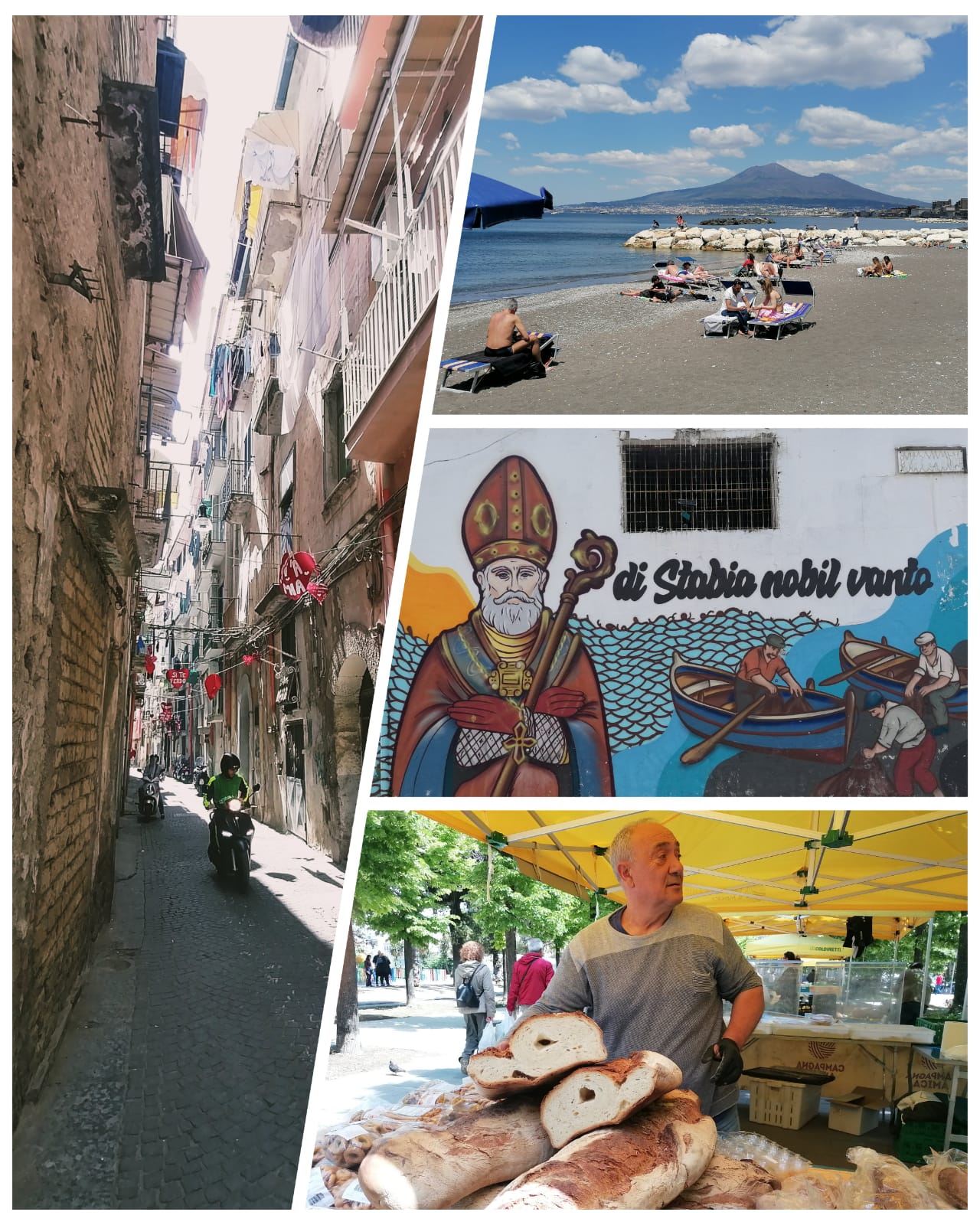
S. ITALY | CASTELLAMMARE DI STABIA: “I speak English,” I said; “I speak Spanish,” Lee said; “I speak Neopolitan,” guffawed the genial baker at the Saturday morning market and repeated it loudly for the benefit of his neighbouring stall holder, before throwing in a free pastry. Neopolitan is, in fact, a Romance language, spoken in Naples and southern Italy, that is distinct from the Florentine roots of Italian. No one speaks English.
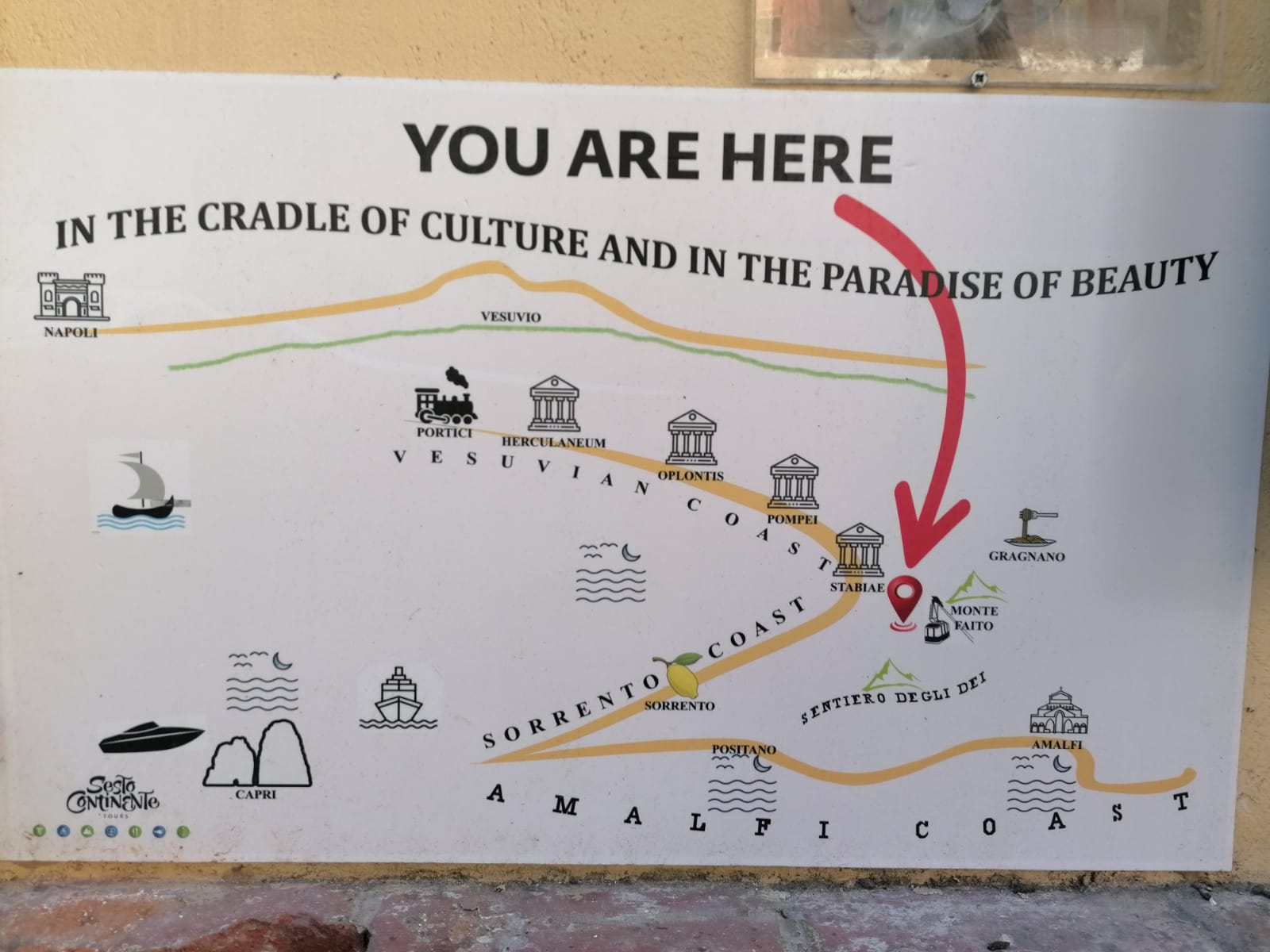
Southeast of Naples, across the bay, Castellammare di Stabia was named for the 9th-century medieval fortress overlooking the sea and the ancient Roman city of Stabia, which was the third settlement after Pompeii and Herculaneum to be buried in the effluvia of Vesuvius’s eruption. Set against the backdrop of Monte Faito, it is an atmospheric seaside town of two-scooter-wide cobbled streets, cathedral bells, Catholic saints and crumbling castles, croquettes and croissants (cornettos), monasteries and Marian shrines, palazzos, pigeons and pizzerias, cats, rats and ruins.
And kindness. Within five minutes of heading out this morning, we had been gifted a handful of freshly-picked broad beans out of the boot of a car. ♥️ Napoli ♥️
Day 5: (3 May 2026)
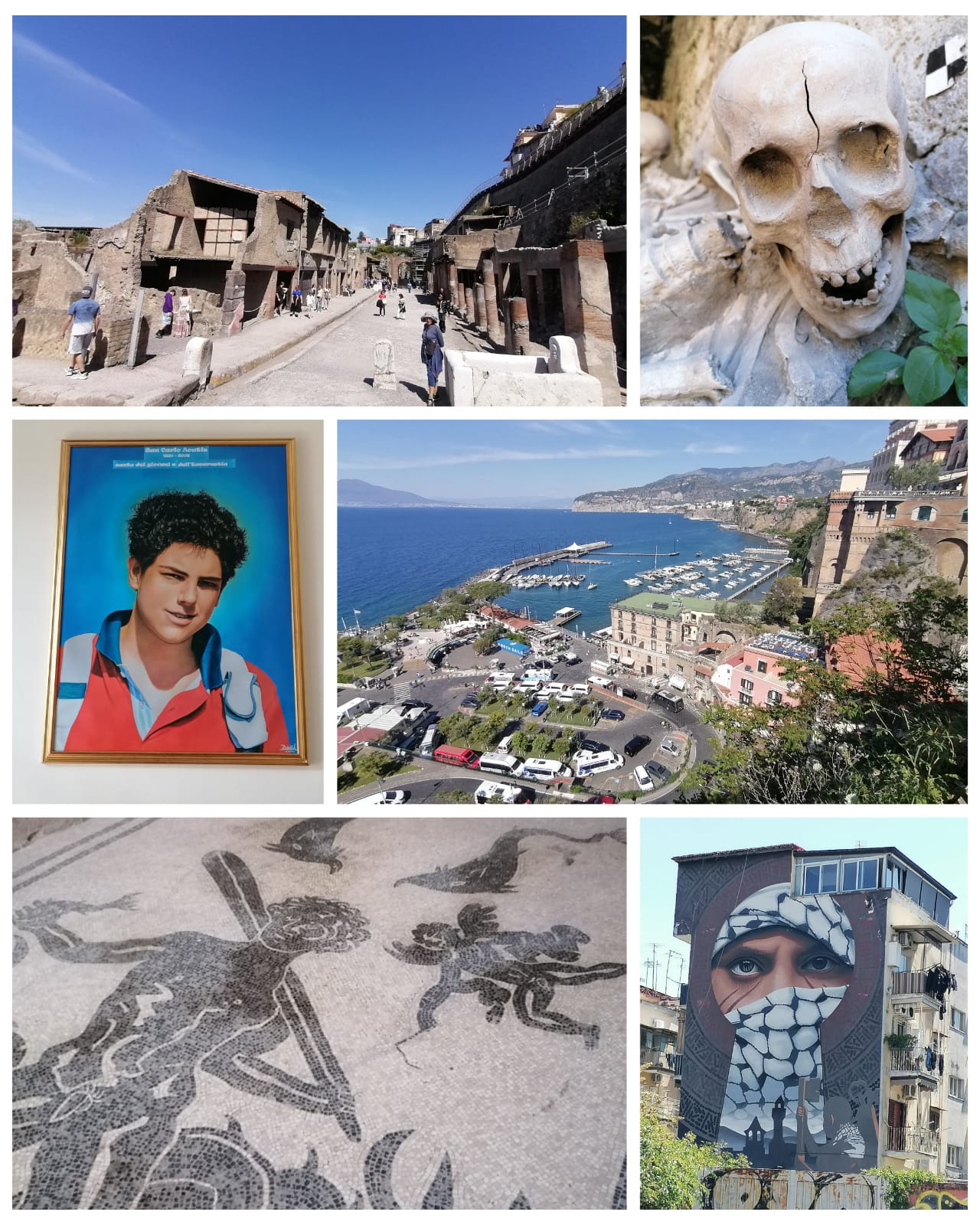
S. ITALY | HERCULANEUM | SORRENTO: A by-word for the most well-known volcanic eruption in human history, Pompeii receives the lion’s share of attention, yet nearby Herculaneum steals the show. We took advantage of the free entry to heritage sites on the first Sunday of the month and arrived before the tour groups.
Founded, it is said, by Hercules returning from Iberia, in 74 AD the city of 4,000 people was buried in pyroclastic rock that solidified to an average of 16 metres in height. In 1738, archeologists began to dig out the temples and taverns and villas adorned with painted wall frescos, mosaic floors, marble altars and countertops, archaistic reliefs and amphora – walnuts were found in one jar. The fiery flow hit at 01:00. Some 300 people fled to the boat houses awaiting rescue by sea. Their skeletons lie where the lava overtook them, still screaming some 1,952 years later.
From mythological heroes and sudden death in the morning, to newly-minted saints and untimely death in the afternoon. We stepped into a church in Sorrento, the limoncello capital of the Amalfi Coast, to find a fresh-faced teenage boy taking pride of place amid the religious iconography. The churches are living museums and art galleries and we are getting a crash course in Catholic saints.
Saint of the Day
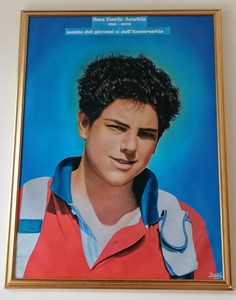
London-born Carlo Acutis, who was raised in Milan, died in 2006 of leukemia aged 15. An evangelising gamer, coder and footballer, Carlo is credited with two miracles of healing, and was canonised by Pope Leo XIV on 7 September 2025. The first saint of the millennial generation, in his short life he avoided the fate of which he had warned: “All people are born as originals but many die as photocopies”.
Day 6: (4 May 2026)
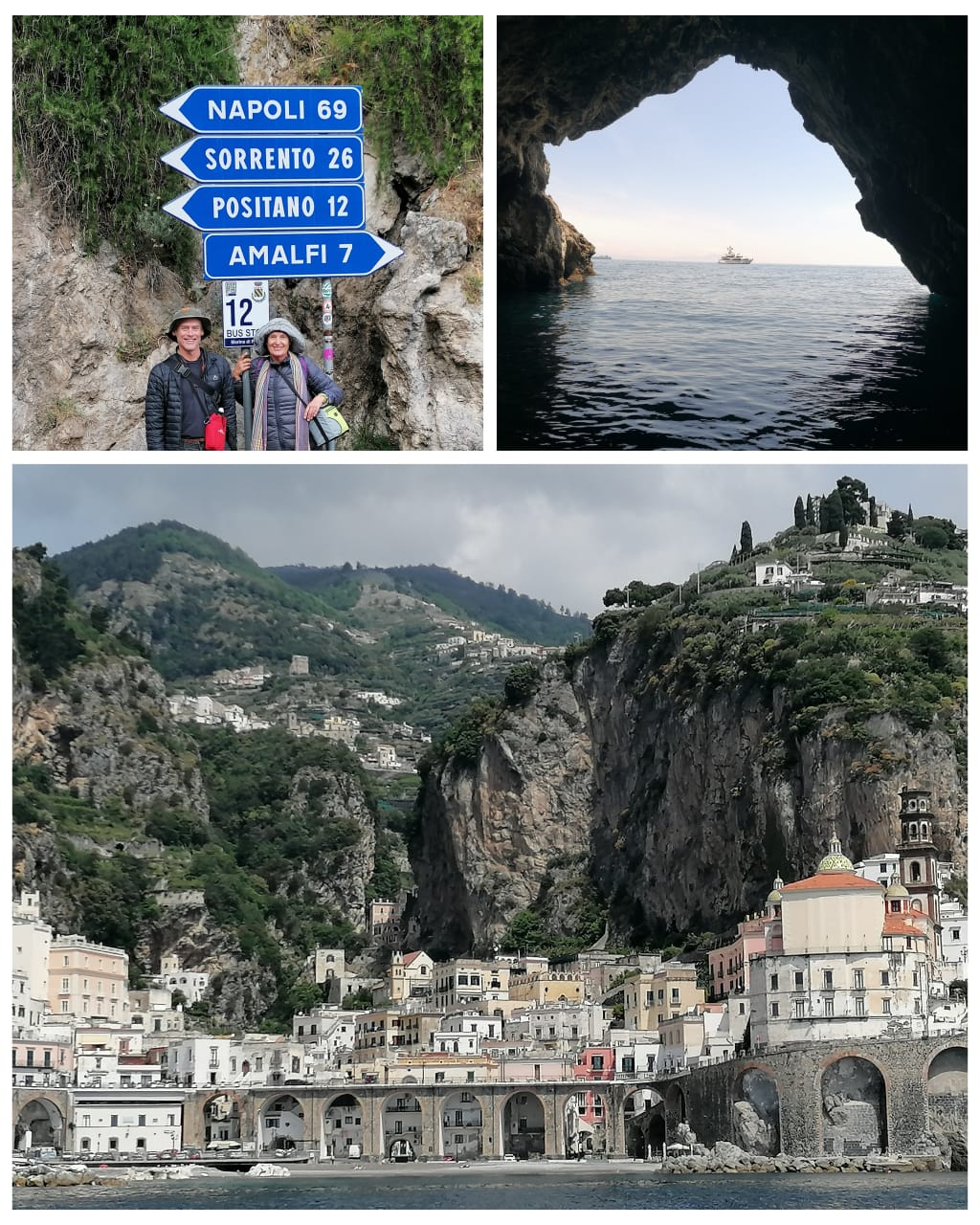
S. ITALY | AMALFI COAST: We woke at 05:00 this morning to make the most of the Amalfi Coast, by train, bus and boat. The road along the coast is an engineering marvel of s-bends and tunnels and bridges carved and cantilevered through and over rock and sea, leaving little wiggle room for the buses, delivery vans, scooters, parked cars and pedestrians.
This early in the season the bus was already chock-a-block with tourists. We hopped on and hopped off at Marina di Praia where friends had hired a boat to self-skipper for the day (€380 including €60 petrol). We puttered past parti-coloured, cliff-clinging villages terraced in lemon trees and vineyards, topped by campaniles and castles, with monasteries and convents perched on pinnacles that should, by rights, belong to the birds. Precipitous steps and ladders plunged down to a cerulean sea, studded with emerald grottoes and flecked in silver fish.
Day 7: (5 May 2026)
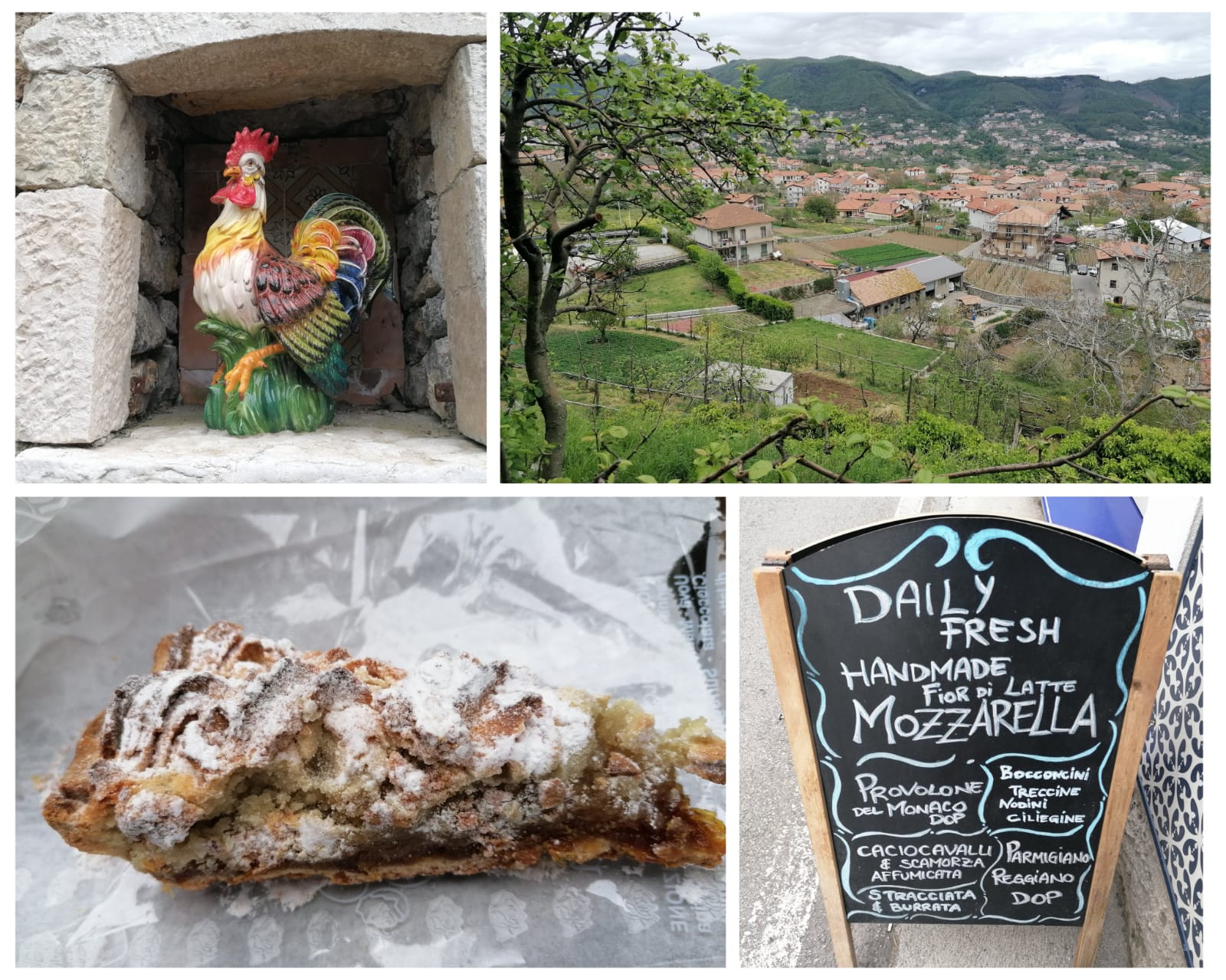
S. ITALY | BOMERANO: We accidentally landed up in Naples today – at rush hour 😲. A week in-country and we are still paying our school fees. Today’s lesson was that Neapolitan bus drivers will not, under any circumstances, tell you where to get off even if, when you get on, they confirm they are going to your destination.
We had caught the bus in Bomerano after spending the day in the mountains above the Amalfi Coast – a camminata paradíso for hikers. Roses cascaded from rocky walls set into wooded hillsides and the cool air trilled with bird song. The terracotta-roofed villas have market gardens edged in olive trees, threaded with vines, dotted with fruit trees and studded with veggies. Goats and geese keep company.
In the village square, pasticcerias, pastificios, panettarias and, of course, pizzerias, sell what
the gardens produce. Dining in restaurants is a costly affair because of the service and sit-down charge, as well as a 400% mark-up on alcohol. Our park-bench lunch of olives, prosciutto, pizza slices as thick as frittata and almond and orange tart came to €10.50 – the view was free.
Day 8: (6 May 2026)
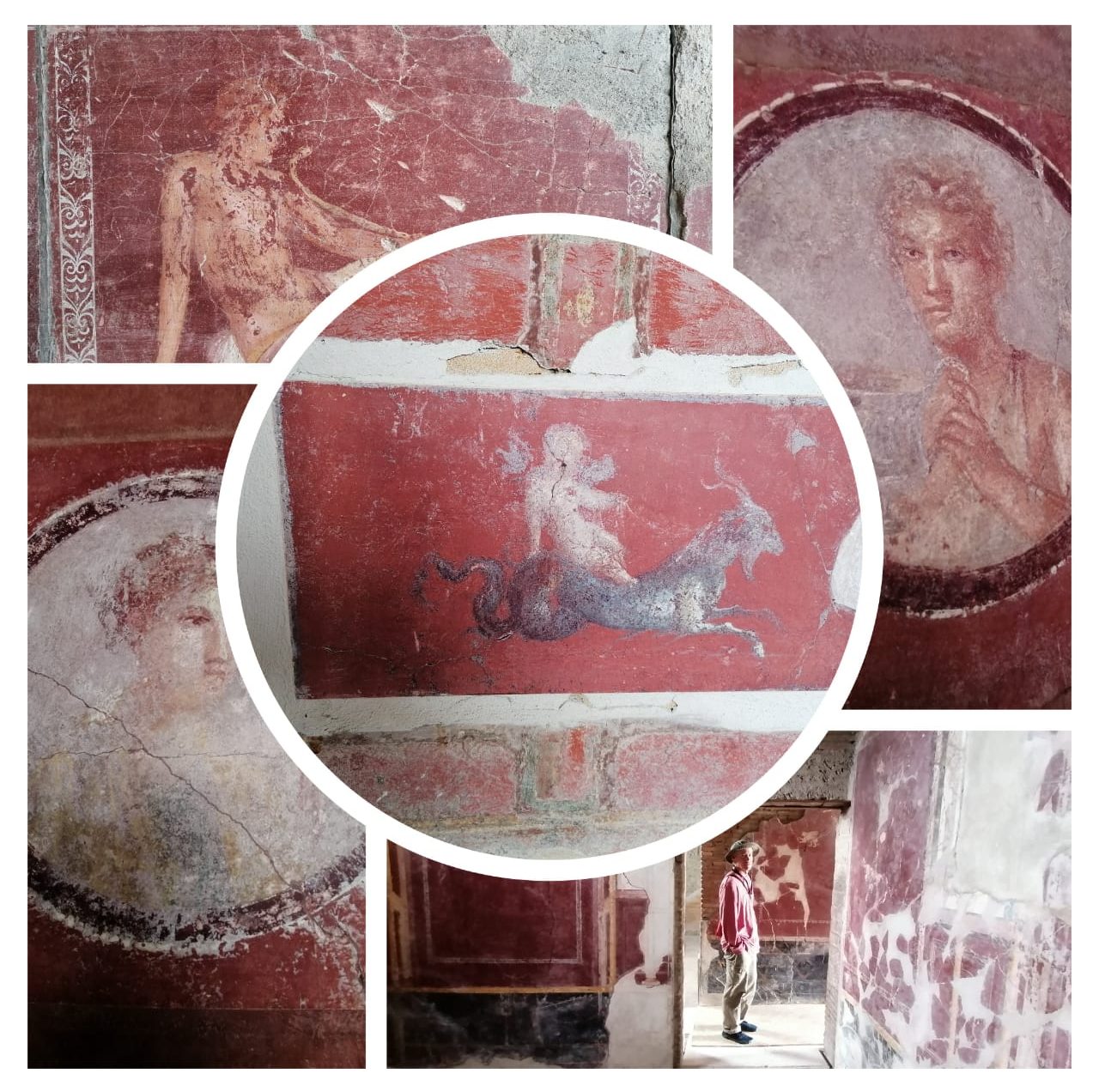
S. ITALY | CASTELLAMMARE DI STABIA: Two Roman villas overlooking the Gulf of Naples, built by the aristocracy between 1 BC and 1 AD, happened to be around the corner from our peeling palazzo. Villa Arianna was named for the fresco depicting the myth of Ariadne and Theseus, who abandoned her on the Greek island of Naxos after she had helped him escape the minotaur in the labyrinth. First excavated during the Bourbon period in the late 18th century, it was re-buried and unearthed again in the 1950s and 1960s. Entrance was free and so was the parking. 🥂
Negotiating and navigating Italy’s roller-coaster road network is not for the faint-hearted. Coming to a standstill is equally taxing. Parking is limited and highly contested because of the mountainous terrain, narrow roads, pedestrianised historic centres and towns built on hilltops because the foothills and flats are farmland. Competition is fierce, necessitating lightening reflexes and fearless feats of derring-do. Illegal parking is gleefully pounced upon by the police, and the abstruse workings of parking metres, cash-free apps and colour-coded parking lines need to be unravelled in order to avoid hefty fines.
Day 9: (7 May 2026)
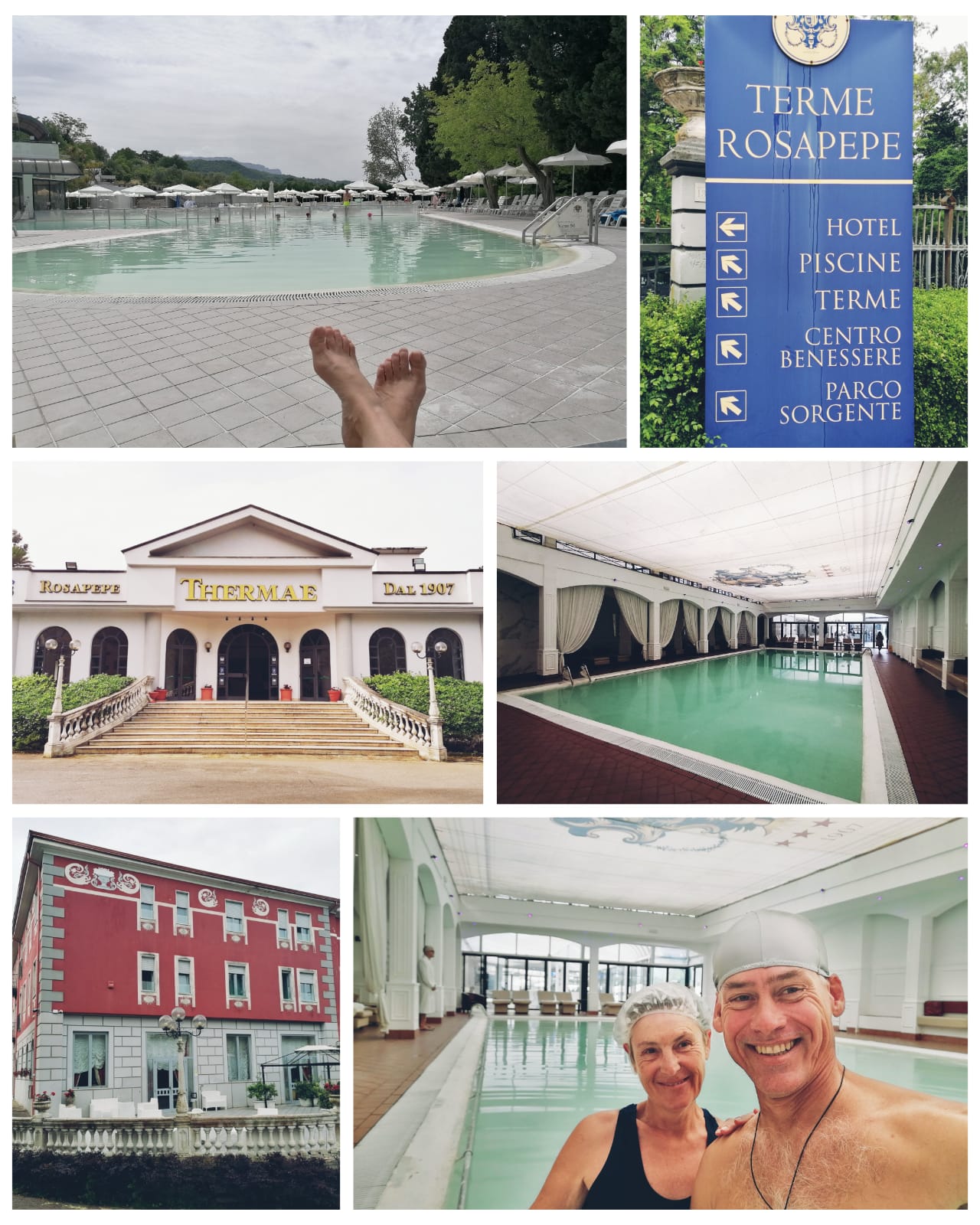
S. ITALY | CONTURSI TERME: We took to the waters today. Just over an hour from Castellammare on the autostrade – worth every cent of the €2.30 in tolls – among wooded hills clad in spring green is a warm water mineral spring that keeps a number of hotels in business.
Hotel Terme Rosapepe is 120 years old and retains the glamour and grand scale of a bygone era. The waters – indoor and outdoor – were rich in white clay and tepid rather than hot, with more than a whiff of sulfur, but just what the doctor ordered after a whirlwind first week in Italy. The €25 p/p day pass also allowed access to the spa facilities, where we dipped and dunked, splashed and sloshed, before hitting the highway once more.
Day 10: (8 May 2026)
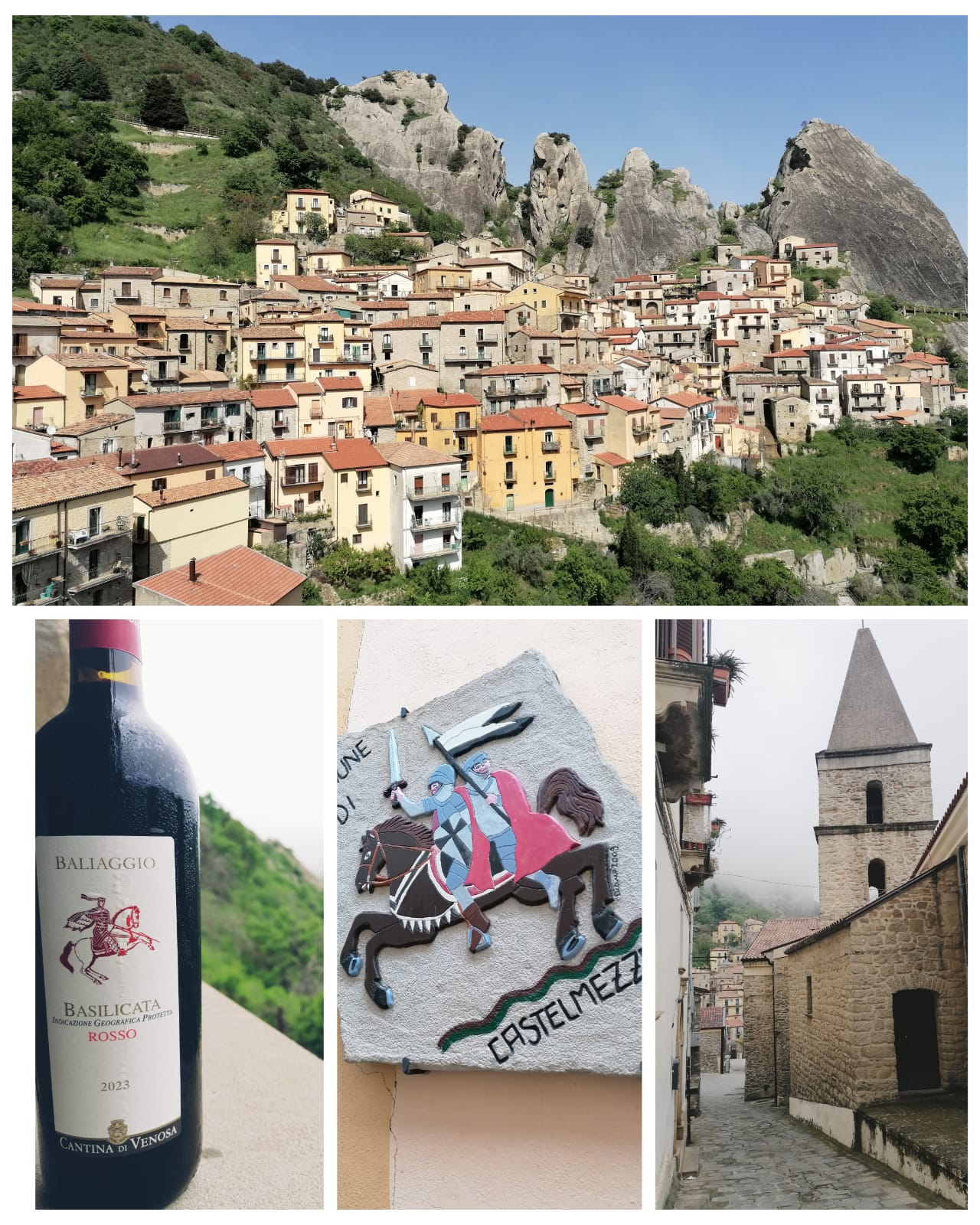
S. ITALY | CASTELMEZZANO (BASILICATA): Emerging through a tunnel, the village of Castelmezzano (pop. 685) magically appears, built into the rock faces of the 15-million-year-old Lucanian Dolomites. At 900 metres elevation, it feels much higher. The surrounding oak and Alpine tundra is home to wild boar and red kite and attracts hikers, alpine climbers and alpine sliders (slittovia).
Basilicata (Lucania) is the least populous and least well-known region of the country despite the fact that the first records of pasta being made in Italy come from here. The province is famous for ‘little ears’ (orecchiette) and ‘big ears’ (tapperelle). Podolico beef is an ancient breed of cattle that graze on these hills and are a regional delicacy along with the cheese produced from the milk (Caciocavallo podolico).
Another of Italy’s ‘Most Beautiful Villages’, Castelmezzano was first settled by Greeks in the 5th to 6th century BC. Since then, it has been a safe haven from Saracens, a hideout for brigands and a Templar fortress, after which the town was named. The patron saint of the village is San Rocco, after which 80% of the men are named – we’ve met two so far. 😊 The most famous inhabitant, however, was not a Rocco but Giuseppe Calvallo, “a local peasant magician (b. 1876) to whom the people go for magical matters, a friend of the poor”. Alas, the elm tree after which the original 12th-century church of Santa Maria dell’ Olmo was named was cut down in the 1970s. A wooden Madonna and child statue from 1200 was, however, preserved.
Dish of the Day
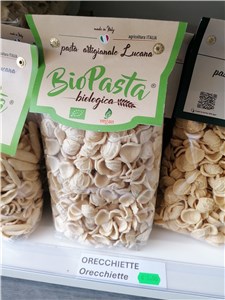
The International Pasta Organisation recognises 350 to 400 official pasta shapes. We are gamely working our way through them 😋 🍝 While pasta is as Italian as the Pope, the Chinese, Persians, Greeks and Arabs all have a claim to its origin – from Chinese noodles to the Ancient Greek laganon (lasagna), Persian rishta and the ‘shoe laces'(itria) introduced to Sicily by North African Arab traders in the 8th and 9th centuries.
By the 12th century, dried pasta made from durum wheat was being produced in Sicily, where trii is still being made today. From the first four main types of pasta common in the 13th century – spaghetti, ravioli, macaroni and gnocchi – the different shapes have expanded with new 3-D printed shapes being patented by major pasta-producing companies.
Day 11: (9 May 2026)
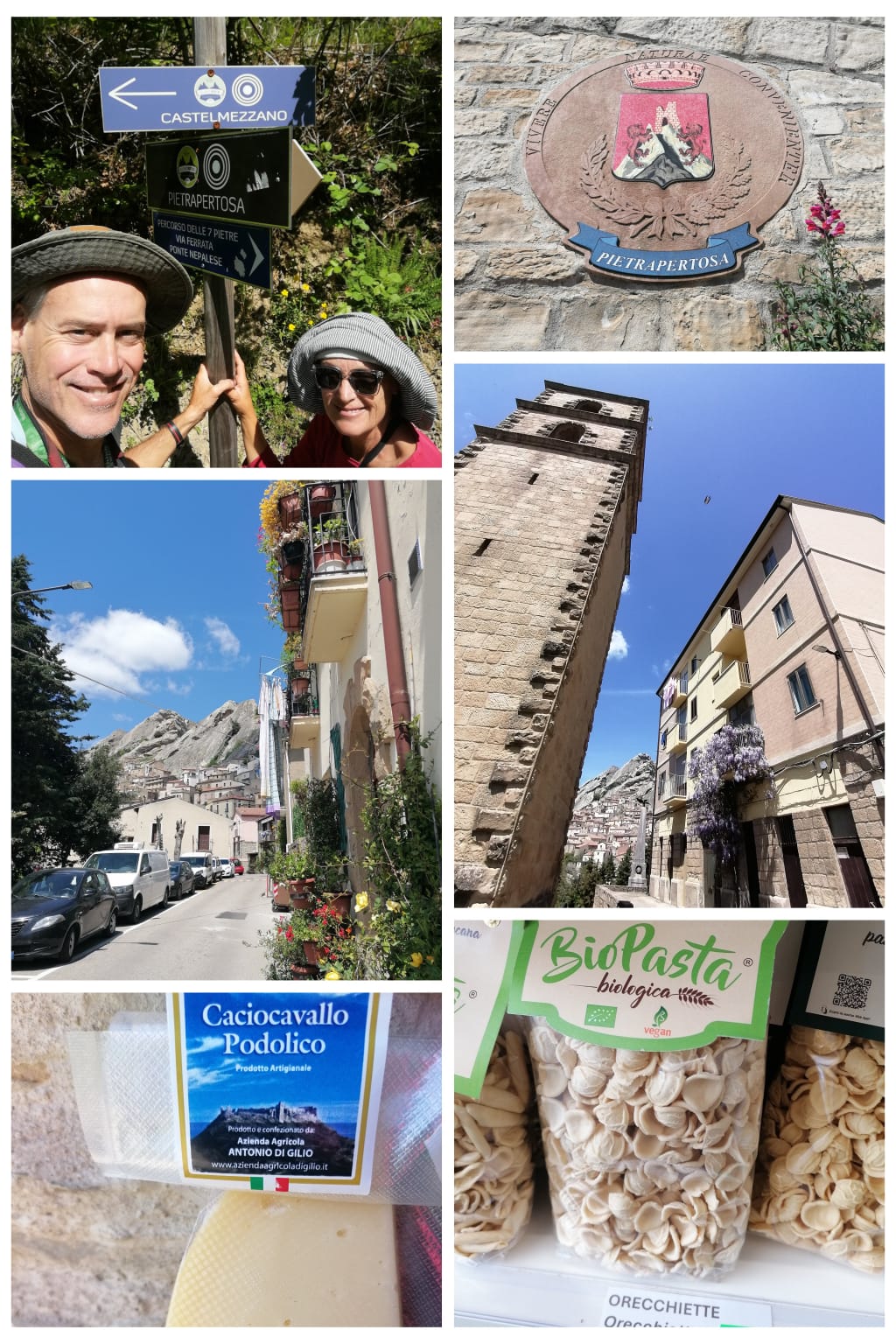
S. ITALY | PIETRAPERTOSA: Pietrapertosa is the highest village in Basilicata (940m). The Path of the Seven Stones (Percorso delle Sette Pietre) – so-called for the seven sound and stone installations that mark the way – is an old shepherd’s path that connects Castelmezzano to Pietrapertosa. It was a day of witchy woods and wildflowers, water wells, window boxes and wisteria, lizards and wizards and pagan rites – despite the many churches after which the province is named.
Saint of the Day
Saint Anthony of Padua, a Portuguese Franciscan priest and gifted preacher, was canonised the year after his death in 1231, aged 36. He is invoked when something or someone goes missing.
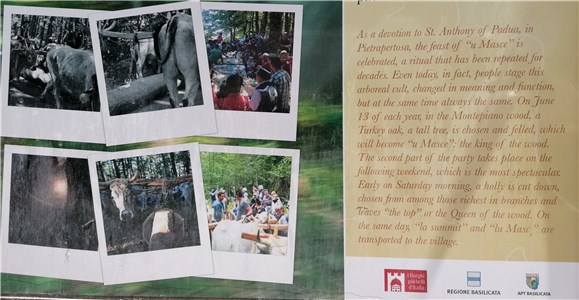
His feast day is the occasion of an ancient village tradition in Pietrapertosa – U Masce (‘The Wedding among the Trees’).
On 13 June each year, a tall Turkey oak is felled in the Montepiano wood. The following weekend, the King of the Wood is joined by his Queen, a leafy holly, and accompanied by a festive village procession, the King and Queen are transported on ox-carts and joined in front of the bell tower of the Convent of San Francesco, where the King is raised and a skilled tree climber ascends to dispense the prizes secreted in the lofty branches.
Day 12: (10 May 2026)
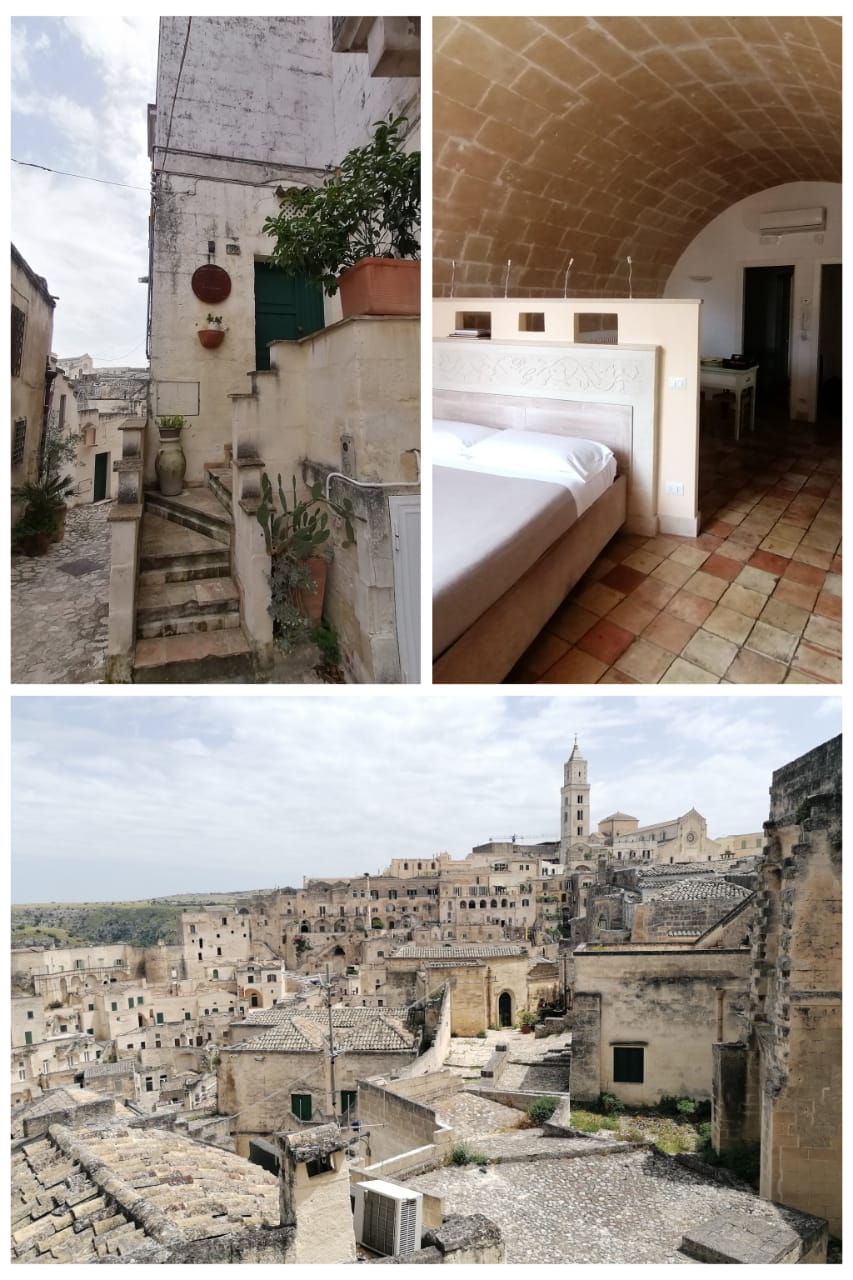
S. ITALY | SASSI DI MATERA: Shortly after arriving at the World Heritage Site of Sassi di Matera, we turned around and went back to Castelmezzano. Therein lies a tale.
We had hit the jackpot and found free parking in Castelmezzano, hoofing it like the locals for the duration. This morning, LA was clearing out the fridge in time for our 10:00 check-out while Lee moved the car into the public square close to our accommodation so that we could load the car. Public squares are usually dominated by churches and today was Sunday …
He arrived in a flurry “We’ve got five minutes. They’re about to close the square.” We panicked. We gathered our belongings and footed it to the car with the police women giving us the evil eye as we raced out of the square ahead of the descending boom.
Congratulating ourselves on our well-timed departure, we rolled into Matera an hour-and-a-half later, just in time for lunch. At a nearby osteria, we dined on a secondo piatto (second plate) of sausage, pork belly and mushrooms, which, at €34 was reasonably priced for Italian restaurants and only cost us our daily food budget.
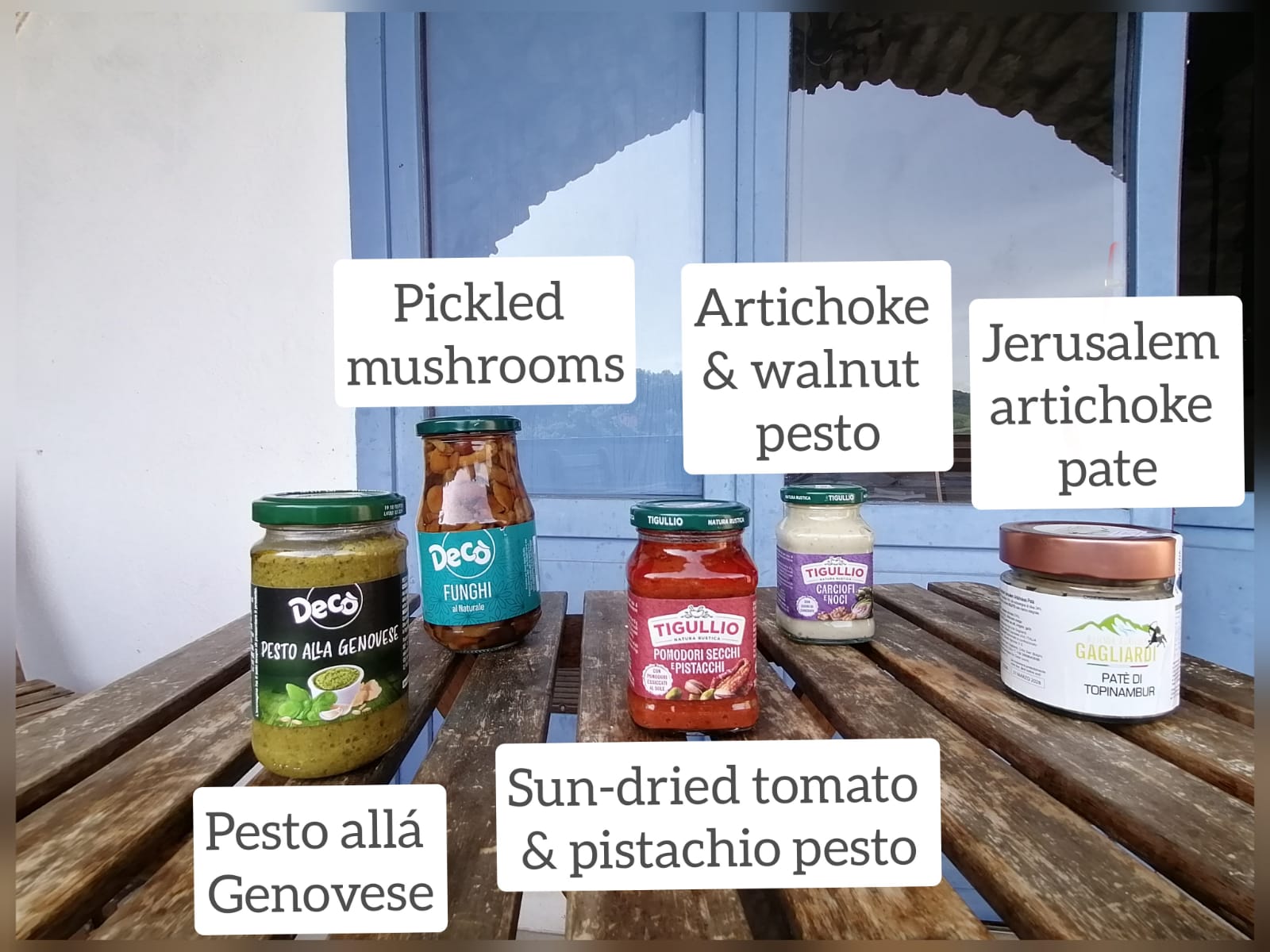
When we returned to our casa to unpack, we discovered that we had left behind all our groceries, including LA’s pesto collection and a Jerusalem artichoke paté that we had bought from southern Italy’s only producer.
With a ricotta and pear gelato under our belts, we backtracked …
Dish of the Day
In Christopher Hibbert’s biography of Rome, he observes that in the 18th century, ice-cream “was eaten in enormous quantities in Rome at all hours of the day and night, even in church, by rich and poor alike”. Little has changed in the modern era. The post-siesta, gelato-fuelled stroll is a daily ritual.
After the “egg cream sorbet” concocted by the Florentine Renaissance man Bernardo Buontalenti for the Medici court around 1565, and the fior di latte (‘flower of milk’) by Cosimo Ruggeri that won the competition in Catherine di Medici’s court for the ‘most singular dish that had ever been seen’, a Sicilian chef in Paris popularised the new dessert in the 17th century and the Neapolitans added dairy to create the first true ice-creams in the 18th century.
Gelato, which means ‘frozen’, is a much-loved tradition and a trade that is passed down from generation to generation. More milk, less cream, no eggs and a slow churn speed results in a dense, silky, smooth texture and a more intense flavour than ice-cream. Creamy mounds of carnival colours do not a true gelato make. Look for duller hues covered by tureen lids to experience the true Italian gelato.
Day 13: (11 May 2026)
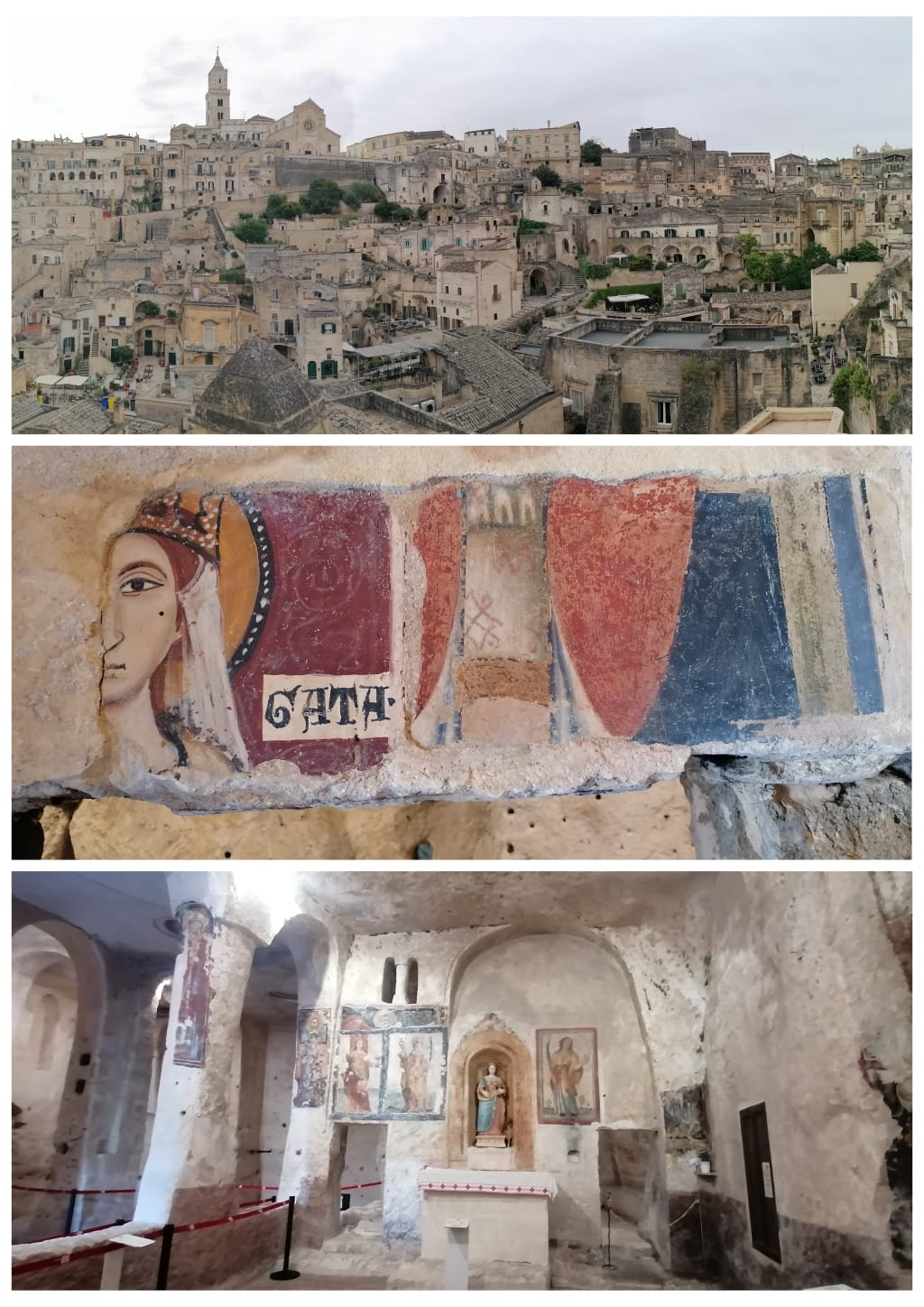
S. ITALY | SASSI DI MATERA: “Sasso means a rocky inhabited district.” One of the oldest human settlements in the world, the Stones of Matera, on the slopes of the Gravina ravine, is a city hewn from limestone. Cave houses, churches, crypts, cathedrals and convents are all carved into the canyon above the river in a symphony of stone, tufa and terracotta that celebrates 9,000 years of continuous habitation and over 1,300 years of Christianity. After becoming a World Heritage Site in 1993, Matera was proclaimed European Capital of Culture in 2019.
Saint of the Day
The rupestrian (rock) church of Santa Lucia alle Malve dates back to the 9th century. The surviving frescoes are from the 11th to the 17th centuries. High mass is still celebrated here on Saint Lucia’s feast day, the 13th of December.
Although born into a wealthy family in Syracuse in Sicily in c. 283 AD, Santa Lucía (Saint Lucy) is venerated throughout Italy. Her widowed mother arranged a marriage to a rich pagan suitor but Lucy was determined to remain a virgin and a Christian and donate her dowry to the poor. This did not sit well with her fiancée who denounced her to the Roman authorities during the Emperor Diocletian’s crackdown on Christians. Lucy lost her head in 304 AD, aged 21.
It was in the 15th century that she became associated with eyes. Her suitor complimented her eyes, the tale goes, and she plucked them out rather than have them come between her and her Divine Betrothed. Lucy is derived from ‘lux’, the Latin for light, and thus she is the patron saint of the blind, the vision-impaired, opticians and writers.
Day 14: (12 May 2026)
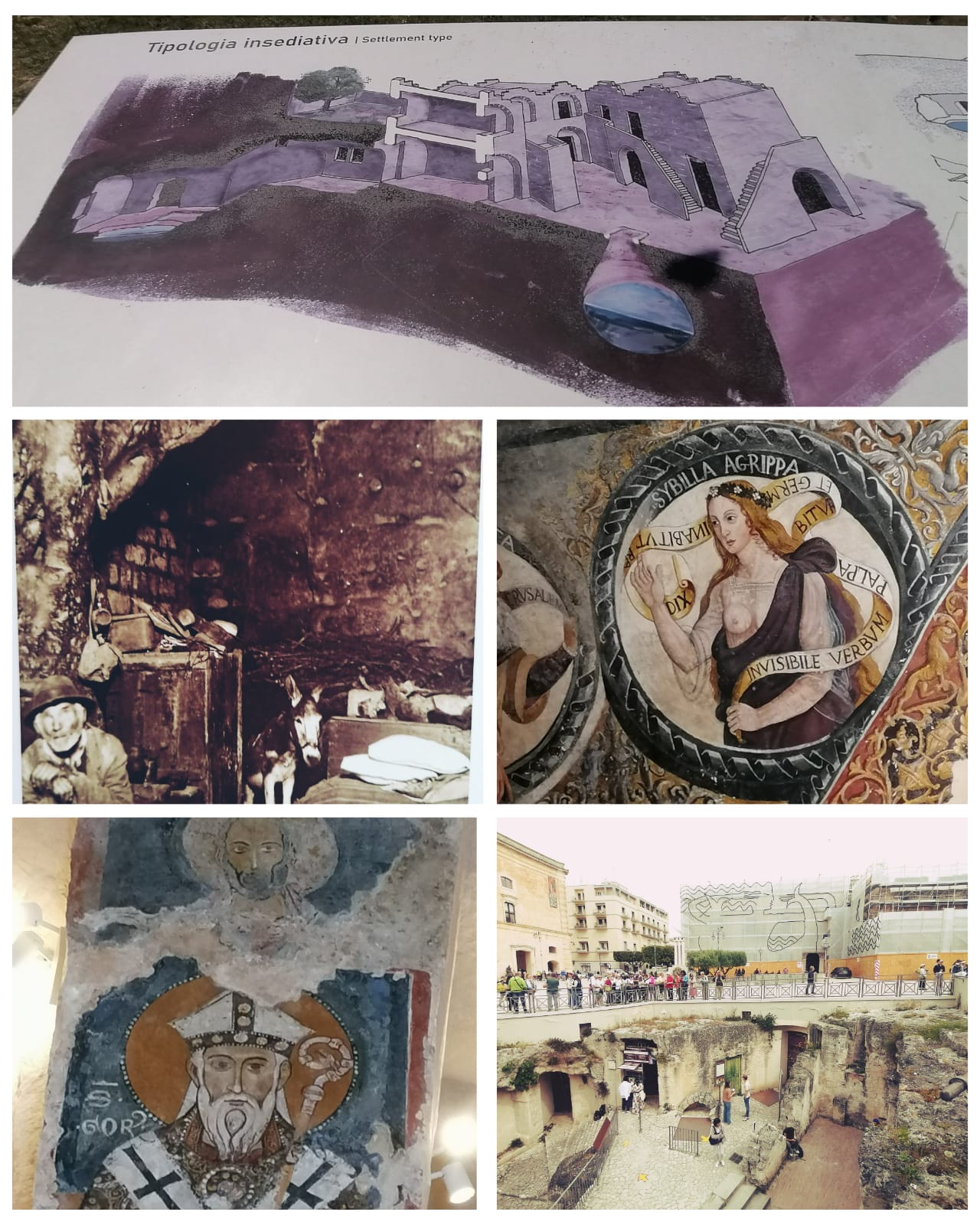
S. ITALY | SASSI DI MATERA: The sassi of Matera “had a vertical development”. These caves, natural and hand-hewn, have many layers, from the marine sediment from which the rock was formed some 1 to 3 million years ago, to a history of human habitation that stretches from the Neolithic era – encompassing the fall of the Roman Empire and Constantinople, the Saracen and Lombardi invasions and a Renaissance resurgence – to the 19th-century “national shame” as poor agricultural labourers lived like animals – with their animals – in the caves that had been dug out in the 15th century by Albanians fleeing the Ottomans. The “shameful burrows” in which 20,000 people lived were finally cleared and their inhabitants relocated in the 1950s.
Day 15: (13 May 2026)
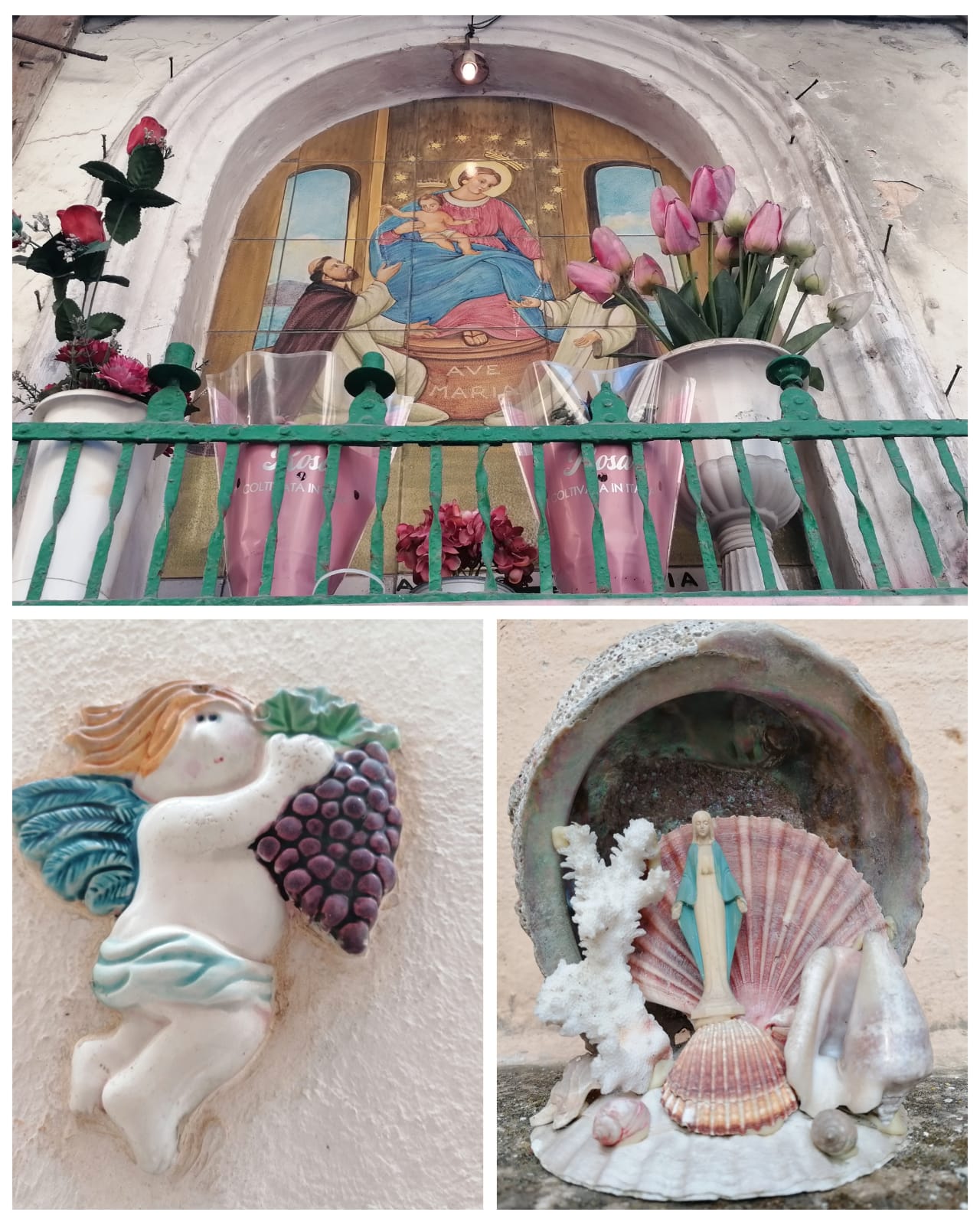
S. ITALY | MASSAFRA (PUGLIA): Fourteen kilometres south of Matera, the Crypt of Original Sin (Cripta del Peccato Orginale) is an 8th–9th-century rock chapel. Benedictine cave-dwelling monks used the walls of the 41m2 natural cavern as a Bible for the poor, illustrating for the illiterate the story of Creation and the fall of Adam and Eve in a flower-strewn Garden of Eden. The Madonna appears as a Byzantine Empress in a three-pointed diadem and a gown embroidered with pearls; God headlines as a young, beardless man. These frescoes are among the oldest artworks in Southern Italy.
Leaving Basilicata behind, we headed for Puglia (Apulia) through gently rolling fields splashed with scarlet poppies and sown with vines, olives and citrus. We stopped off at the sleepy, sandy beach town of Marina di Ginosa on the waveless Ionian Sea where we had penne arrabbiata for lunch as the rain set in.
Day 16: (14 May 2026)
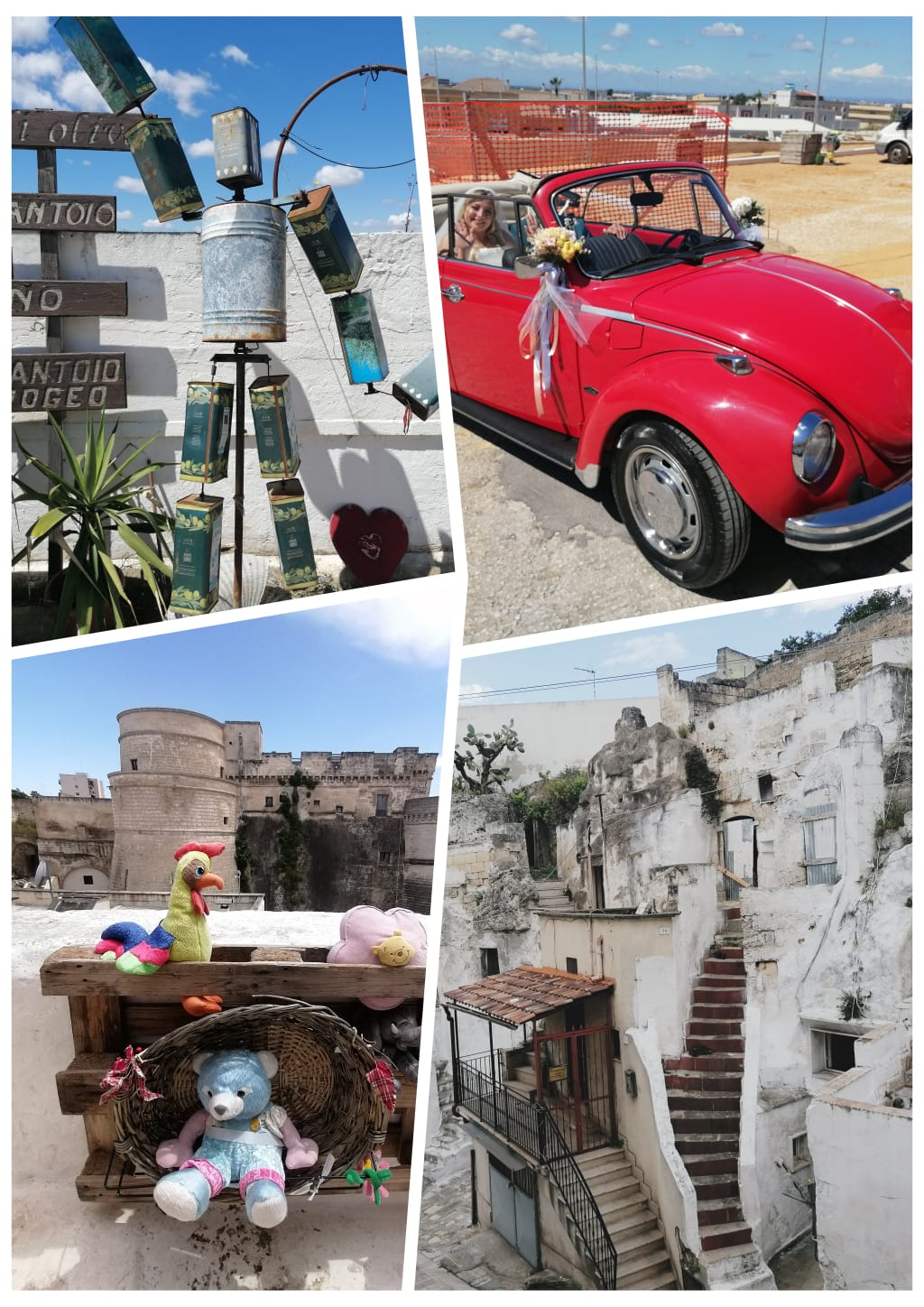
S. ITALY | MASSAFRA: Canyons, caves and castles, capers, cats and kitsch – just another day in southern Italy. Like Bilbo Baggins, we went out our front door today not knowing where we would be swept off to. The day began with a wedding – the bride arrived in a red VW Karmann Ghia convertible – “a Beetle in a nice Italian suit”. An impromptu olive oil tasting in an incognito museum followed, all in incomprehensible Italian.
Settled, it is said, by refugees from the Roman colonies in Africa, Massafra, like Matera, was another medieval rock village (8th-13th century) nestled in the natural caverns of the Gravina San Marco, which splits the old and new town in two.
Miracles and magic are closely intertwined here. “Until not so many years ago, the people of Massafra were nicknamed I Masciari (fortune tellers) for their magical potions and miraculous waters. We found this enigmatic description outside the Santuario de Gesu Bambino (1858) – one of the only five churches in Europe dedicated to the ‘divine child’: “The foundation of this church is strictly related to some ‘miracles’ that occurred on a wax statue.”
That most famous of southern Italian folk dances, the Tarantella, originates from the Puglia region. Named after the nearby provincial capital of Taranto, this frenzied, unflagging dance stems from the belief that exertion would sweat out the venom from the bite of a wolf spider.
Day 17: (15 May 2026)
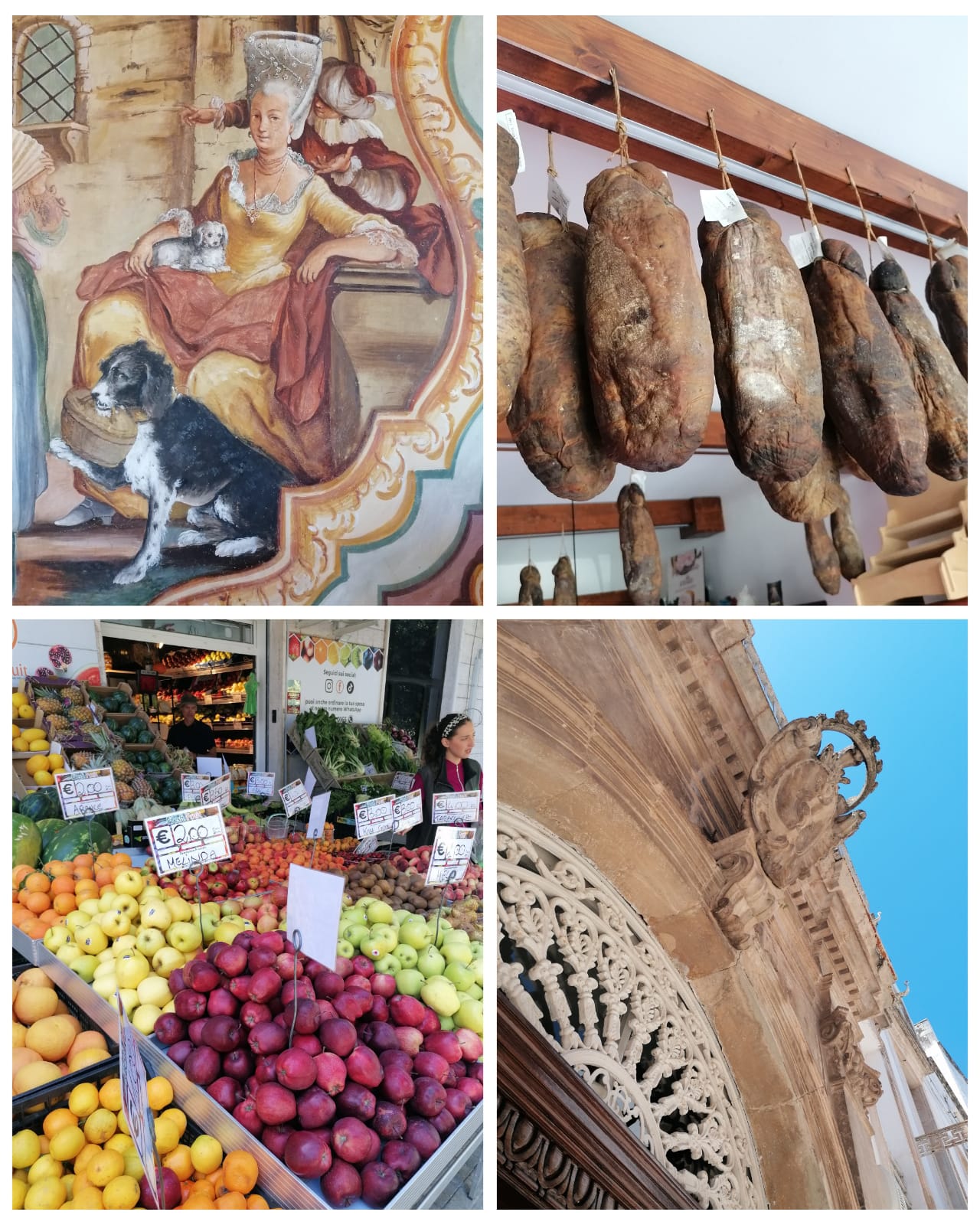
S. ITALY | MARTINA FRANCA: The road from Massafra to Martina Franca winds through vineyards, olive groves and orchards. Flowery fields are daubed in the colours of the Italian flag.
What started out – “well before the 10th century” – as a village founded by Taranto citizens fleeing pirate raids, by the 18th century had become a Baroque pièce de résistance of palazzos and churches. An Italian Grahamstown, Martina Franca hosts the annual opera Festival della Valle d’Itria in summer. The local specialty is a dry-cured pork cold cut called capocollo and a filled pastry called bocconotti. It’s cherry season. We got us some.
Day 18: (16 May 2026)
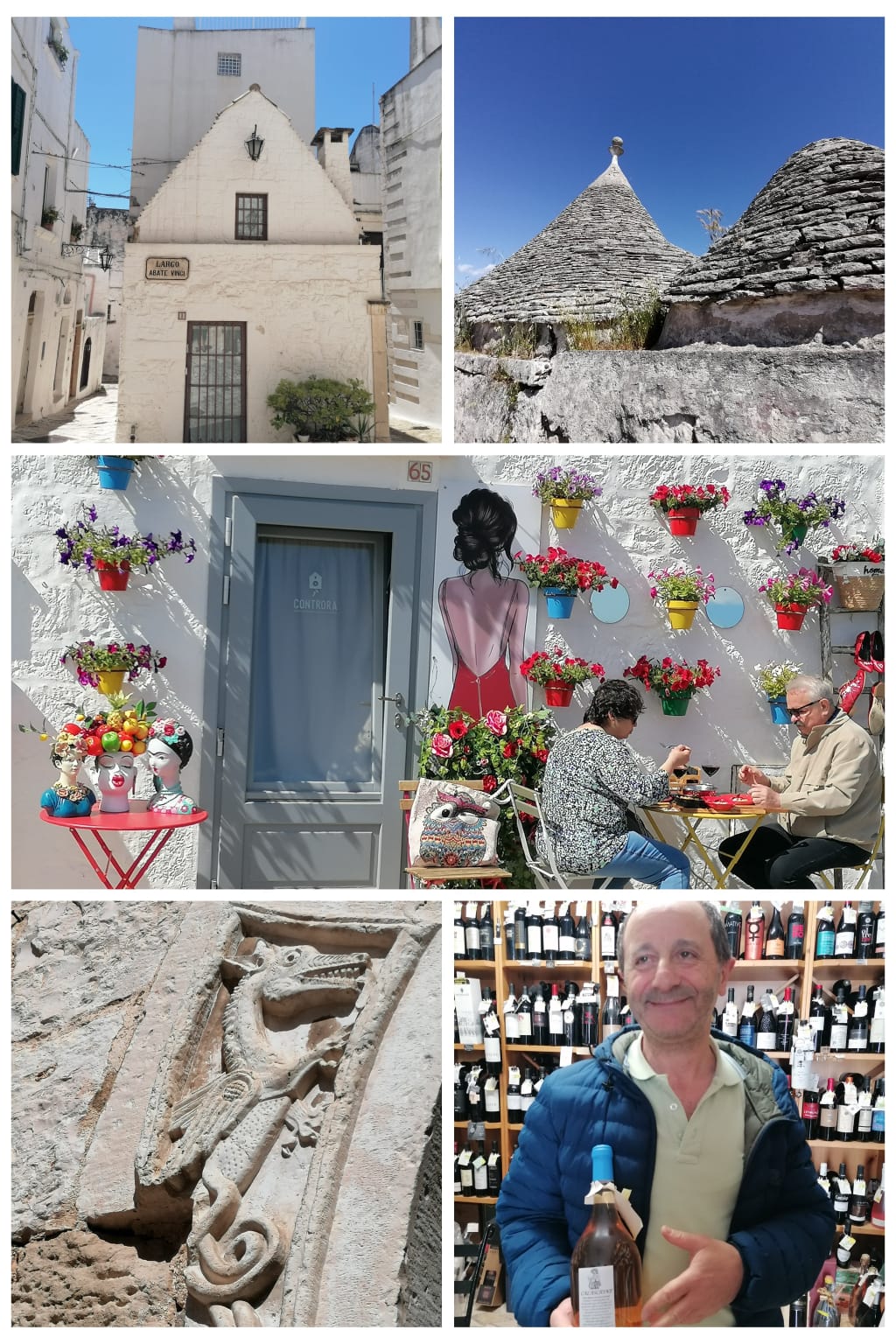
S. ITALY | LOCOROTONDO: Today, we walked around “the place called round”. Locorotondo (locus rotundus) is, like Martina Franca, another of Italy’s ‘Most Beautiful Villages’. Dating back to before 1195 – its first historical reference – the town was built in concentric rings, for purposes of defense and surveillance, on top of a hill 410 metres above Puglia’s famed Valle d’ Itria.
Locorotondo is also known for its distinctive cummèrse houses with their pitched roofs clad in flat limestone shingles (chiancarelle), in contrast to the conical roofs of the trulli that dot the surrounding countryside.
The clay and lime soil of the valley is fertile and rich in minerals, which may explain the Chelsea Flower Show standard of the town’s window boxes and certainly explains its wine-producing pedigree. We acquired a five-varietal rosè blend, fermented in terracotta, made by winemaker, merchant and photographer of ancient olive trees, Alfredo Neglia, which includes verdeca, fiano, and bianco d’Alessano – white grapes particular to Locorotondo.
Saint of the Day
As Locorotondo’s patron saint, George of the Dragon featured today.Born in Cappadoccia (Turkey), he was an officer in the Roman army under Emperor Diocletian. He survived being poisoned and crushed on spiked wheels, but was finally beheaded for his faith on 23 April 303 AD. He is credited with converting the population to Christianity after slaying a dragon that was terrorising the people of Silene in Libya.
Byzantine monks fleeing iconoclastic persecution brought with them the veneration of such Eastern saints. An ancient cave on the hill where Locorotondo stands was appropriated from the pagans and dedicated to Saint George before a chapel was built on the site in the 14th and 15th centuries and became the Mother Church of San Giorgio.
Day 19: (17 May 2026)
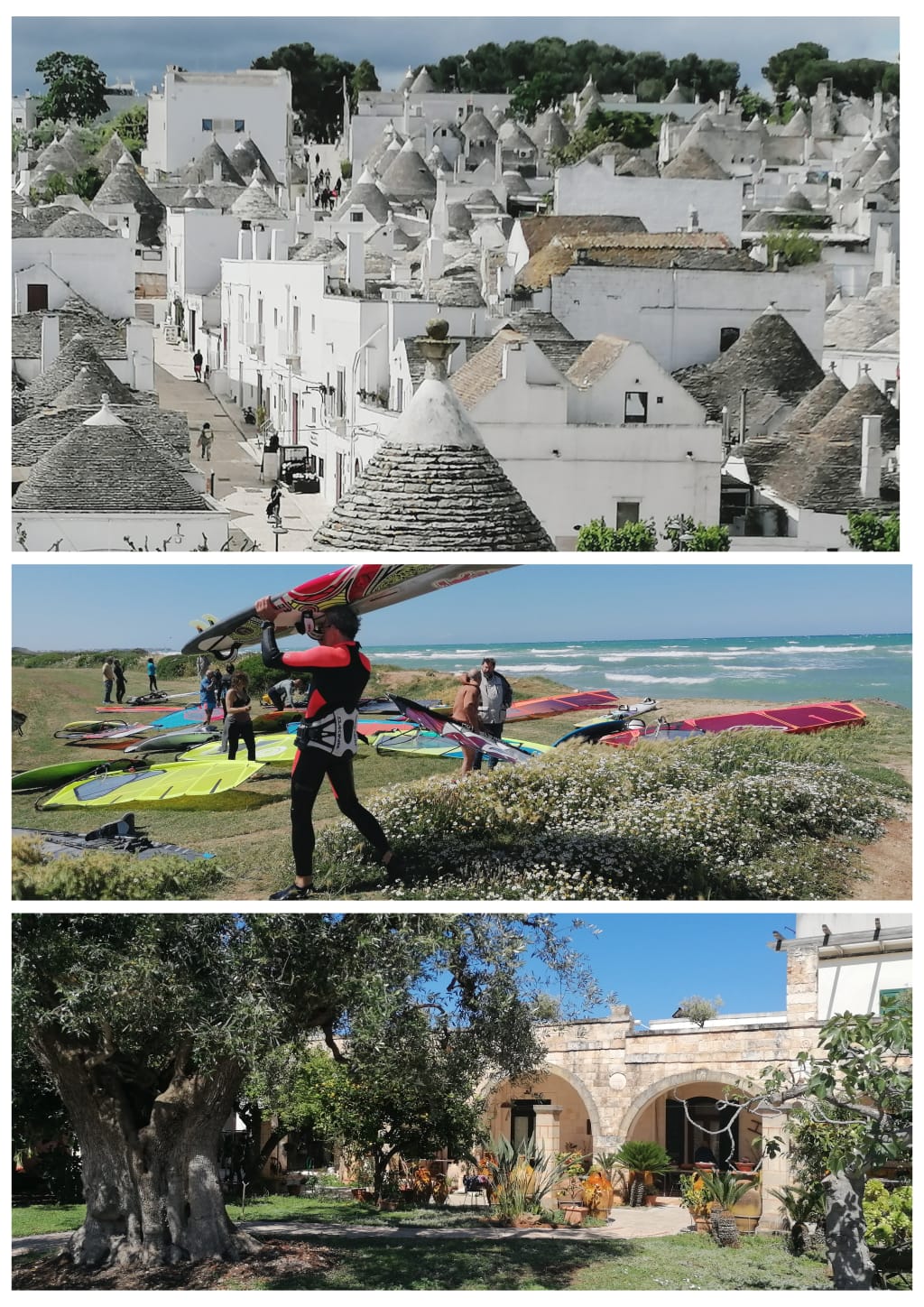
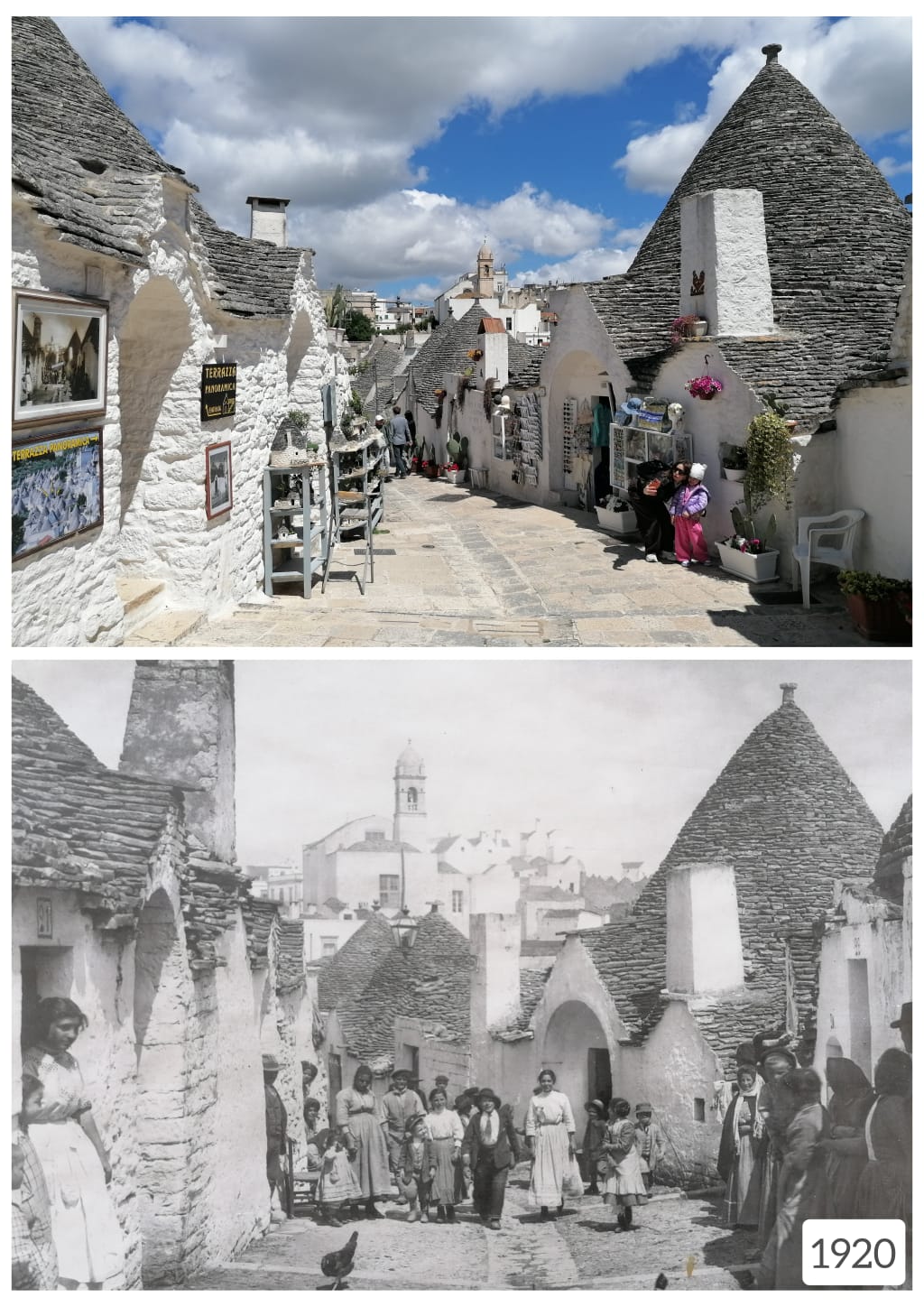
S. ITALY | ALBEROBELLO | MASSERIA ASCIANO: We were in the first wave of the torrent of tourists flowing into the UNESCO World Heritage site of Alberobello this morning to cluck and click at the more than 1,500 medieval trullo houses unique to the Valle d’ Itria.
Then, we left the hills behind us and headed for the coastal plains of the Adriatic where plantations of olive trees march toward the sea. We stopped for a wind-shielded picnic lunch in our car at a breezy, bright, kite-surfing beach north of Brindisi, before checking in at Masseria Asciano.
Particular to Puglia, masserias were fortified farms providing protection from bandits, pirates and slave raiders. Today, many of the farms have branched out into hospitality. An olive oil estate since 1916, this masseria has 17,000 trees, with 6 different varieties, some dating back to the 1400s and produces 50,000 to 75,000 litres of extra virgin olive oil a year.
Puglia has 60 million olive trees, which account for 40% of Italy’s production. However, a spittlebug-transmitted bacterium is threatening the ancient olive orchards. Ten years on from the start of the outbreak, there is no known cure.
This evening’s antipasti on our terrazza featured black Puglian olives the size of Brazil nuts. Buon appetito.
Day 20: (18 May 2026)
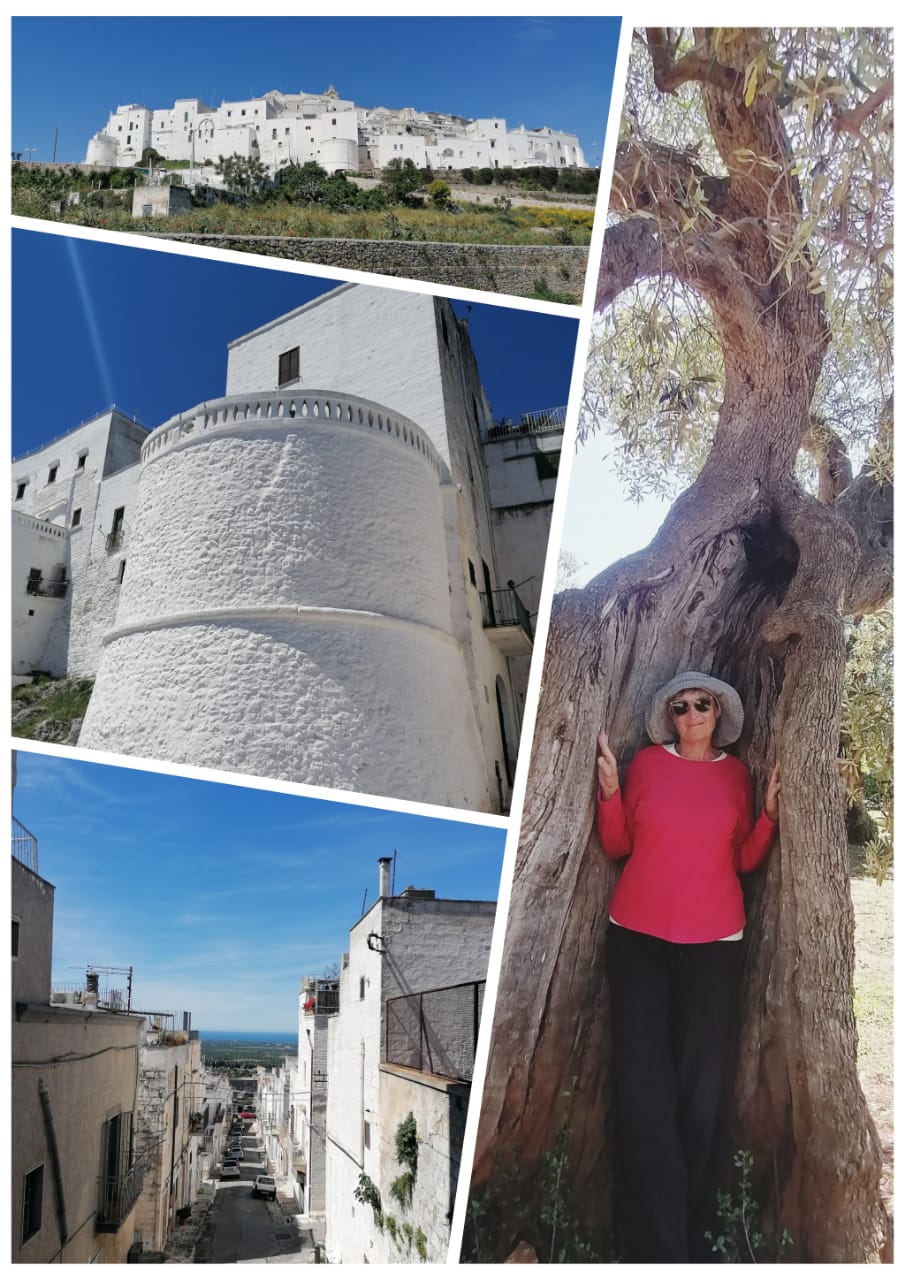
S. ITALY | OSTUNI: Waking up this morning, the air smelled like truffles – which could be Lee’s shoes. 😤 Accompanied by one of the farm’s Jack Russells, we walked off a continental breakfast of three kinds of pastries and great coffee on tap among the olive trees.
Then, a short drive brought us to the whitewashed hilltop town of Ostuni, which has had many incarnations – Roman, Byzantine, Norman, feudal and Aragonese. The flat roofs and white facades overlooking the Adriatic have a distinct Greek-island feel. The town was on the route of the medieval coast road, and its ancient marina of Petrolla (Villanova) was one of the ports where Crusaders – and pilgrims – set sail for Jerusalem.
Day 21: (19 May 2026)
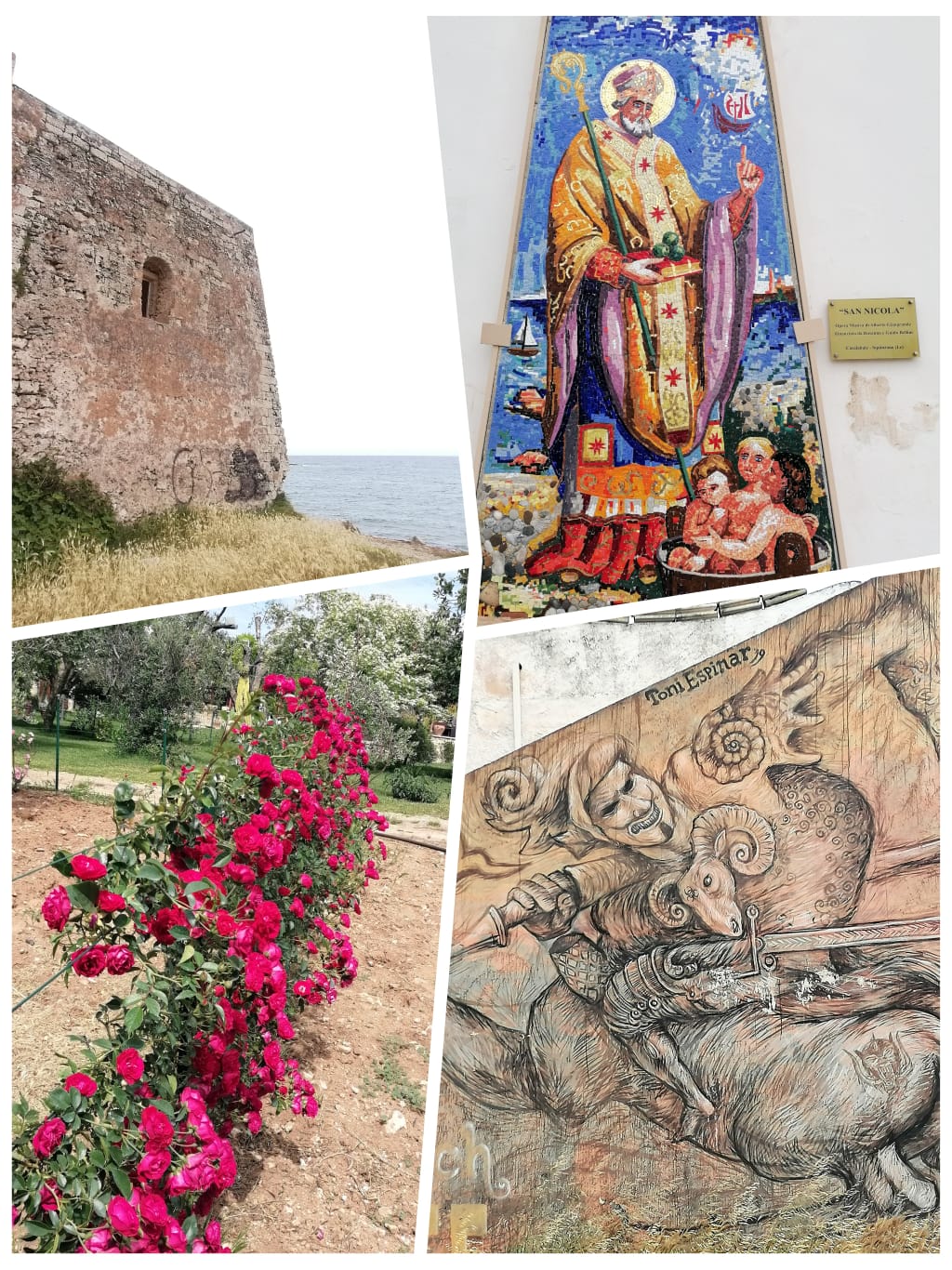
S. ITALY | SALENTO COAST: We headed south from Ostuni today, skirting the working port city of Brindisi where, in 40 BC, Mark Antony and Octavian divided the Roman world between them. Withered olive trees alongside newly planted saplings were sobering reminders of the spittlebug blight.
The flat, sandy Salento coastline is of strategic importance – the Strait of Otranto is the narrowest passage between the Adriatic and the Mediterranean. The flat furrows of the coastal plains are dotted in the imposing stone ruins of manor houses of medieval masseria and shabby, sleepy hamlets named after the watchtowers (torri) that guarded this stretch of the Adriatic against Saracen and Ottoman pirates in the 15th to 16th centuries. Smoke signals by day and fire by night raised the alarm.
Saint of the Day
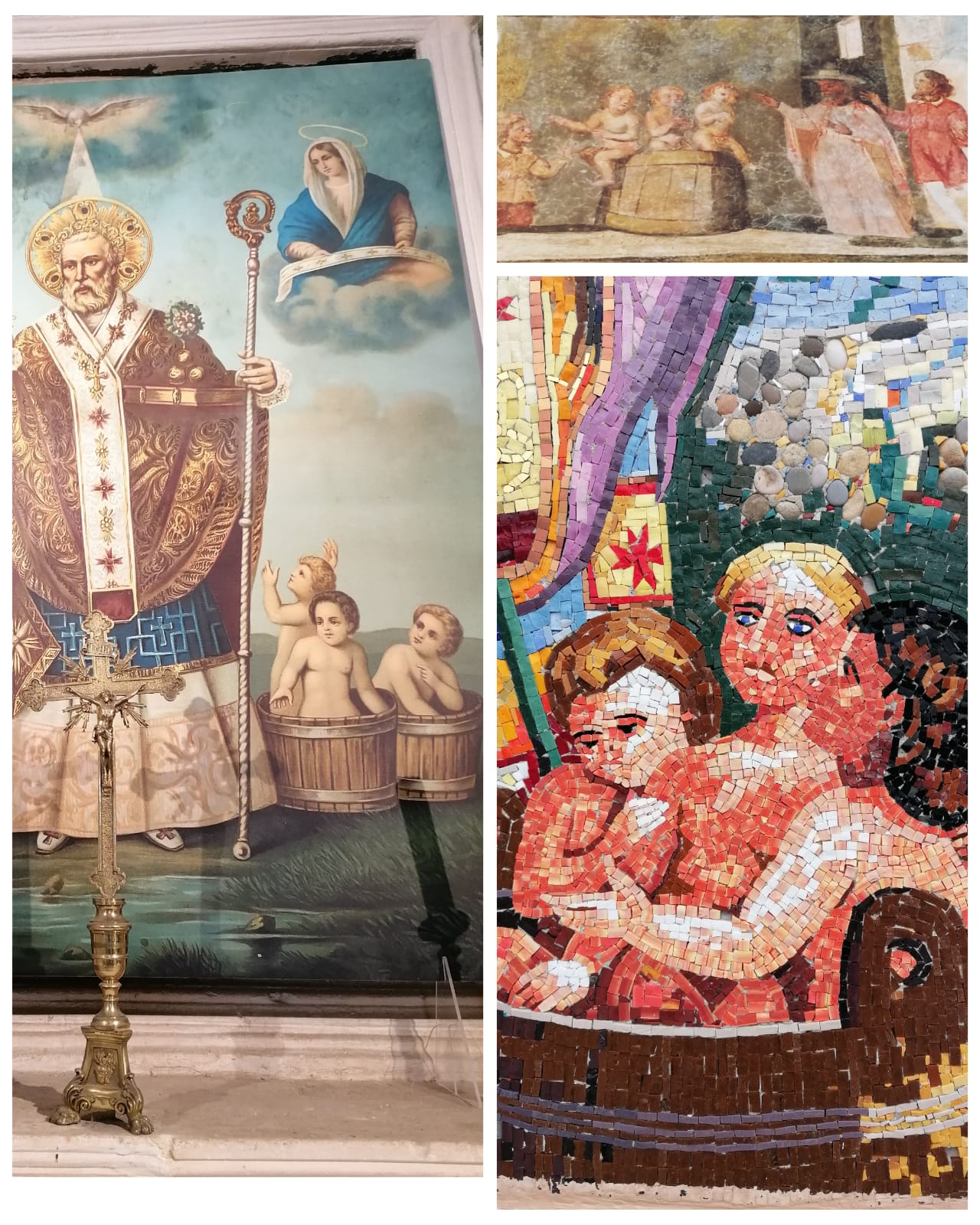
En route, in a nondescript church in a nondescript neighbourhood, we found an eye-catching mosaic of Saint Nicholas (270-343 AD), our Saint of the Day.
Born in Patara (Turkey), Nicola was a wealthy orphan whose generous habit of anonymous gift- giving gave rise to his identification as Santa Claus (Saint Nick). Bishop of Myra, he was exiled and imprisoned under the Emperor Diocletian’s persecutions. He died on the 6th of December – his feast day and Laurianne’s birthday – and his remains are said to be interred in the Basilica di San Nicolás in Bari, north of Brindisi.
Medieval myth tells of how he resurrected three school children. A butcher had murdered them during a famine and hidden them in a pickling barrel to be sold as pork.
Day 22: (20 May 2026)
S. ITALY | SALENTO COAST: “Signora, materassi, materassi, signora” hails the passing merchant truck stuffed with mattresses for sale as I sat on the dry-stone wall at the crossroads waiting for Lee who had vanished after driving around the corner to park the car.
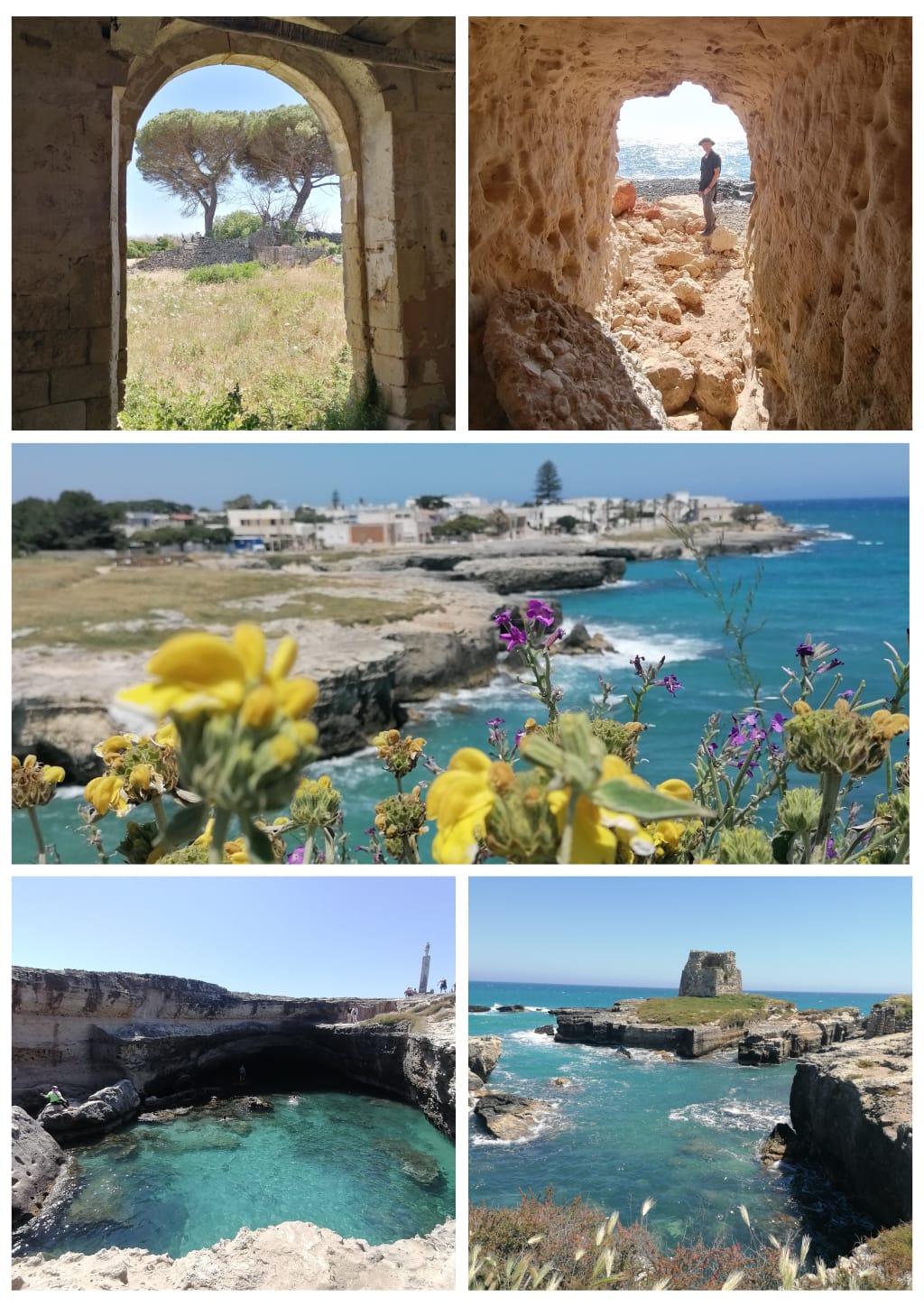
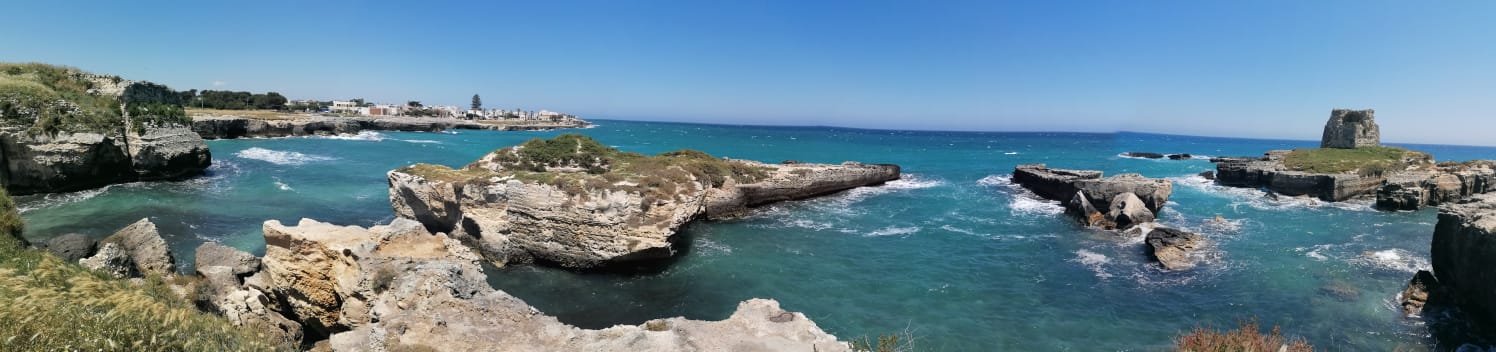
After this somewhat rocky start to a bright, blowy, blue-sky day, we explored Roca Vecchia with its crumbling limestone cliffs and ruins, turquoise seascapes, cliff-diving ‘grottoes of poetry’ and sweeping pine-fringed beaches awaiting the summer crowds with furled umbrellas.
Some have already arrived. Pelotons of multi-coloured cyclists swish by to the southern Italian anthem of ‘Volare! Nel blu, dipinto di blu’ (‘To fly in the blue; Painted in the blue’).
Day 23: (21 May 2026)
S. ITALY | OTRANTO: 10,000 years of human creativity was in evidence today as we explored another of Italy’s 50+ World Heritage sites.
Otranto (pop. 5,000) marks Italy’s easternmost point where the Ionian and Adriatic Seas converge. On a clear day you can see the mountains of Albania.
Otranto was a strategic harbour as early as the 6th century. But it was the caves that were the foundation of human settlement in the region – from Paleolithic hunter-gathers (14,000-8,000 years ago), Neolithic farmers and livestock breeders (12,000-7,000 BC) to Byzantine refugees escaping iconoclastic persecution (4th-9th C). Norman and Arabic invaders followed. All left their mark in the caves and cathedrals and castles that have survived.
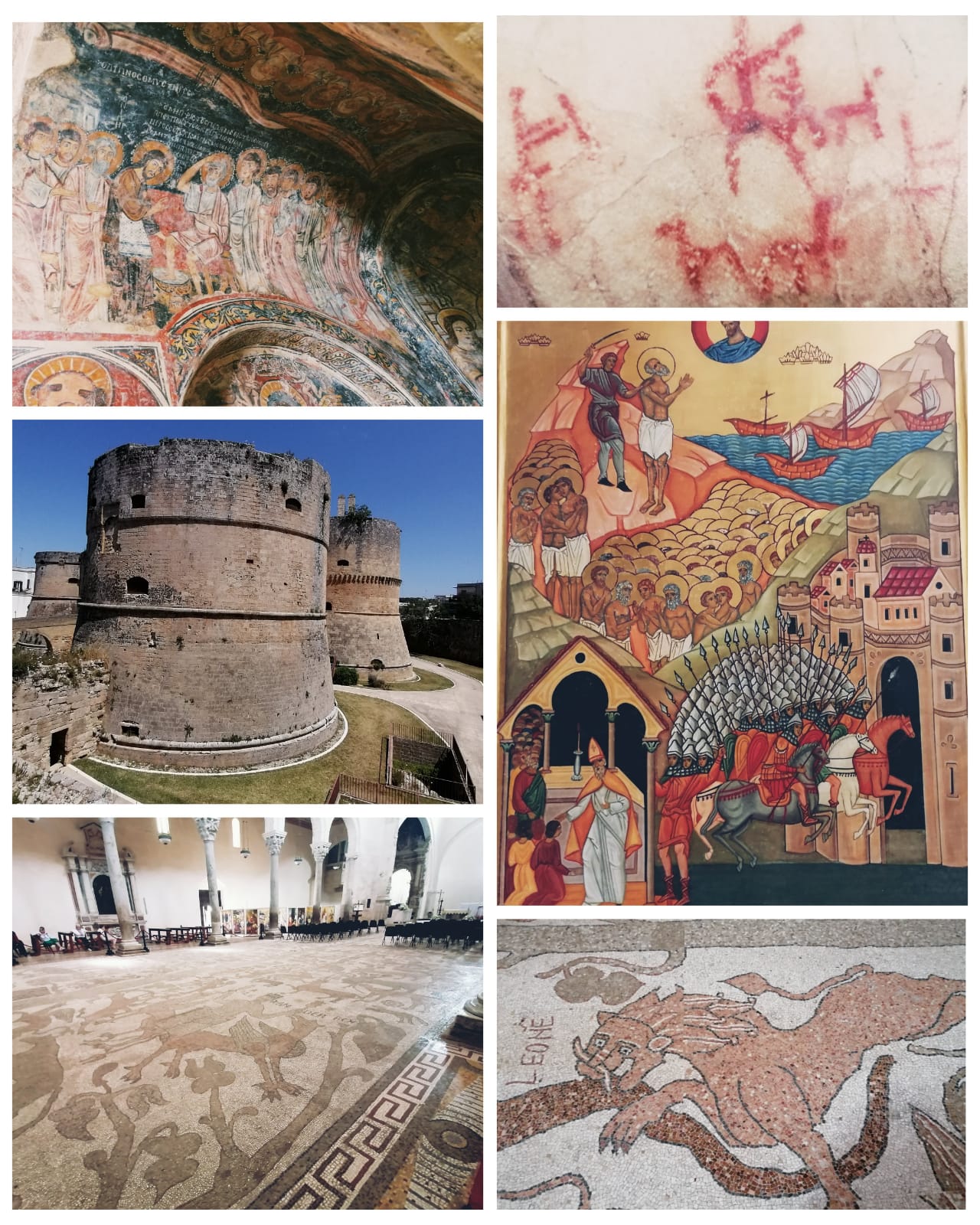
South of Otranto is a cave complex with paintings of red ochre and black bat guano as old as 5,000-6,000 BC. Discovered in 1970, Grotto dei Cervi is one of the most important sites of post-Paleolithic parietal (wall) art in the Mediterranean. Closed to visitors, we only saw photographs of the cave paintings, which bear striking similarities to our San rock art – priapic hunters, stick animals, handprints and the spirals and geometric dots and lines of trance.
The Greek Chiesa di San Pietro is Otranto’s oldest surviving church (9th-10th C). It preserves Byzantine and Western frescoes, some five layers deep. ‘The Last Supper’ is as old as the church. Above the altar is a remnant of a Kufi incantation to Allah, testimony to a period of coexistence and co-mingling of Byzantine, Western and Arab cultures.
The biggest drawcard, however, is to be found in the Basilica di Santa Maria Annuziata (1088-12th C). One of the best-preserved medieval mosaic floors in Europe, the Tree of Life is 52 metres long, 16 metres wide and is made up of 10 million individual tiles of glass paste and terracotta. It was completed in three years (1163-1165) by a monk called Pantaleone.
While the fantastical floor and the Moorish ceiling have survived, the library of the Abbey of Saint Nicola – one of the richest repositories of Hellenic literature in the West – did not. It was burned by the Turks in 1480. On the 28th of July, their ship landed near Lake Alimini, close to where we were staying. On 11 August, Otranto fell. The bishop was killed, along with 800 residents. Whether they were killed for religious or political reasons, the bones of the ‘martyrs’ can still be seen in the Basilica di Santa Maria Annuziata.
While Otranto was reclaimed by the Christians within a year, its fall galvanised King Ferrante (Ferdinand 1 of Napoli) to improve the coastal defense system. The result was the Aragonese Castle of Otranto (1485-1498).
Minds blown 🤯 we braaied 🔥.
Day 24: (22 May 2026)
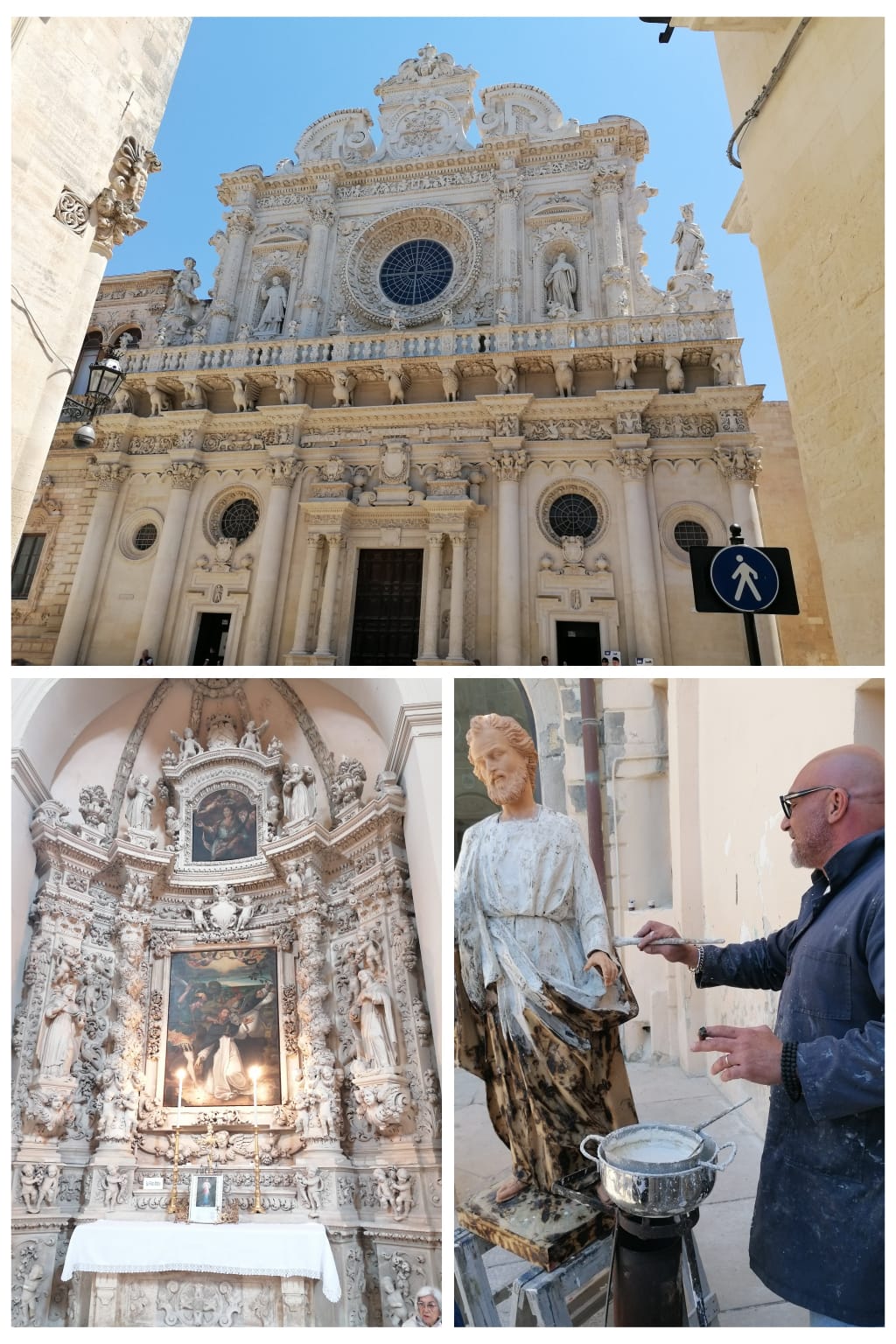
S. ITALY | LECCE: Our park bench lunch this afternoon overlooked a second-century Roman amphitheatre where blood sports once entertained 25,000 people. Today, Lecce’s main attraction is its 15th- to 17th-century Baroque churches, carved from the soft local sandstone known as pietra leccesse. The humble olive made the ‘City of 100 Churches’ possible. The production and export of a smokeless lamp oil pressed from olives financed the building boom. The lace-carved stone of Lecce Baroque features spiral columns, smiling cherubs, acanthus leaves and religious symbols like the pomegranate, the apple, the pine cone and the grape.
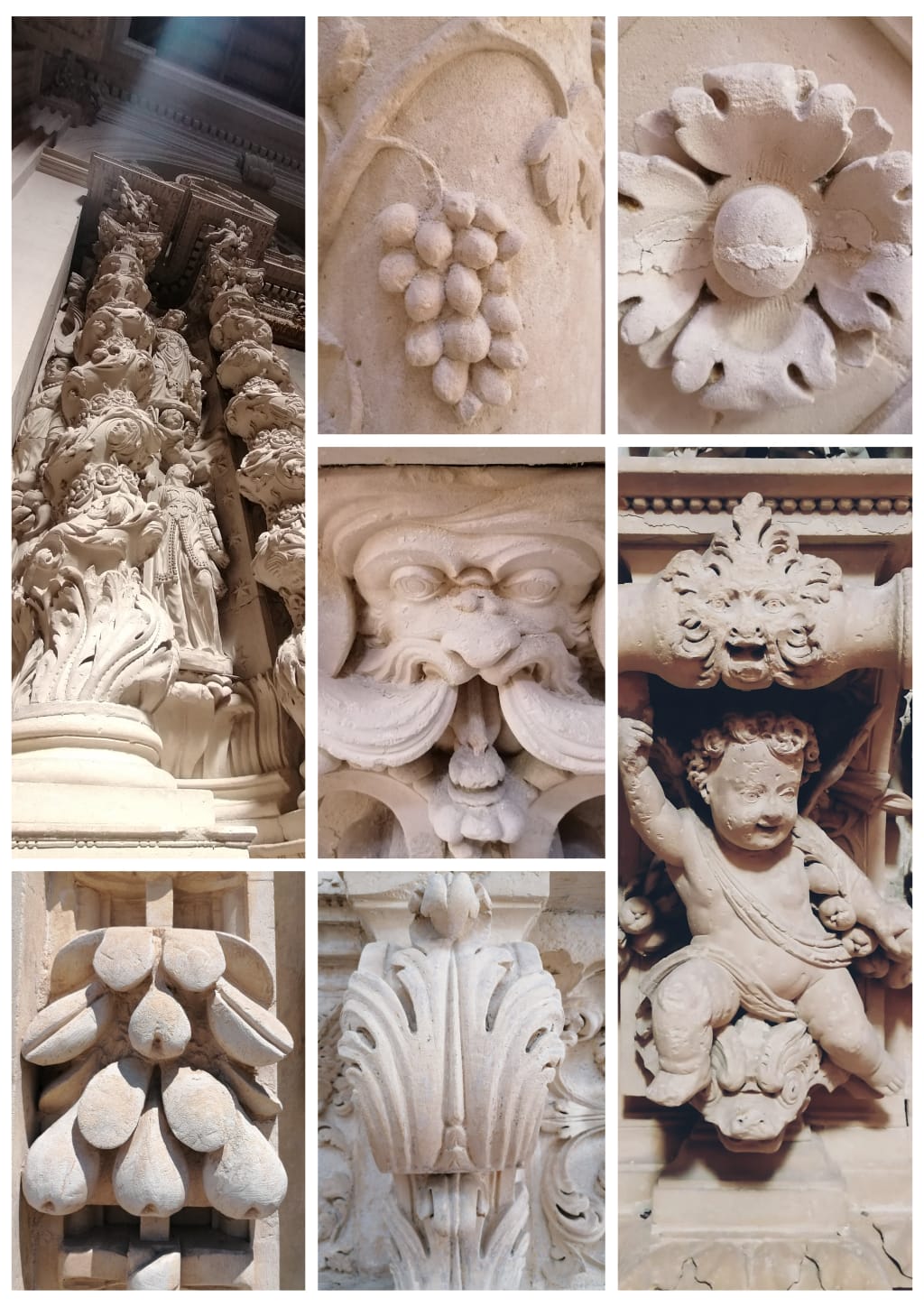
Lecce is also known for its papier mache (cartapesta) artists. The 16th-century technique, imported from Spain, is still in demand today for making portable religious statues for use in religious processions.
Day 25: (23 May 2026)
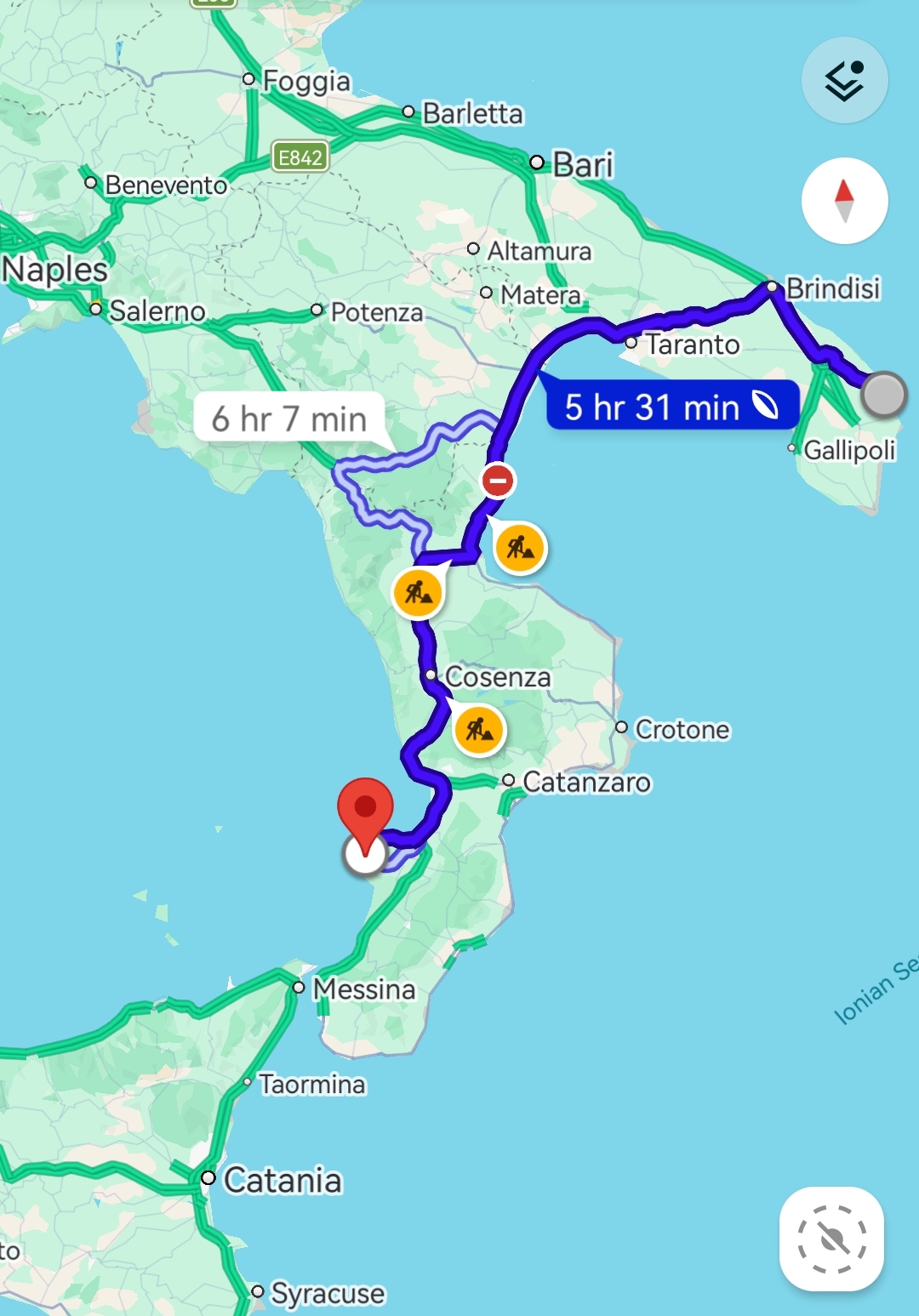
S. ITALY | TROPEA (CALABRIA): Heel to toe, we drove 463 kilometres across the boot of Italy today. ‘As the crow flies’ is NOT an Italian idiom. After so many millennia, the roads do not lead to Rome; they are not linear; they have no shoulders; roundabouts spin you off like a pinball machine; speed limits oscillate like a drunken sailor; tractors and tourist treninos (open-air mini-trains) traverse state highways, which pass through villages of crumbling cliffside casas. ‘What goes up, must go down’, in Italy, translates to ‘If going down, one must first go up.’ Offramps entice one to castles, hot springs and Greek temples. We succumbed – to the 6th-century BC Temple of Hera outside of Metaponto for a leg stretch.
Hay bales, fruit orchards and forests, hillside olive terraces, crop-topped pine trees, stony fingerling river beds, the aquamarine shimmer of sea and the last streaks of mountain snow herald summer. We are the first guests of the season. We have come to rest in Calabria, the land of the giant red onion (cipolla rosa) and the prickly pear (opuntia ficus-indica).
Native to Mexico and introduced to the Mediterranean in the 16th century by New World Spanish colonists, the prickly pear is used gastronomically, medicinally and agriculturally and has become an iconic emblem of Calabria and Sicily.
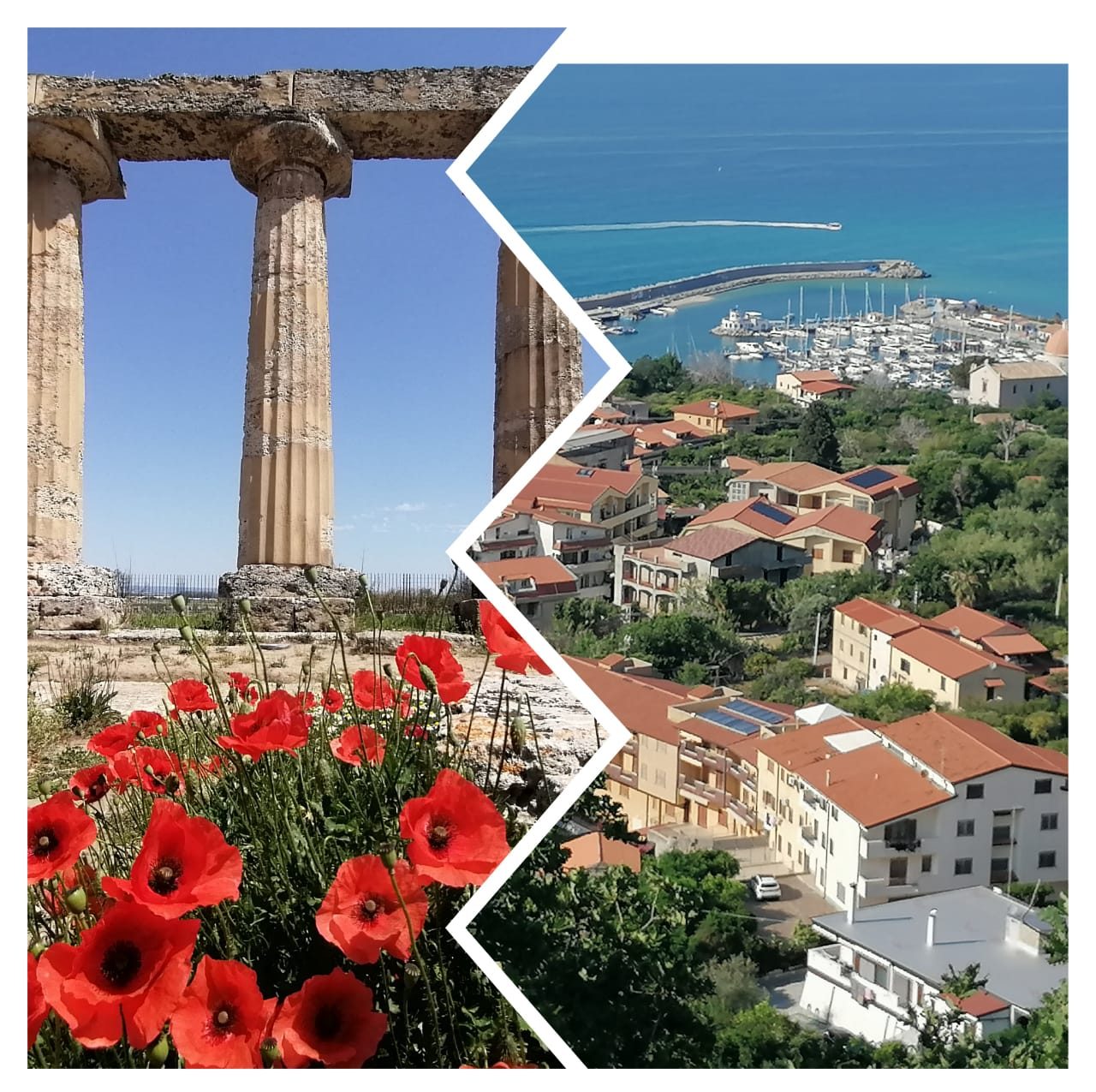
Day 26: (24 May 2026)
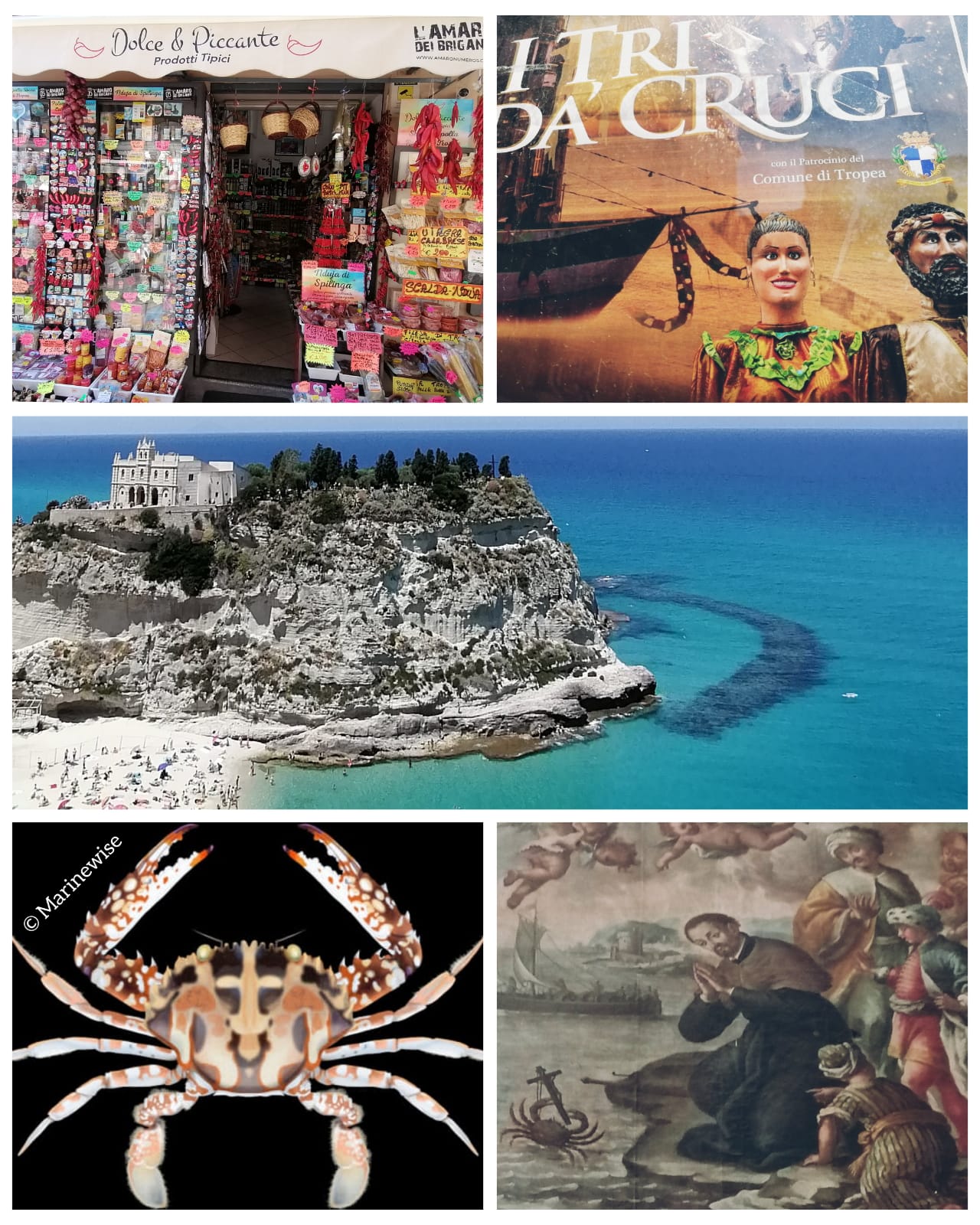
S. ITALY | TROPEA: Crosses, crabs and camels on the Costa degli Dei. It was a cerulean summer Sunday on the ‘Coast of the Gods’ where once “Arab and Turkish pirates … spread terror on camel back”. Three weeks ago, on the 3rd of May, Tropea (pop. 5,661) – another of Italy’s ‘Most Beautiful Villages’ – celebrated the annual Feast of I Tri da Cruci, which welcomes the coming of summer with bonfires, boat-shaped fireworks, “races of the spicy pasta” and the destruction – to frenzied drumming – of a firework-filled camel made of reeds. The Festival commemorates the participation of the citizens of Tropea in the Battle of Lepanto in 1571, which dealt a morale-boosting blow to the fleet of the Ottoman Empire in the largest naval battle in Western history since classical antiquity. The Jesuits arrived in Tropea in 1594 and built the Church of Jesus in the early 17th century.
Saint of the Day
In 1546, the co-founder of the Jesuits and ‘apostle of the Indies’, Saint Francis Xavier (1506-1552), was on board a ship to Malacca (Malaysia/Indonesia). He stilled a violent storm with his crucifix, but lost it to the waves. After the ship made it to shore, a crab scuttled out of the sea with the lost crucifix. To this day, it is said, all crabs of this species (Charybdis feriata) have a cross-shaped mark on their shells.
Day 27: (25 May 2026)
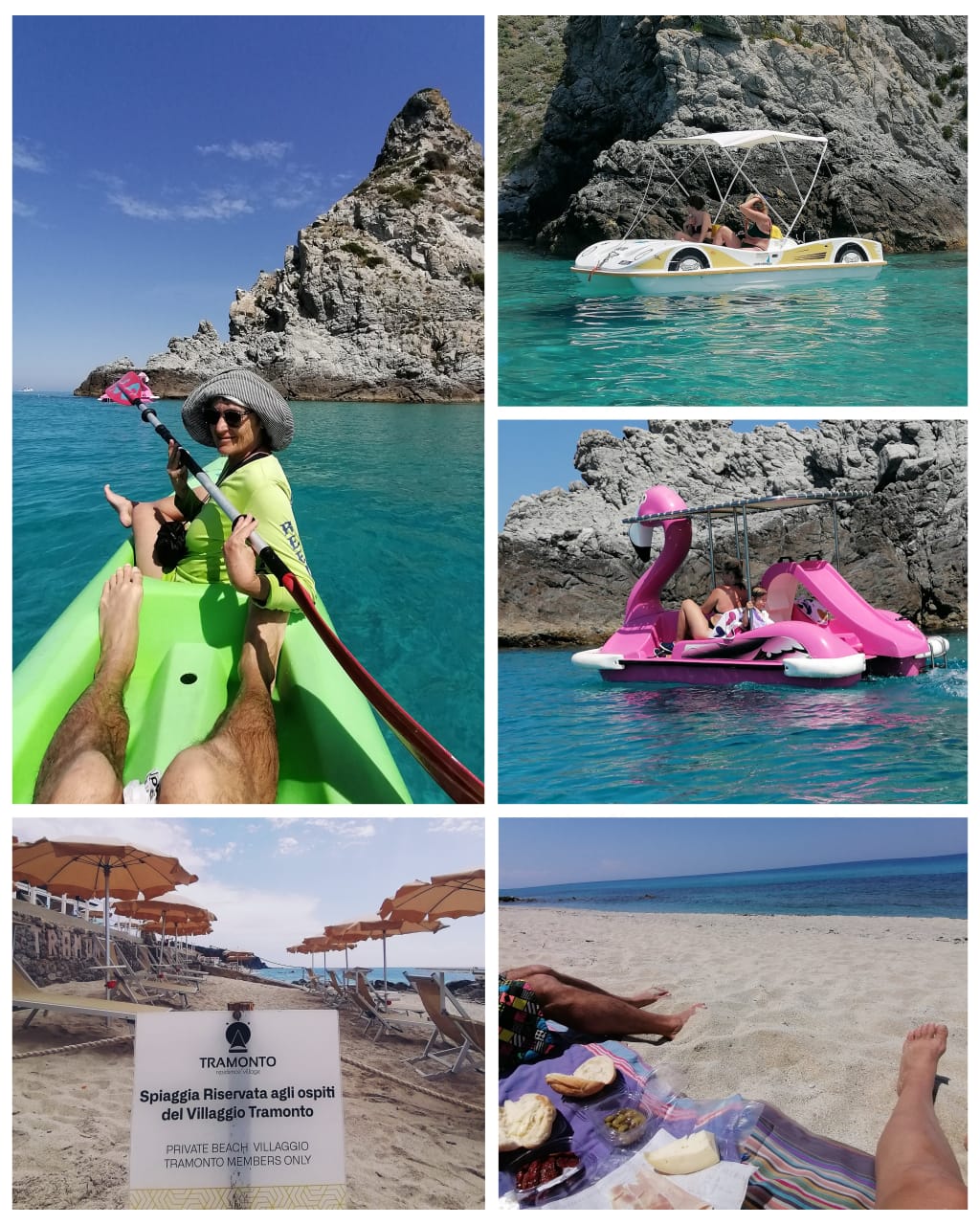
S. ITALY | TROPEA: We passed on the pedal-boats and paddled instead, south of Tropea, past granite cliffs peppered in prickly pears and pebble beaches bristling with umbrellas. The stretch of sand without umbrellas is usually the spiaggia libera (free beach), which is where we picnicked, before heading for the hills and the village of Spilinga.
Dish of the Day
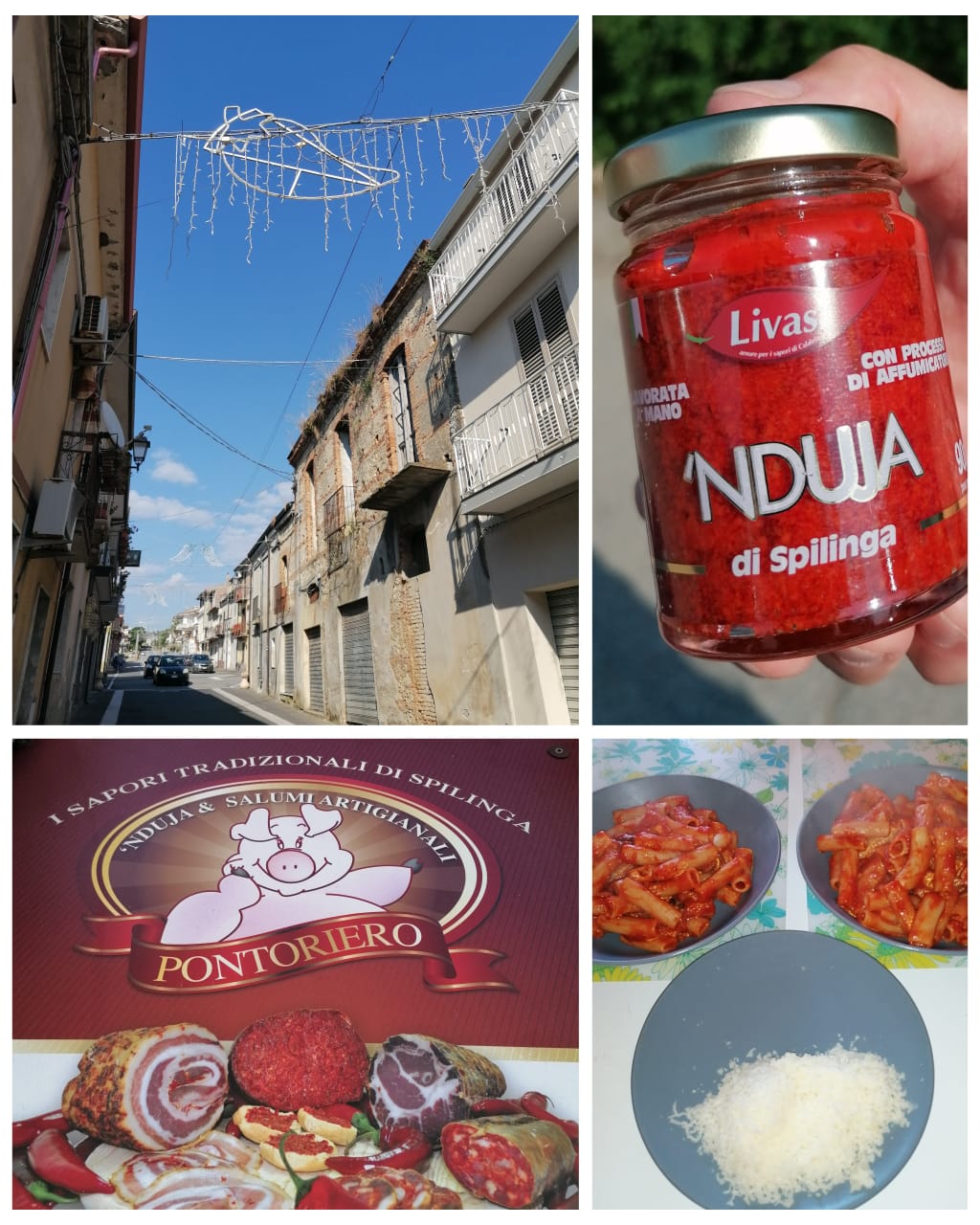
Calabrians like it hot. The local speciality is a chili-spiced sausage called Nduja. The village of Spilinga (pop. 1, 665) is famous for its spicy, spreadable salami, which originated as a peasant dish that used scraps of pork and a local volcanic-ash-enriched chili. We dined on ‘Pasta a la Lee-Wee-Gee’ tonight – elicoidali pasta – a shape from Puglia – and an Nduja-infused passata sauce. And to cool things down, there’s nothing like gelato.
Day 28: (26 May 2026)
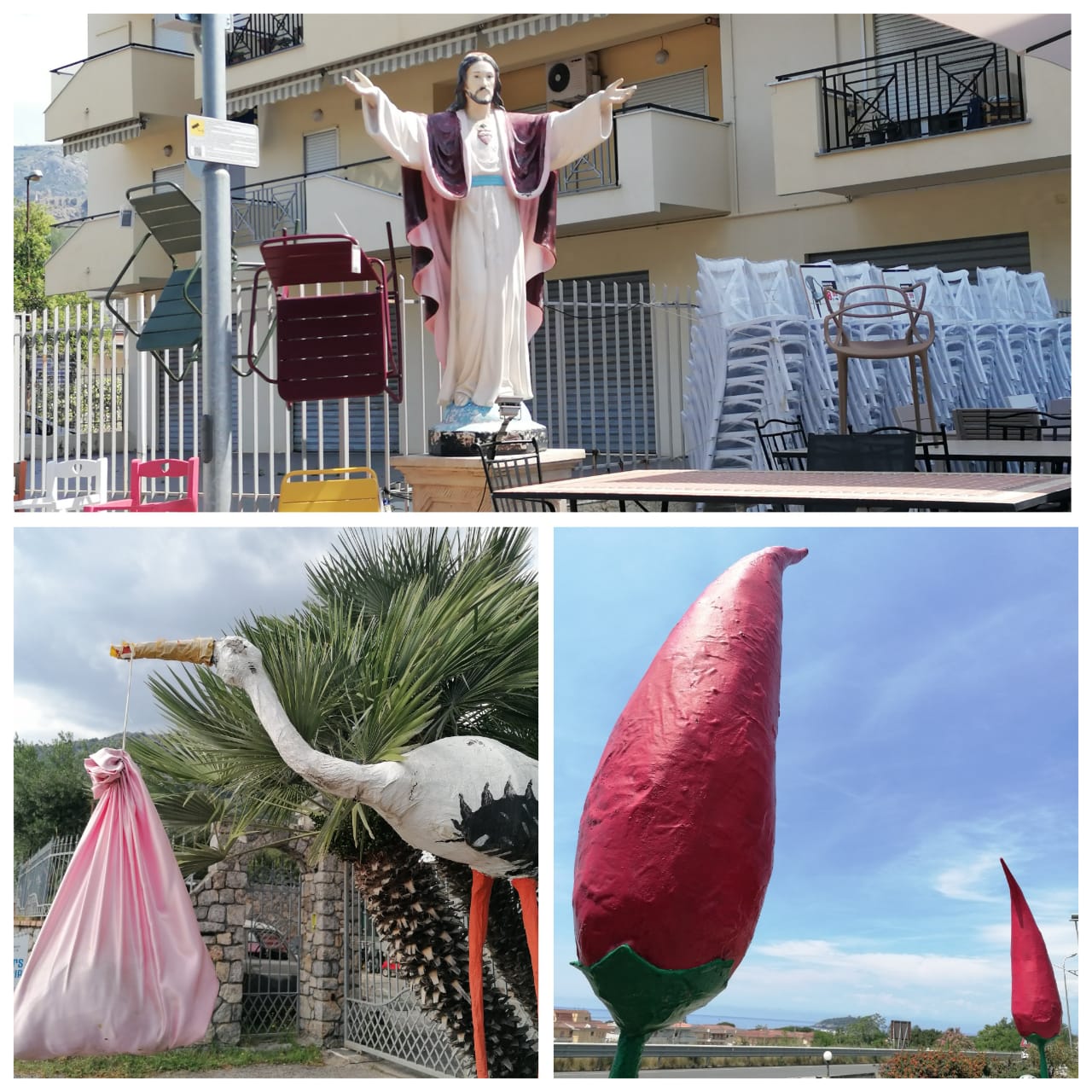
S. ITALY | ACQUAFREDDA (BASILICATA): The SS18 is purportedly Italy’s most scenic road. After driving half its 406-kilometre-length from Tropea in Calabria to Acquafredda in Basilicata, who are we to disagree?
Road tripping in Italy is slow-going – for all the right reasons. Flanked by long, flat stretches of undeveloped, umbrella-free beaches on one side and farmland on the other, with the mountains an ever-present backdrop, the road gyrates and undulates, past farm stalls – red onions give way to watermelons – fresh pasta and Prodotti Tipici delis, with a mouth-watering array of local cheese, salami, prosciutto, pesto, pickles and paninis.
Fairy-tale villages and intriguing ruins populate the craggy heights and signs for hot springs (terme) and grottoes clamor for attention, vying with rose-and-cream terracotta towns with names like Diamante. Like icing on a wedding cake, they decorate the low-slung promontories that jut into the sea.
Fittingly, we began this leg of the trip on the Tyrrhenian Sea and are ending it here in a little village with black volcanic beaches called ‘Cold Water’. While snorkelling is apparently rewarding we gave it a miss. Summer has yet to ascend to these depths.
Day 29: (27 May 2026)
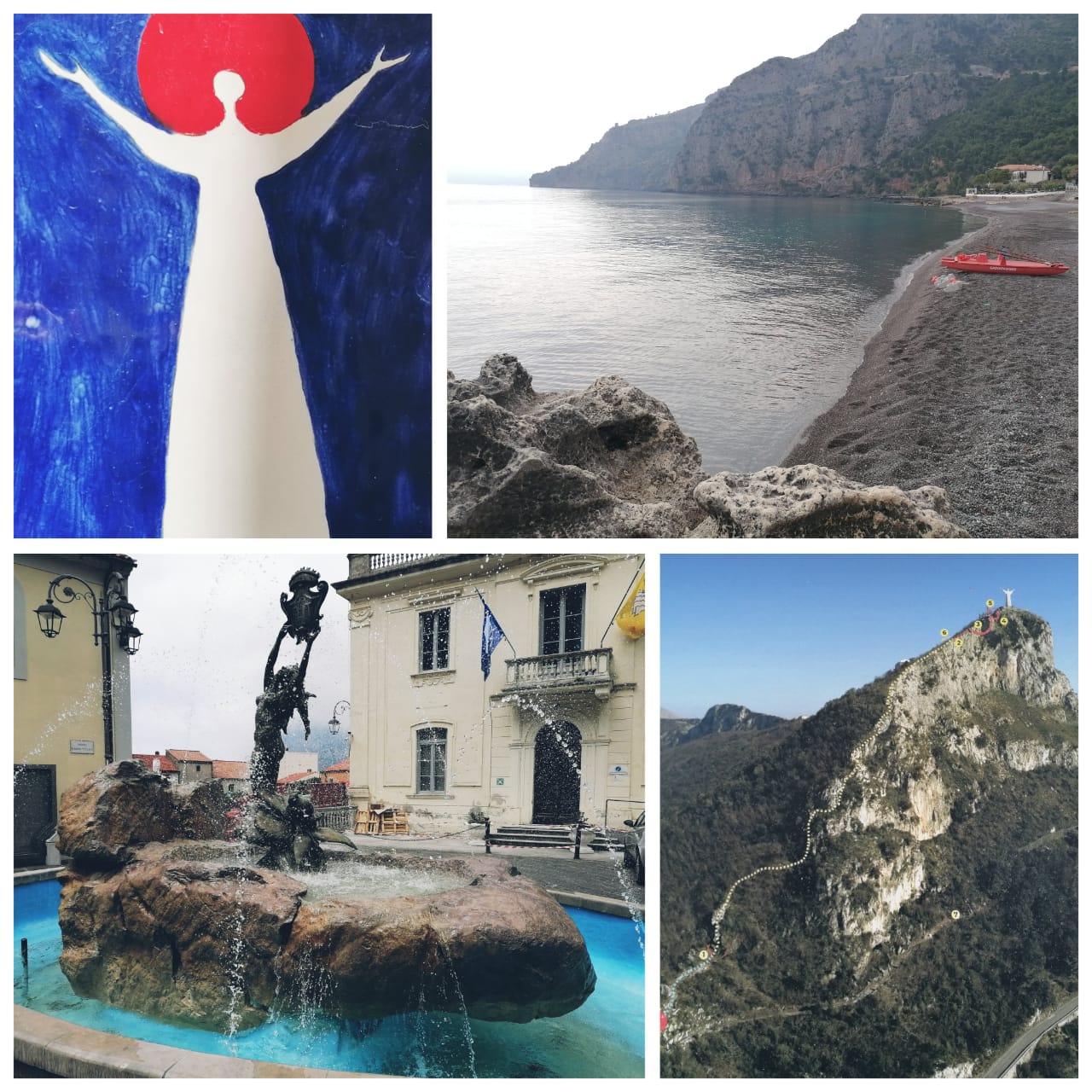
S. ITALY | MARATEA: We ended our stay in southern Italy on a high note today although we never reached the summit of Maratea’s Monte San Biagio and its 22-metre-tall marble statue of Christ the Redeemer, as the view was lost to the clouds. Formerly dedicated to Minerva, the Roman Goddess of Wisdom, the mountain was rebranded in the Christian era as a tribute to the 4th-century monk, healer, bishop and martyr, Saint Blaise, whose remains are said to be housed in the Basilica on the heights.
Incidentally, Świebodzin in western Poland 🇵🇱 has the world’s tallest Jesus statue (33m); Rio de Janeiro, Brazil 🇧🇷 (30m) is not even in the world’s top three.
Saint of the Day
Maratea’s patron saint was born and martyred in Lesser Armenia (Sivas, Turkey). Armenia was the first state to officially adopt Christianity in 301 AD. Bishop of Sebastia, Blaise was forced by persecution into hiding where he lived as a cave-dwelling hermit. Having reputedly saved the life of a child choking on a fish bone, Blaise is associated with the healing of ailments of the throat. He is also the patron saint of wool combers for the similarity to the iron comb or rake with which he was tortured before being beheaded in 316 AD. A shipwreck some 400 years on brought the saint’s remains to Italian shores, as they were being transported to Rome in the wake of the iconoclastic persecutions in Armenia. He is credited with saving Maratea from being bombed during WWII.
Day 30: (28 May 2026)
€ Travel Tally: Southern Italy
Average expenses (for 2) over 29 nights (ZAR to EUR = R19 to €1):
● Accommodation: €80 (R1,520)/day (self-catering with terrace)
● Food & drink: €30 (R570)/day (mostly supermarkets, delis)
● Transport: €46 (R874)/day
– Car rental: €33 (R627)/day
– Fuel, tolls, parking: €13 (R247)/day
● Activities: €12 (R228)/day
● Daily average: €174 (R3,306)/day
SICILY
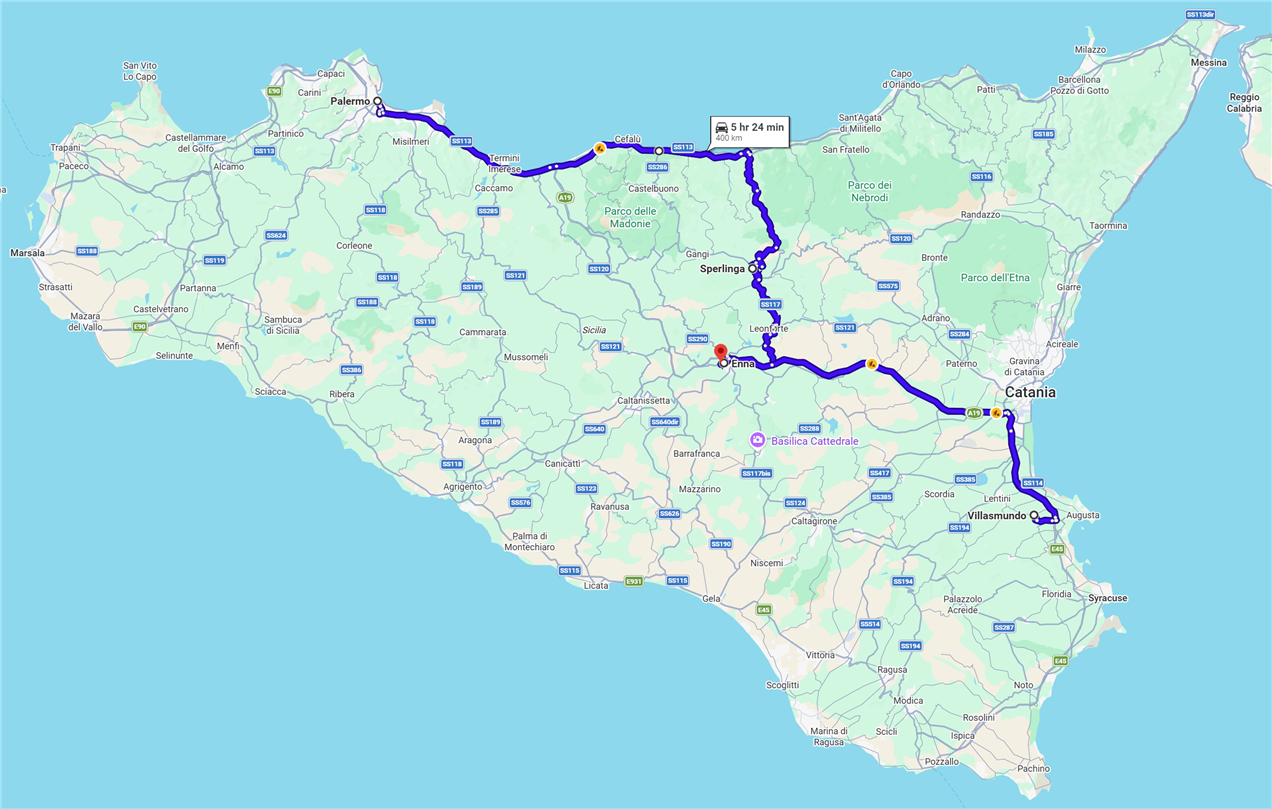
Day 31: (29 May 2026)
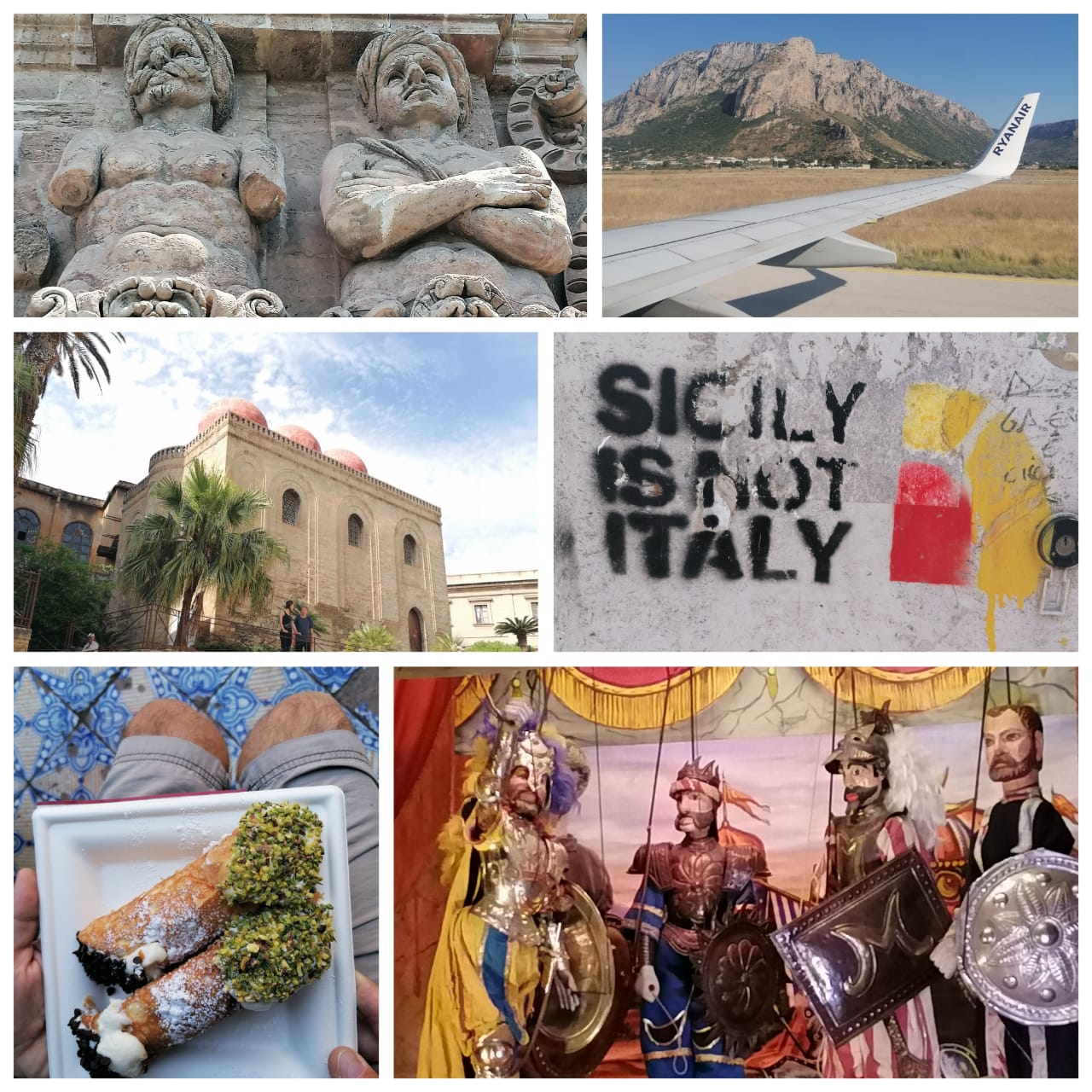
SICILY | PALERMO: We were out of the starting blocks yesterday in a race to get the rental car back to Rome by 13:00. We made it, despite an unplanned ‘spit stop’ for Lee to expel something he had eaten that disagreed with him.
An hour’s hop by plane deposited us on the largest island in the Mediterranean. Hot, dry, dramatic, grubby, graffitied, quirky, colorful and multicultural, Palermo, the capital of Sicily, is an assault on the senses.
The largest island in the Mediterranean, Sicily’s strategic position between Africa and Europe has given rise to a history of foreign domination. The prehistoric tribes from which it got its name, followed by the Greeks, then the Romans, the Phoenicians, the Byzantines, Arabs, Normans and the Spanish all left their mark, giving the island an identity distinct from the mainland. As a result of this distinctive history, culture and language (Sicilianu), Sicily is one of Italy’s five autonomous regions, controlling multiple sectors of the economy and the taxes collected within its borders.
The iconic symbol of this melting pot is the hand-painted ceramic vase known as the Testa di Moro (Moor’s Head). Betrayed by her Moorish lover, who had failed to disclose his married status, a young Sicilian woman beheaded him and used his skull to plant basil on her balcony. The vases fashioned as male and female heads are traditionally given as wedding gifts.
The country’s population of 6 million swells to 25 to 30 million in July and August as the continent goes on holiday. We joined the first wave today, gaping at the Norman-Arab churches and Europe’s largest theatre, the Massimo. Alas, the Cathedral was closed for a film shoot (Young Sherlock 2). We ogled the street food markets, marvelling at the metre-long snake zucchini (cucuzza), passing on the local spleen and ricotta burger, but scoffing brioscia (brioche) and saffron-rice arancina balls for lunch, and attempting suicide by sucrose for tea. We sampled our first cannoli in the cloister of a former monastery before attending a puppet show that preserves a tradition dating back to 1800. Three families – where once there were thirty-two – keep Opera dei Pupi alive in Palermo.
Dish of the Day
Cannoli, Sicily’s most famous dessert, emerged during Arab rule between the 9th and 11th century, either from the harem or the convent, depending on which source you consult.
Also known as ‘Turkish hats’, the deep-fried, tube-shaped, ricotta-filled pastry is named after a reed (canna). We sampled the traditional monastic version in the flowery courtyard of what was once the richest monastery in Palermo. Home to Dominican nuns from 1311 and later a Benedictine Abbey, the last cloistered nuns, “famous for the exquisite almond sweets they sold through a rotating wheel”, left in 2014. Their recipes live on, and an on-site bakery I Segreti del Chiostro (‘The Secrets of the Cloister’) produces an array of traditional monastic confectionary that can best be described as ‘heavenly’.
Day 32: (30 May 2026)
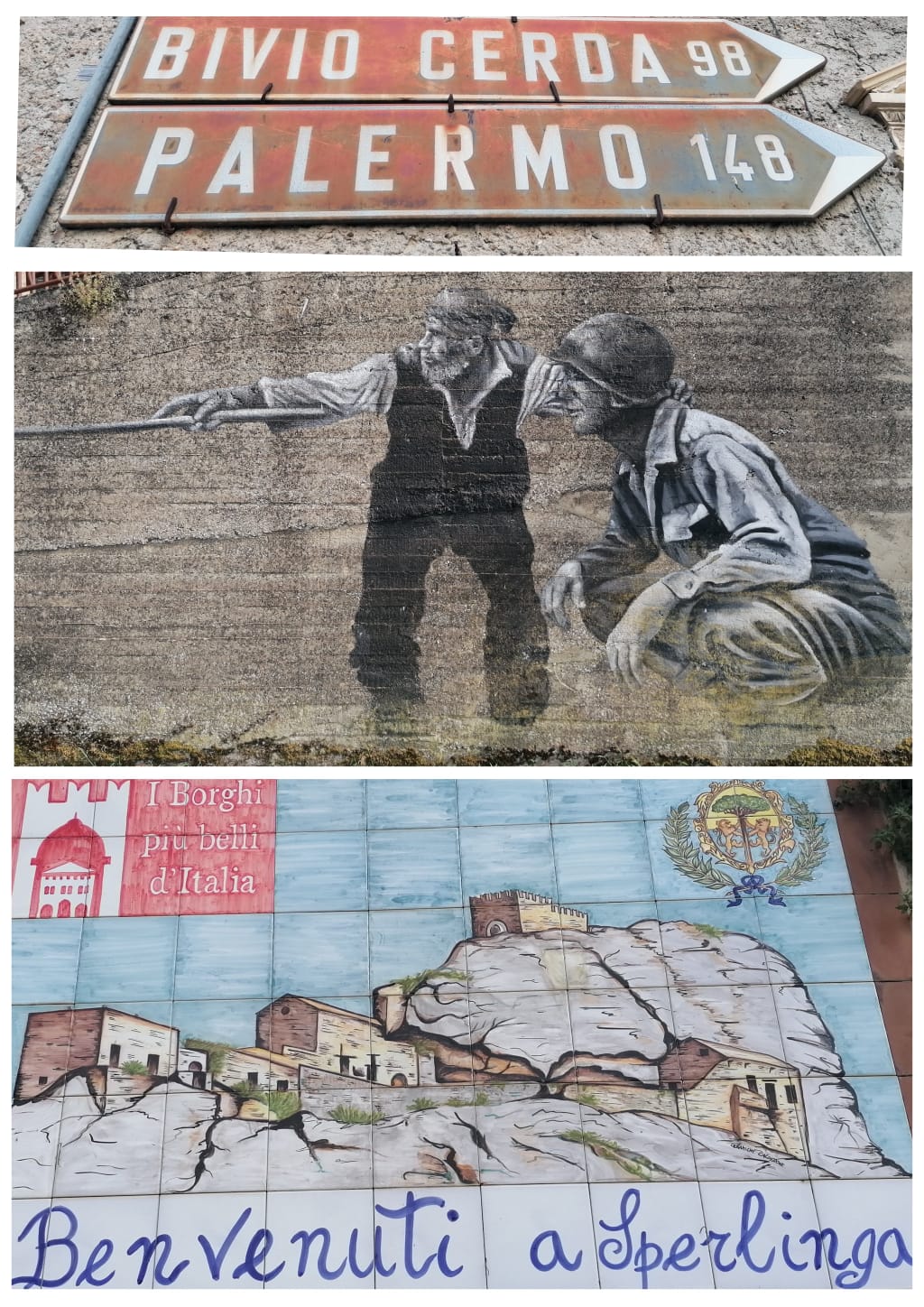
SICILY | SPERLINGA: Old hands, by now, at negotiating Italian roads, we purred out of Palermo in our rental MG and headed for the coastal hot spot of Cefalù, where we munched arancina on a marble bench overlooking the unfurled umbrellas of the start of the Sicilian summer.
Transported by the beauty of the coastal road, we were swept up into the sparsely populated mountain forests, which gave way to sporadic farmhouses and pastures dotted with sheep as we ascended the Appenine Cycle Route – the easy way – to Sperlinga, another of Italy’s ‘Most Beautiful Borghi’. Its name comes from the Greek for ‘cave’ (spelaion), in reference to the dwellings hollowed out of the malleable sandstone since prehistoric times.
The bucolic landscape belies the beating Sicily took during WWII. Up here, in these remote hills, a photographer called Robert Capo captured the arrival of the US armed forces in August 1943 in an iconic photograph that appeared in Time magazine. Overcoming the language barrier – which persists to this day – a local farmer points the way to a US serviceman during the Battle of Troina.
Sperlinga had a walk-on part in other distant wars. A plaque commemorates two local women born in the late 19th century who died in the Triangle Waist Co. fire in New York on 25 March 1911, marking “a turning point in the history of women’s union claims”.
Dish of the Day
A popular street food throughout Italy, the rice balls known as arancini in mainland Italy, arancino in the east and arancina in the west of Sicily are a traditional speciality of the island. Arab settlers introduced rice, the orange and saffron, the three key ingredients of ‘little oranges’. Before the tomato washed up on these shores, the saffron rice balls would have enclosed shredded veal and vegetables. Today, they are cooked in chicken broth with saffron, and shaped into spheres in Palermo or Mount Etna-like cones in Catania. The arborio rice balls are filled, traditionally, with a beef or pork meat sauce (Al ragù) with peas and caciocavallo (‘cheese on horseback’) or with ham and cheese in a white bechamel sauce (Al burro), coated with breadcrumbs and deep fried.
Day 33: (31 May 2026)
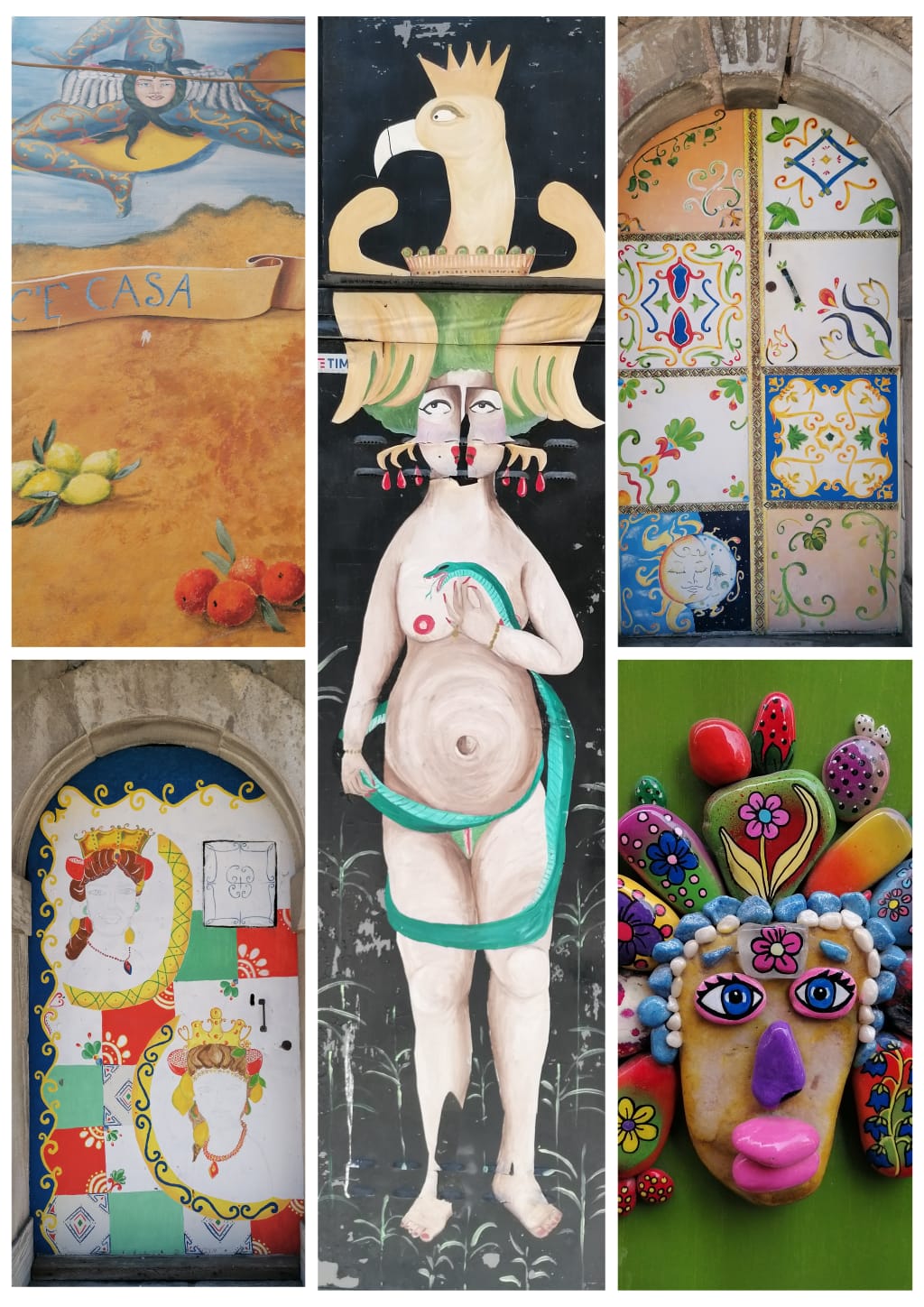
SICILY | VILLASMUNDO: From the crenellated caves of Sperlinga, we descended to the east coast. Mount Etna muscled in on the view, streaked with snow on a blue, cloudless day at high noon. Europe’s most active volcano, and, at 3,403 metres, one of the highest, was docile during our visit but flared up significantly in August, disrupting air traffic for several days. 🌋
Blood oranges and lemons flourish at her feet on the fertile volcanic and alluvial plains, which also produce fine wine. The island has 70 native grape varietals although ‘only’ 16 are used for wine. Sicily has long been renowned for its agricultural abundance. The ‘Granary of Rome’ was the first province of the Roman Empire.
We stayed in a villa near the coast, 30 minutes north of the ancient Greek city of Syracuse, where the distinctive symbol on the Sicilian flag – the Trinacria – first appeared on coins in the 4th century BC. The three legs represent the three corners of the island – Syracuse, Marsala and Messina. The face is that of Medusa, the snake-haired Gorgon of Greek mythology, framed in wings and wheat ears. It is one of the oldest flags in Europe.
Day 34: (1 June 2026)
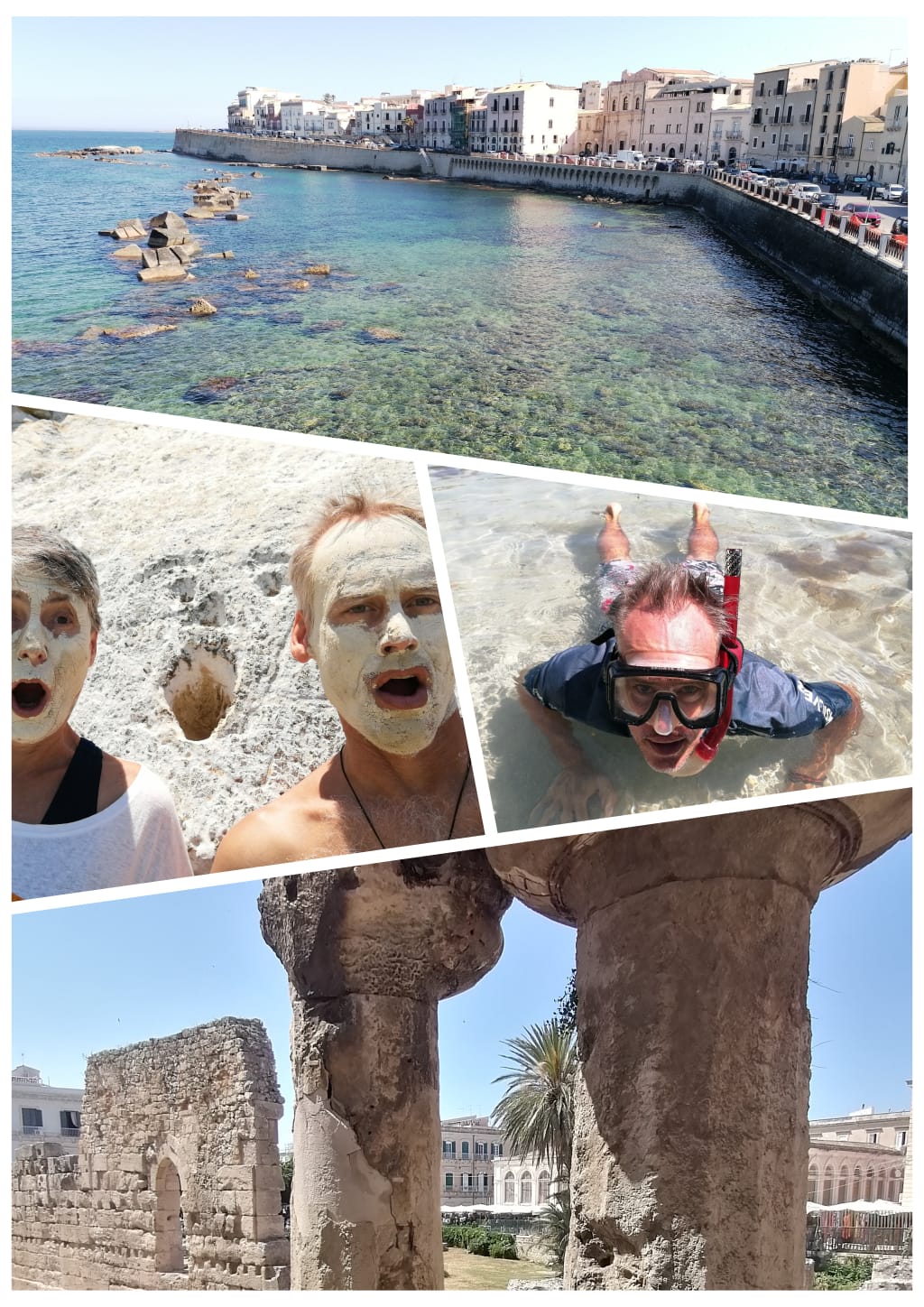
SICILY | SYRACUSE | ORTIGIA: We awoke to church bells, chickens, blue sky and bird song and headed to the beach along with the bikini-clad Ombrellone Brigata – both fit and flabby – and their offspring, on the first day of the summer holidays.
Getting into the swing of things, we scraped white clay from the limestone tufa for face masks, and snorkelled the cool, crystalline waters. While not the Two Oceans Aquarium, we are happy to report that there are fish in the Mediterranean.
We spent the afternoon on the island of Ortigia, where Sicily’s ancient capital of Syracuse was founded, and where Archimedes, the ancient Greek mathematician, physicist, engineer, astronomer and inventor was born (c.287-212 BC). Another GOAT from Syracuse, Enzio Maiorca (1931-2016), was the first free diver to descend below 59 metres, pushing the barrier to 101 metres in his lifetime.
The remains of the 6th-century BC Temple of Apollo bear witness to 2,500 years of recorded history. On a whimsically decorated balcony overlooking the ruins, an elderly man with a white beard rebuked a tourist, “Photograph the monument, not me.” Son of a Jewish baker, ‘Professore’ is a local boy who won a Fulbright Scholarship to study sociology in America. He landed up in Ohio, met Elvis in person after a concert, came home 20 years ago, bought the abandoned building in a run-down part of town that no-one would touch because it was haunted by the ghost of Apollo – and now has a million-dollar view in front of which no one can build. Privacy, however, is the price he has to pay.
Day 35: (2 June 2026)
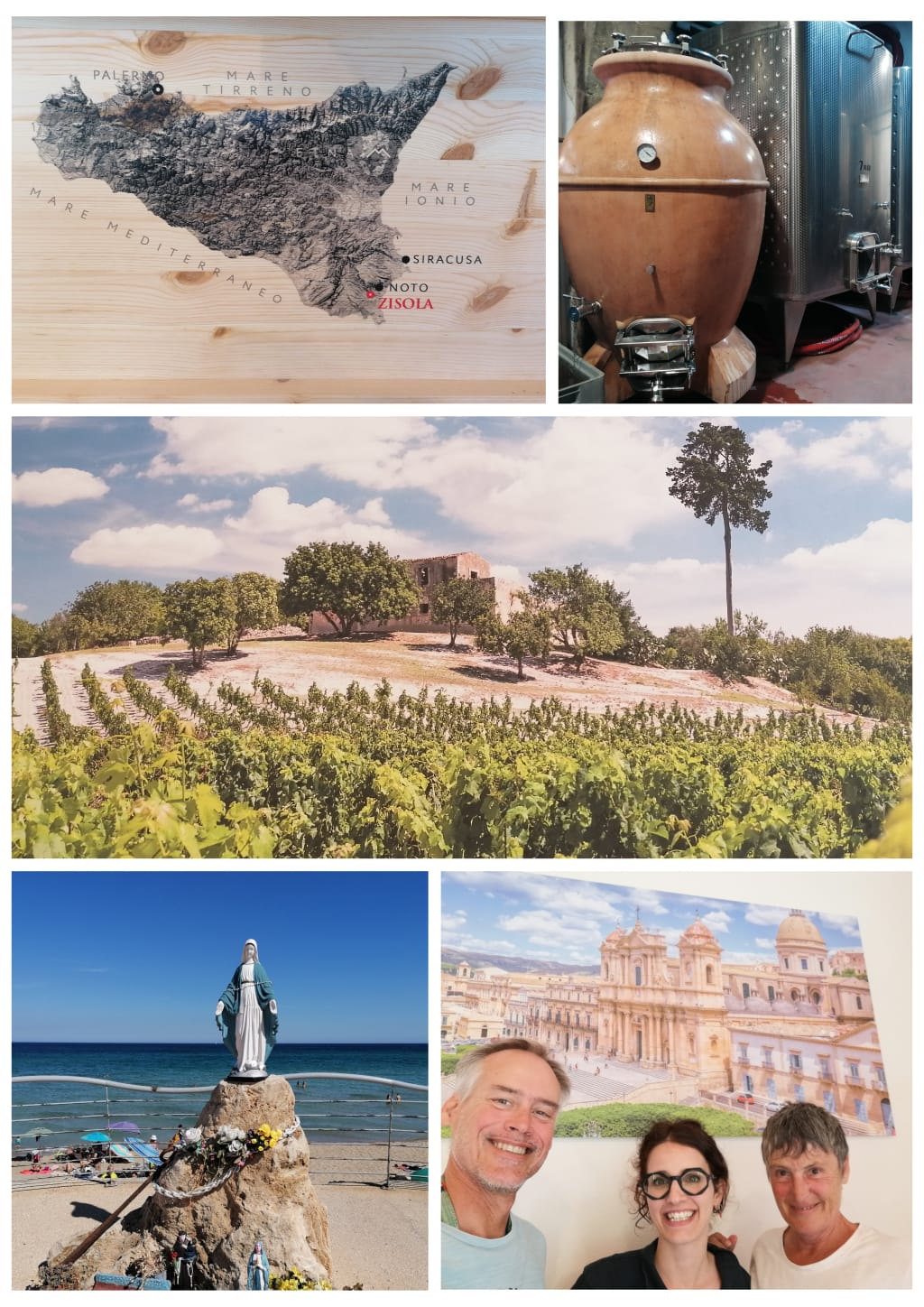
SICILY | MARINA DI AVOLA: Sipping and dipping was the order of the day, which began with a wine tasting and ended with a swim and an impulsive gelato stop which garnered us a hefty parking ticket. 😒
“It’s not so hot today,” said Francesca, our knowledgeable and fluent southern Italian sommelier, as she welcomed us to Zisola Winery. It was 38.5°C. In 2024, it didn’t rain for 10 months.
Overlooking the Baroque World Heritage Site of Noto and within sight of the sea, the citrus farm was acquired in 2003 by a family from Tuscany who have been winemakers since 1435. They planted grapes – the Sicilian red Nero d’Avola and the whites, Grillo and Catarratto, as well as some Pinot Noir. Their organic, handmade wines come from bush vines and only 170,000 bottles are produced a year by a full-time team of 27.
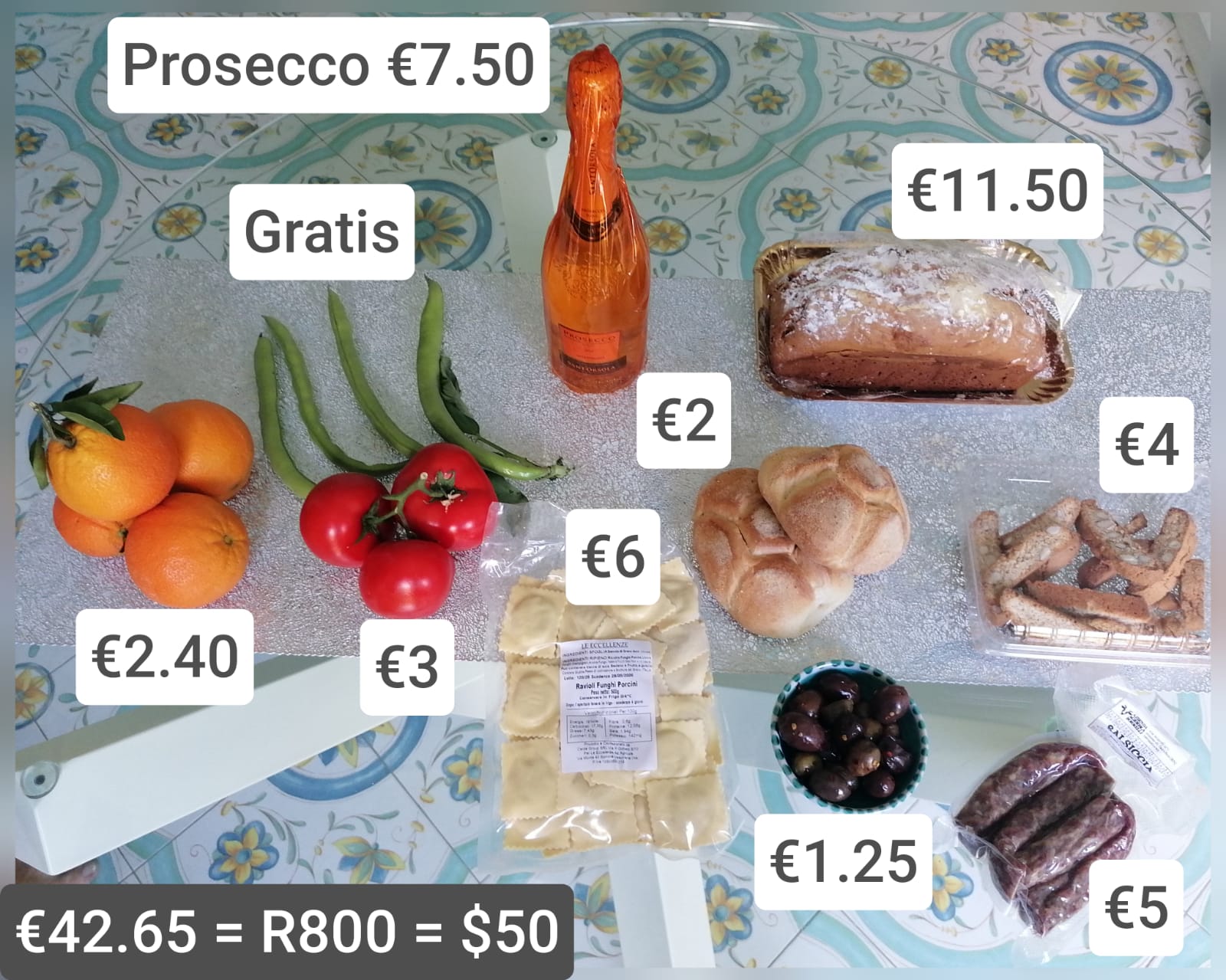
The trend in Italy is towards lower alcohol wines so their wines pack less of a punch than South Africa’s and make for easier drinking. They are affordable too. We’ve been buying bottles of red, white and Prosecco from the supermarkets for between €3 and €7. Zisola wines will set you back between €16 and €46 a bottle.
While the reds – a lighter and a more robust Nero Rosso – were distinguished, and the Grillo a quaffable “swimming pool wine”, the Catarratto was the headliner.
Recreating the ancient method of wine-making, which is said to have originated in the Georgian Caucasus, the Catarratto is fermented in terracotta amphorae before being oaked. It spends three months on the skins being pressed down by hand two or three times a day. The result is a delicate, creamy, honey-dry wine that can age up to 10 years in its thick, dark bottle.
Francesca was generous with her servings, her time and her expertise. Two-and-a-half hours, four wines, an olive oil tasting and a Ragusa black pepper cheese cost us €35 per person.
Drink of the Day
Prosecco, the sparkling wine with a Slovenian name, is Italy’s answer to French champagne and Spanish cava. Named after the village in the province of Trieste with the Slovene name ‘path cut through the woods’, ‘Prosecho’ was first mentioned by an English tourist in 1593. Made in the Friuli and Veneto regions of NE Italy from the Glera grape, the sparkling (Spumante) and fizzy (Frizzante) versions undergo second fermentation inside a steel tank, rather than in the bottle. Since 2020, DOC rules allow the production of a spumante rosé using Glera blended with 10-15% Pinot Nero.
Day 36: (3 June 2026)
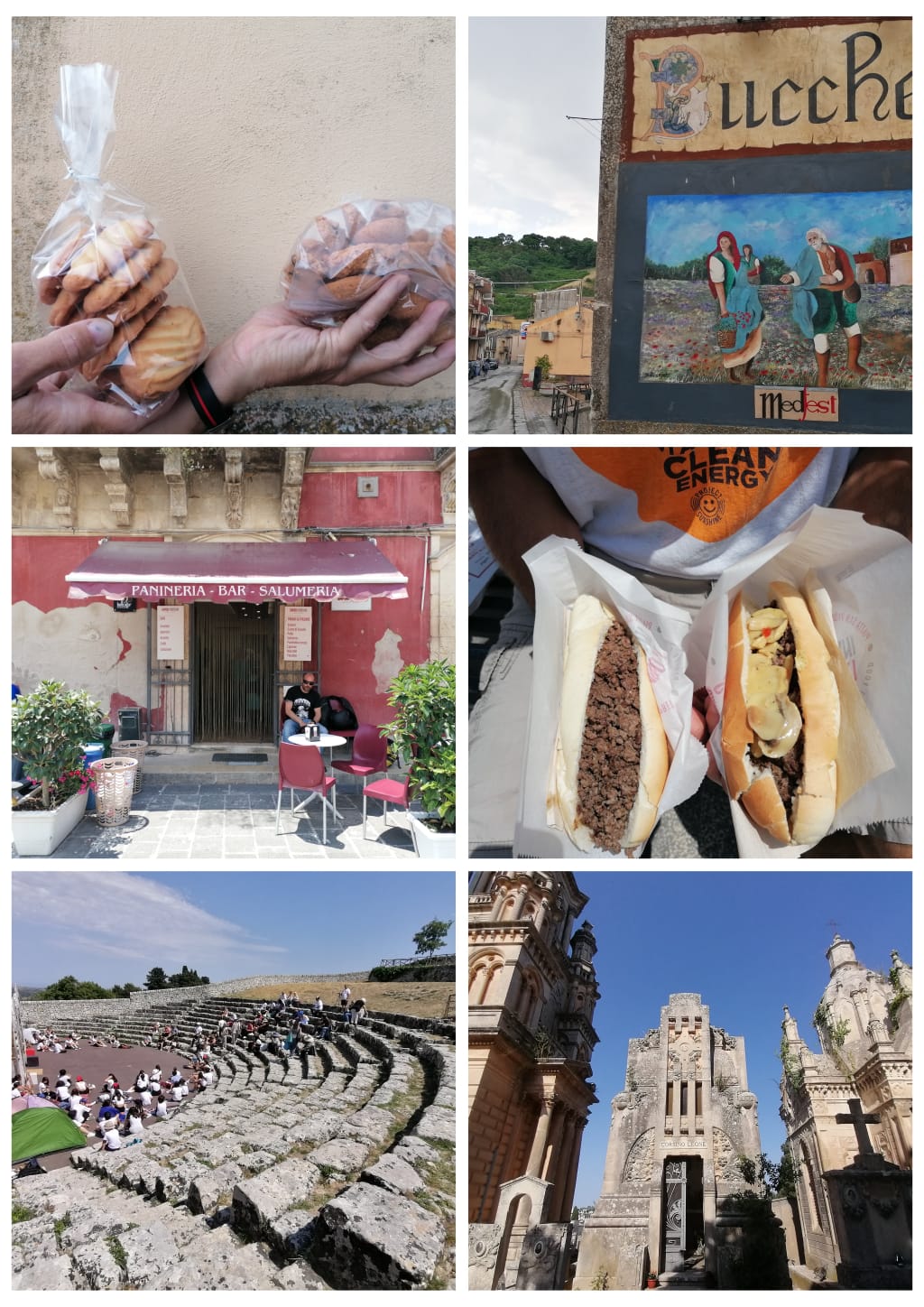
SICILY | PALAZZOLO ACREIDE: Tornante is the Italian for ‘hairpin bend’. Like the roads, and the twisted (tortili) columns of Baroque Leccese, our days often take unexpected turns.
We set off this morning for a village in the hills called Palazzolo Acreide, named for the ancient Greek settlement of Akrai, founded in 664 BC. Along the way, we sniffed out an undercover bakery in Buccheri – another of Italy’s Beautiful Borghi – and were gifted two bags of freshly-baked biscuits; we sampled more of Sicily’s street food – our park bench lunch was panini filled with a rich and tasty horsemeat ragù; we bought dried sausage made of a four-thousand-year-old breed of black pig, and finally made it to the Greek amphitheatre to find a troupe of young drama students from Syracuse rehearsing a production that seemed to merge Shakespeare’s Twelfth Night with The Iliad.
Heading for home, we veered off-script once more, running into Palazzolo’s 19th-century Monumental Cemetery where church-like crypts and sumptuous sarcophagi house generations of illustrious dead.
And then, we braaied. ❤️🔥
Dish of the Day
Eating horse and donkey meat is an Italian tradition that dates back as far as 1,000 BC to the horse-breeding Veneti of Veneto. Horse still features in Venetian cuisine and is consumed throughout Sardinia and Sicily, particularly in the eastern Catania region. A papal ban in 732, intended to preserve Europe’s herds for fighting the Arabs, outlawed a practice that had been widespread throughout Europe. While Italy is still the leading importer of horse meat in Europe, – mainly retired riding horses – 83% of Italians who responded to a 2025 survey said they did not partake, while 17% said they ate it at least once a month.
Day 37: (4 June 2026)
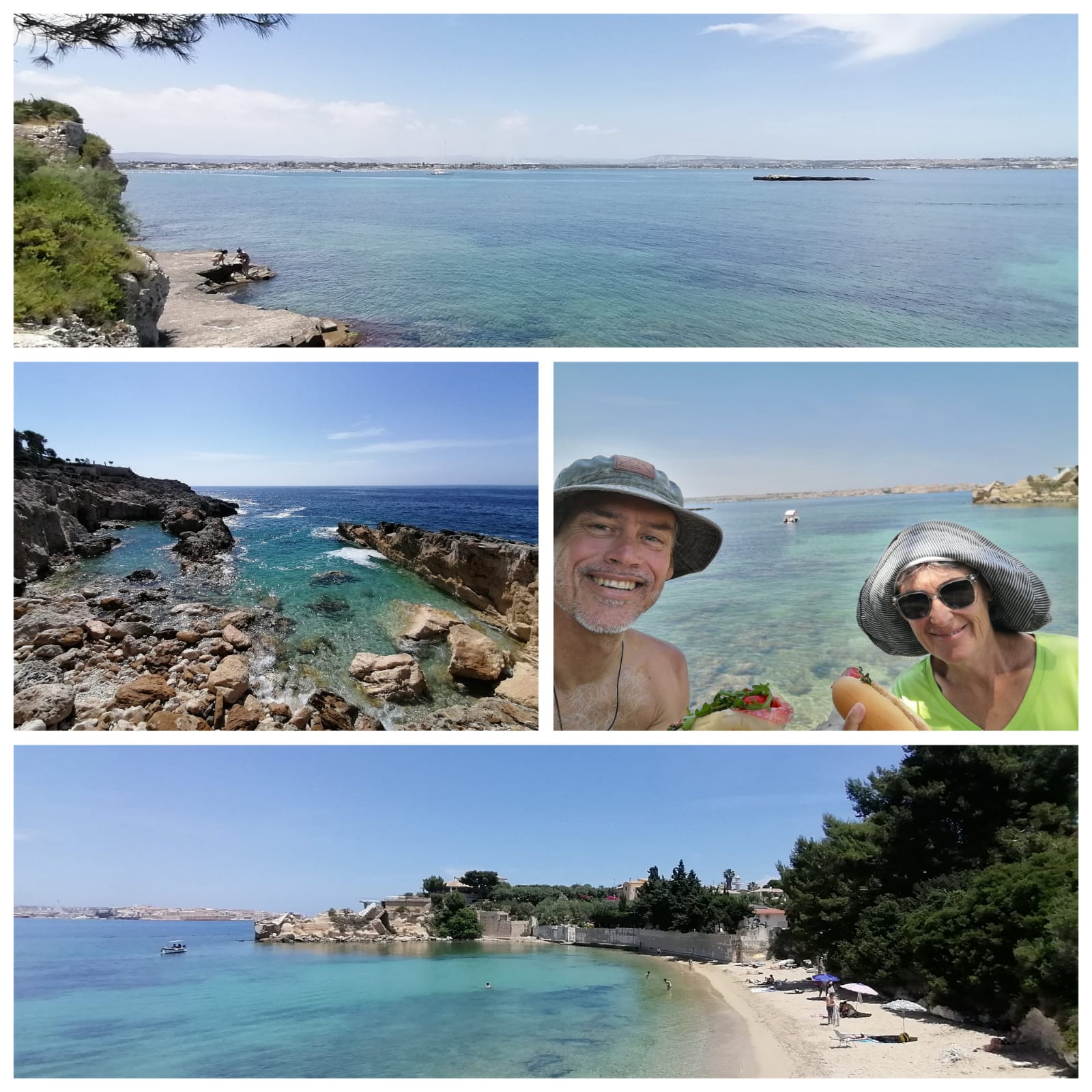
SICILY | PLEMMERIO MARINE PROTECTED AREA: It’s HOT 🔆 🔆 🔆 Across the bay from Syracuse is a 1,500ha marine reserve where we spent the day seeking – and then finding – a quiet, shady beach entry to the water. [IMG_20260604_145553]
After a morning delving in and out of the numbered coastal entry points around the rocky, sun-baked Punta Milocca, we headed for the other side of the peninsula and found what we were looking for at Punta della Castelluccio – a Lido-free, spiaggia libera, good snorkelling – albeit in a wet-suit-worthy sea – and a pine-shaded rocky outcrop with a view of the medieval walls of Ortigia across the bay, with Mount Etna making a guest appearance before disappearing into the hazy afternoon.
We managed to pay our parking ticket at our local tabaccheria – where else? 😉 Everyone smokes, everywhere, so a tobacconist is never far away and they keep siesta-proof hours.
They don’t only sell cigarettes – you’ll find Lotto tickets and public transport tickets, photocopies, batteries, stationery, chocolates, airtime and, often, they double-up as a bar.
Day 38: (5 June 2026)
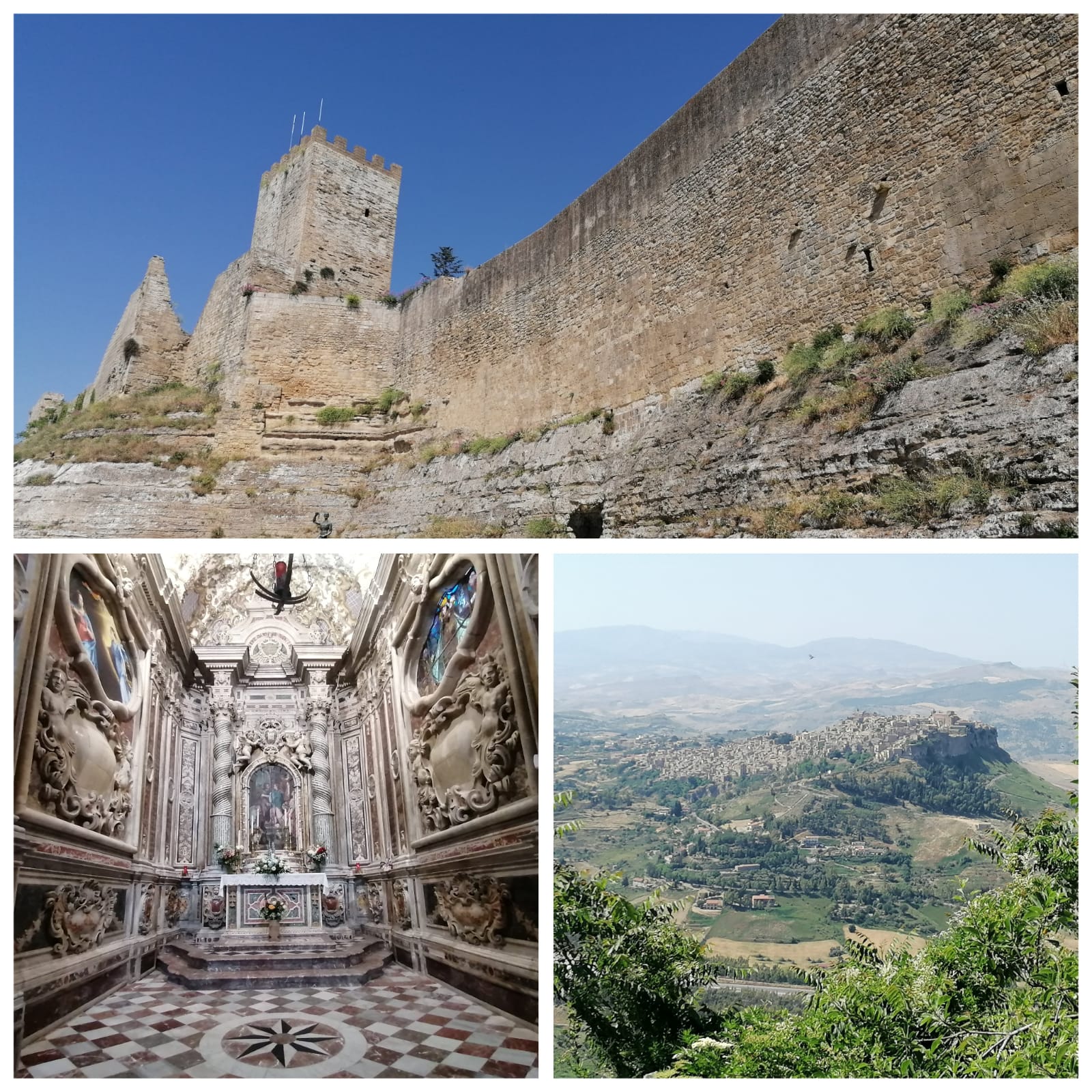
SICILY | ENNA: The three legs of the Sicilian flag mark the three compass points and the three seas (Tyrrhenian, Ionian, Sicilian Channel) of the island. Enna is the belly button. At 931 metres, it is the highest provincial capital of the island and its geographical centre.
Inhabited from at least the 14th-century BC, Enna, by virtue of its lofty position on Mount Polizo and its ample water supply, is one of the strongest natural fortresses in the world. However, it fell to the Muslims in 859 and was re-taken by the Normans in 1087.
The origins of the inevitable castle (Castello di Lombardia) – one of the largest and oldest in Italy – are lost in myth (~1,000 BC). It was rebuilt and renovated between the 9th and 13th centuries by the Muslim conquerors and the Holy Roman Emperor Frederick II, King of Sicily, Germany and Jerusalem, and later inhabited by Frederick III of Aragon.
Like the castle, the Duomo (mother church) has also undergone many face lifts since it was built, courtesy of Frederick’s wife, Eleanor of Anjou, in the early 14th century. The plain, if imposing, exterior belies the cornucopia of art and architecture that adorns the interior – free of charge and mostly free of other visitors.
Italy’s churches, her castles and her medieval street mazes never grow old. 😉
Day 39: (6 June 2026)
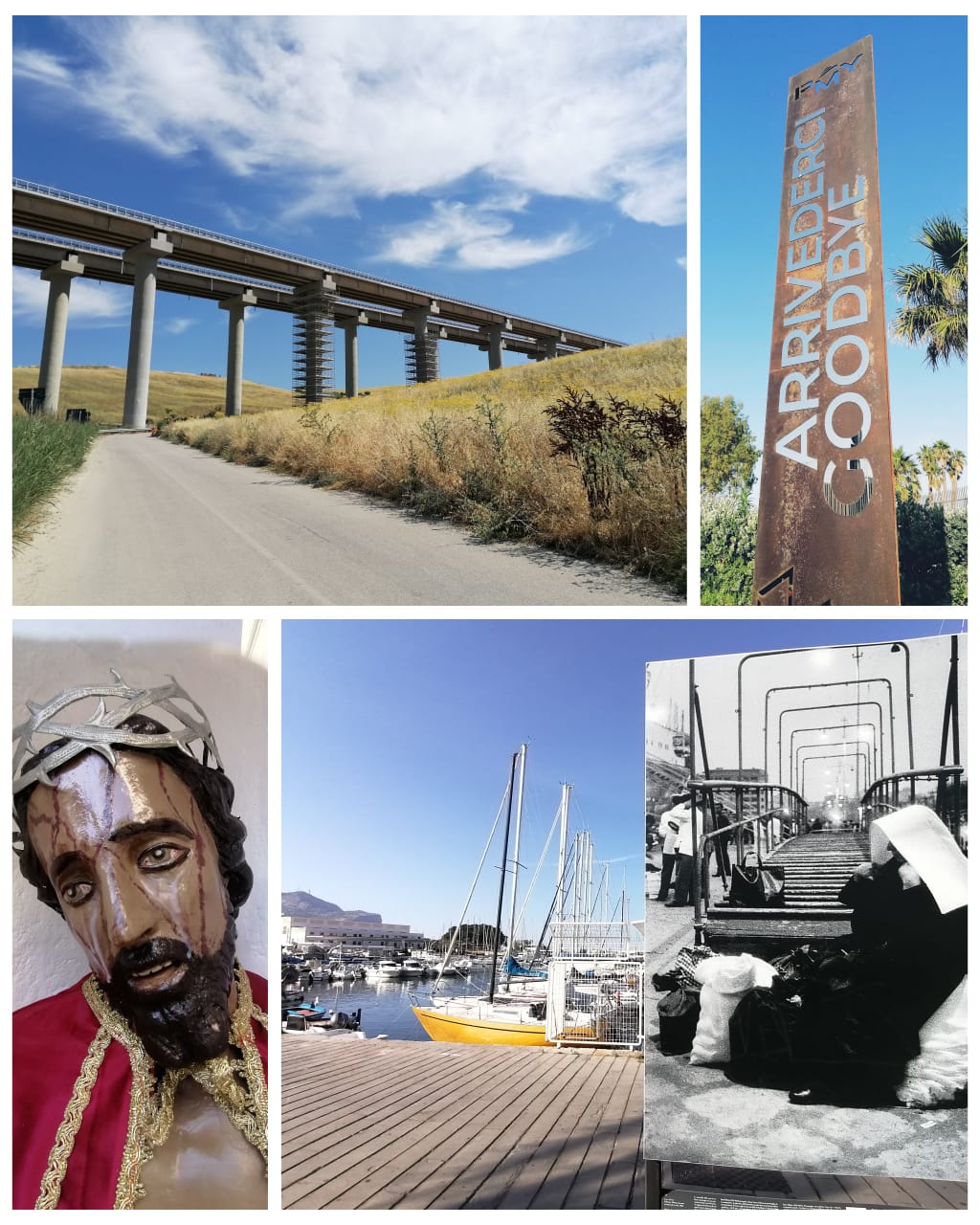
SICILY | PALERMO: We covered just over 1,000 kilometres on the winding Sicilian roads in eight days. Like southern Italy, the shortest distance between two points was seldom a straight line. The speed limits are guidelines for Sicilians – the car rental agent informed us that most speed cameras don’t work. We hope this is the case and no speeding fines arrive. 🤞🏼
We cruised back into Palermo’s urban chaos, had our car valeted for €12, and handed it back to ‘Sicily by Car’ unscathed, checked into our dock-side apartment and hit the streets for the unfinished business of La Kalsa, the historic quarter founded during the era of Islamic rule as a fortified citadel called Al-Khalesa. This heritage is not evident. Although we did find our first brown Jesus, there was no sign of a mosque. [IMG__20260606_163850] Instead, weddings filled the churches today with sartorial finery and flowers. We beat the heat with Sicilian slushies, called Granita, and sought the shade of banyan-tree gardens – Giardino Garibaldi has the largest tree of any species in Italy (40m in diameter).
Arrivederci, Sicily. Benvenuto…?
Dish of the Day
Granita is Sicily’s answer to gelato. Neither sorbet, nor ice-cream, it is a semi-frozen dessert made from water, sugar and fresh seasonal fruit. Derived from the frosty sherbet (sharbat) flavoured with rose water or fruit juice introduced by the Arab occupiers during the 9th to 11th centuries, who collected snow from Mount Etna, which was stored, scraped and flavoured, this semi-frozen dessert is traditionally eaten for breakfast with a soft topknotted roll, a brioche col tuppo.
Saint of the Day
“As young people, Rosalia is considered one of us,” said Jada, our free walking tour guide, pointing out a street art rendition of Palermo’s patron saint. Affectionately known as ‘Santuzza’, Saint Rosalia (c. 1130-1166) was born into a noble, well-connected family during Norman-ruled Sicily in the 12th century, and was brought up in the court of King Roger. At age 13 or so, she was bound over to be married to Count Baldwin who had saved the King from a wild lion and claimed the blonde-haired, blue-eyed Rosalia as his reward. Rosalia fled to a convent and then to a cave to escape her parents and her betrothed, and embraced the life of a hermit for 12 years before dying in her sleep aged 36.
More than 450 years later, a deadly plague struck Palermo. Rosalia’s bones were discovered in the cave in which she had died after the Virgin Mary appeared to a sick woman in a vision. A year later, Rosalia herself appeared to a hunter and instructed him to carry her bones in procession through Palermo. This was done and the plague abated. Unfortunately, Rosalia was unable to protect Palermo from modern warfare – around 85% of Palermo was destroyed during WWII. Nonetheless, the procession in her honour continues to this day with the Feast of Saint Rosalia being celebrated between the 10th and 15th of July.
Day 40: (7 June 2026)
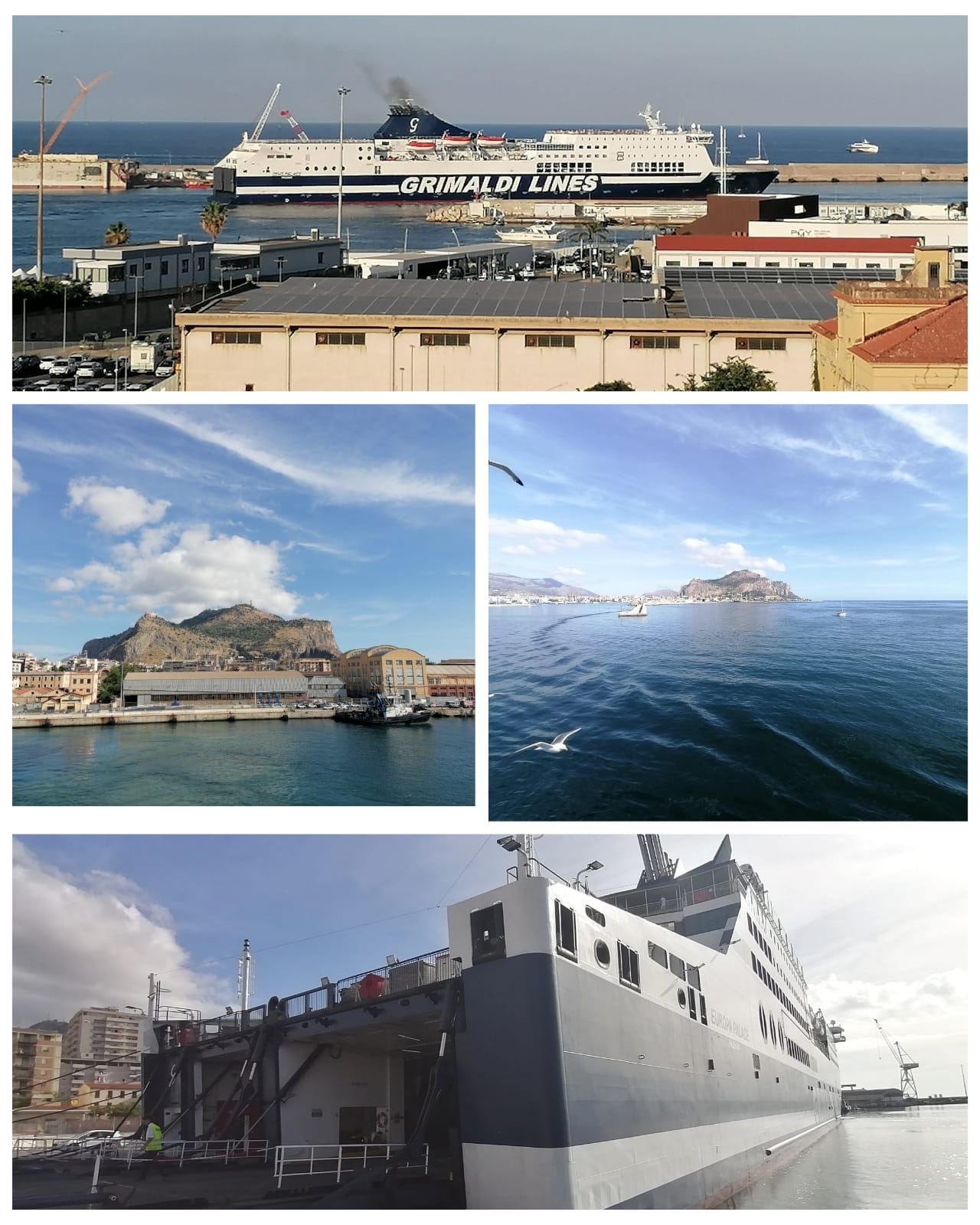
SICILY | TYRRHENIAN SEA: We have been at sea, on a floating ten-deck hotel called the MV Europa Palace, for the last 12 hours after leaving Palermo at 09:10 this morning. A taste of the high life on the high seas… At R925 p/p the ⛴️ was cheaper than a ✈️ with a lot more leg room. 😉
SARDINIA
Day 41: (8 June 2026)
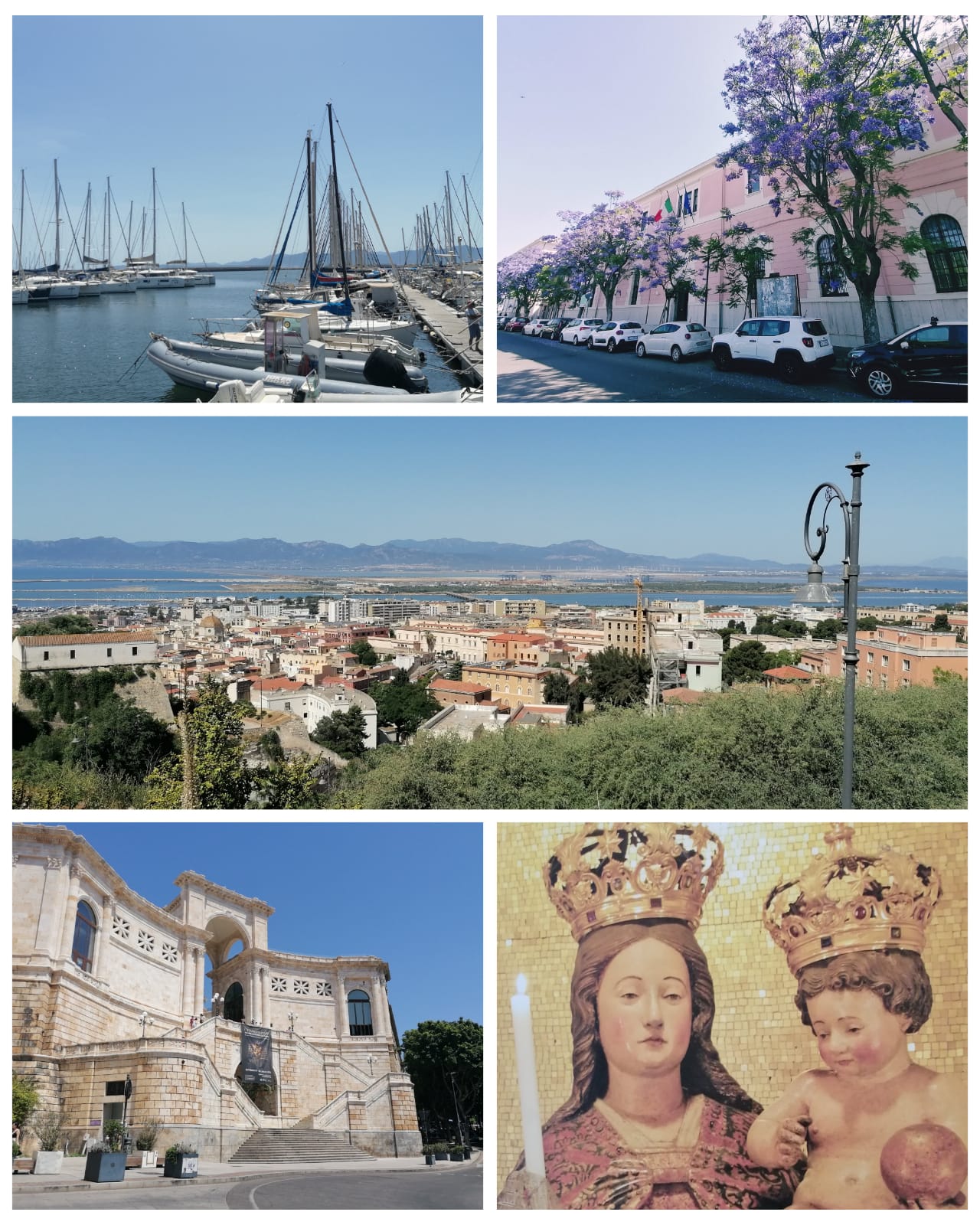
SARDINIA | CAGLIARI: After Sicily, Sardinia (pop. 1,56m) is the second largest island in the Mediterranean (~24,000km2). It has ~2,000 kilometres of coastline, hundreds of beaches and the highest number of native grapes in Italy (120–150). Sardinia was founded by the Phoenicians and passed through the hands of the Carthaginians, the Romans, the Vandals, the Byzantines, the Pisans, the Aragonese, the Spanish and the Piedmontese before becoming one of Italy’s 20 regions upon unification in 1861.
Cagliari, the capital, is Palermo’s country cousin – smaller, sleepier and more sedate. Touted as the city of the sun (La Città del Sole) for its 300 days of sunshine a year, it is only 195 kilometres from Tunisia in North Africa.
There are days when nothing goes according to plan and this was one of them. The only free walking tour was in Italian; the English walking tour cost €22p/p 😲; the museum was being renovated; the 5th-century church was closed on a Monday …
So we explored the original,13th-century citadel this morning and hiked the coast this afternoon, putting in some 18 kilometres by the end of the day, without managing to find a beach, other than a patch of sea grass and a rocky promontory pummelled by a wind-driven swell.
Sundowners on our balcony, however, with a splash of Prosecco, a mascarpone/blue cheese wedge and some giant green olives went exactly as planned. 😋
Saint of the Day
The patron saint of Sardinia – and sailors – is the Madonna of the Sea, Our Lady of Bonaria, a neighbourhood next to where we are staying. In March 1370, a Spanish ship caught in a storm threw a mysterious crate overboard. The sea was stilled, and the crate was opened. Inside was the wooden statue of the Madonna, with her candle still miraculously lit. The Argentinian capital of Buenos Aires was named for Our Lady of Good Air and Fresh Winds, by the Spanish conquistadores, many of whom came from Sardinia.
DAY 42: (9 June 2026)
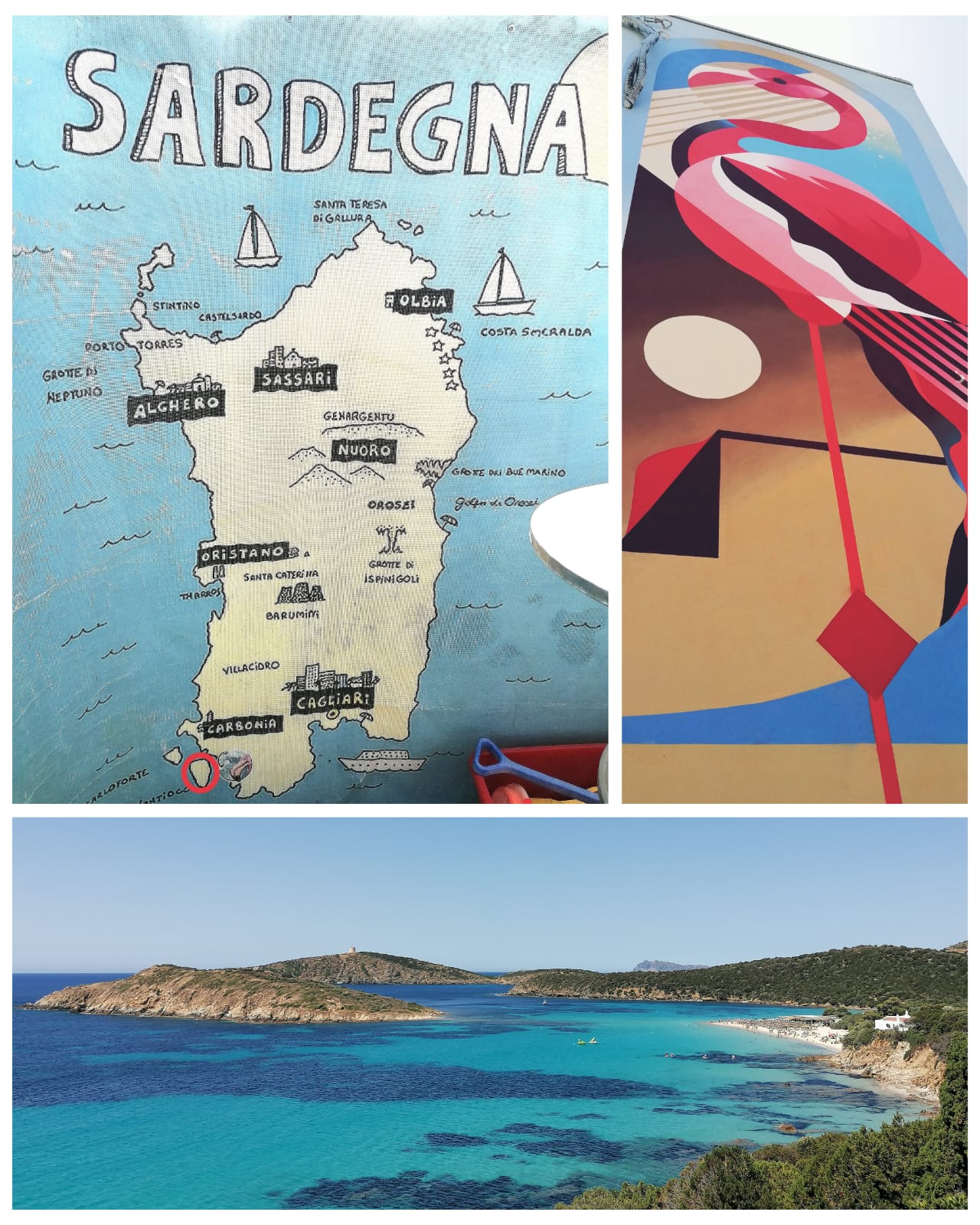
SARDINIA | SANT’ANTIOCO: We rolled out of Cagliari this morning in our first Italian car – a Fiat Panda hybrid. Going strong since 1899, Fiat is Italy’s largest car manufacturer.
Less developed and dramatic than Sicily, Sardinia is, nonetheless, breathtaking. The S71 coastal road winds its way over hills carpeted in Mediterranean scrub like astro-turf. Flamingo-dotted salt pans, wetlands and lagoons are separated by sweeping beaches from the multi-hued seas of blue, studded with rocky outcrops and promontories topped with the ruins of medieval watchtowers. Apart from the odd car, tractor or tourist trenino, groups of chubby aging cyclists and vintage bikers, we mostly had the road to ourselves. The summer crowds have yet to descend on Sardinia.
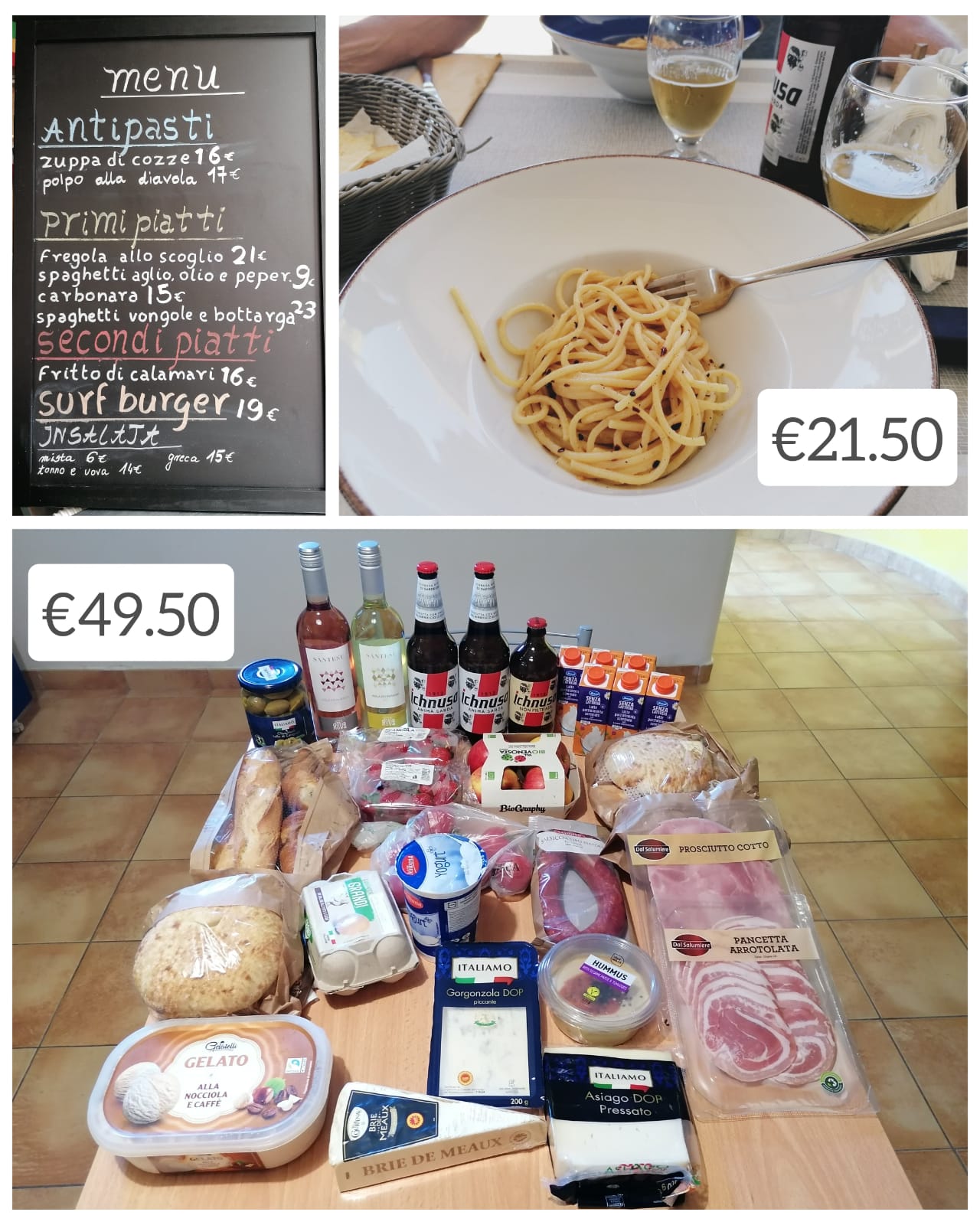
We stopped for lunch at the appropriately named ‘Sunny Island’ restaurant, frequented by kite-surfers, wind-surfers and Poles 🇵🇱 – the owner is Polish. While the (limited) menu items were as pricy as the mainland, Sardinia, it seems, doesn’t charge a sit-down fee and the beers are cheaper. Two moderate portions of spaghetti aglio olio and a local quart came to €21.50 (R408). By contrast, our supermarket shop for the next few days came in at €49.50 (R940).
We are on Sant’Antioco (pop. 10,384), an island off the island thanks to an ‘artificial isthmus’ created by unknown builders of antiquity. It is purportedly the site of Sardinia’s second-oldest settlement, ancient Sulci.
Stand by for the Beach Report, coming your way tomorrow.
DAY 43: (10 June 2026)
SARDINIA | SANT’ANTIOCO: There are 54 entryways to get wet on this 109m2 volcanic island. Of the 15 recognised beaches, 7 are on the west coast. We went east. First, to Su Portixeddu, a small stretch of sea grass and 130 million-year-old pebbles with a shallow reef feathered in pink and a diver with an octopus at the tip of his spear. Then, to the southernmost tip of the island, Capo Sperone, which we shared with a lone sun worshipper without an umbrella.
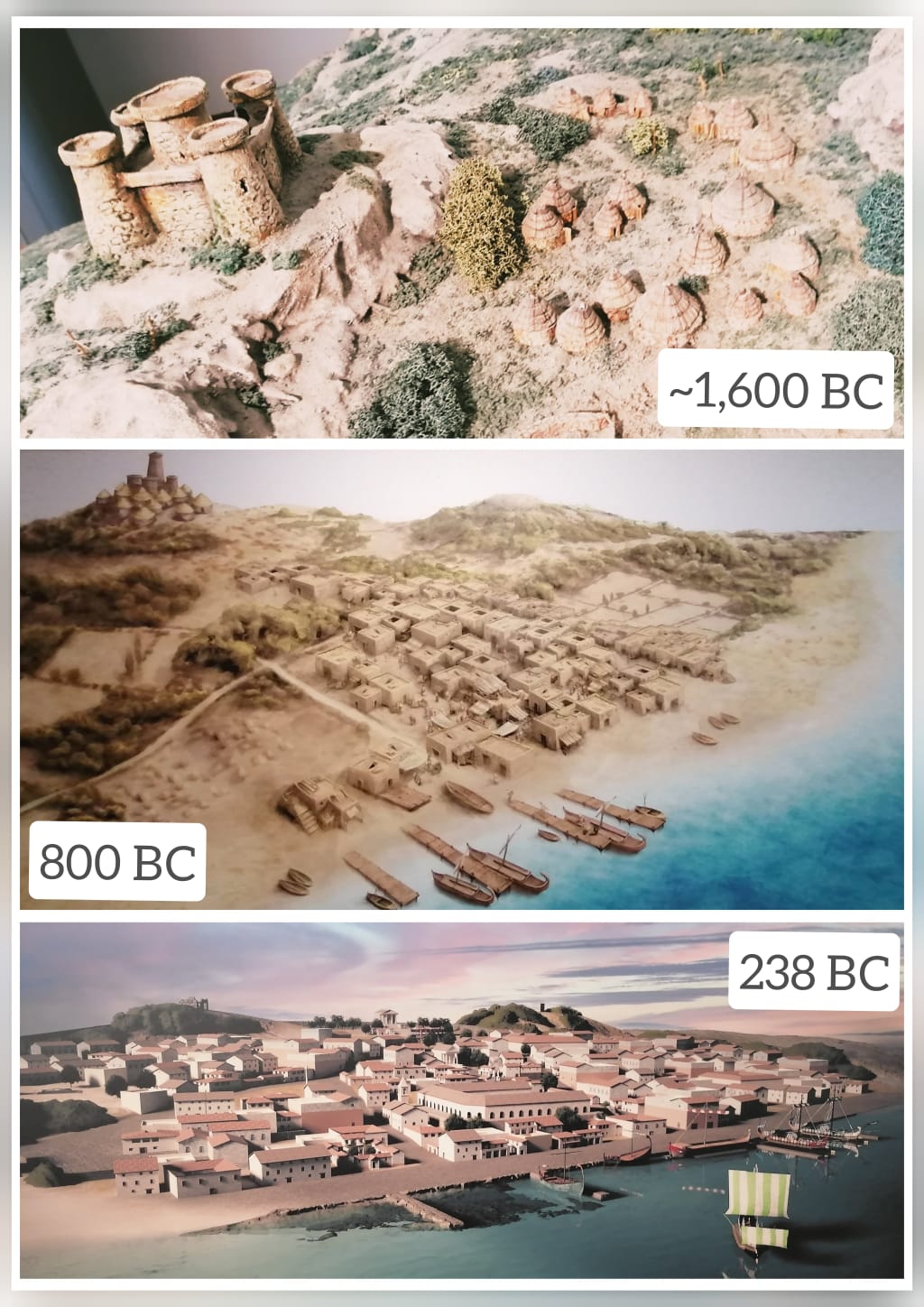
The afternoon was spent in the local museum, acquainting ourselves with Sardegna accuau – the hidden Sardinia that lies behind the postcard scenery. Neolithic cave dwellers (3,500 BC), who erected standing stones (‘menhirs’) and burial chambers (‘dolmens’), were followed, around 1,600 BC, by megalithic builders of defensive stone towers called ‘nuraghi’, after the pre-Indo-European word nur for ‘hollow heap’. There are 7,000 nuraghi mapped in Sardinia – 50 in Sant’Antioco alone. Were these towers a blueprint for the medieval bastions we’ve been seeing all over Italy?
Then came the Phoenicians in the 8th century BC, the Carthaginians from North Africa in the 6th century BC and the Romans in the 3rd century BC – their presence all immortalised in stone.
DAY 44: (11 June 2026)
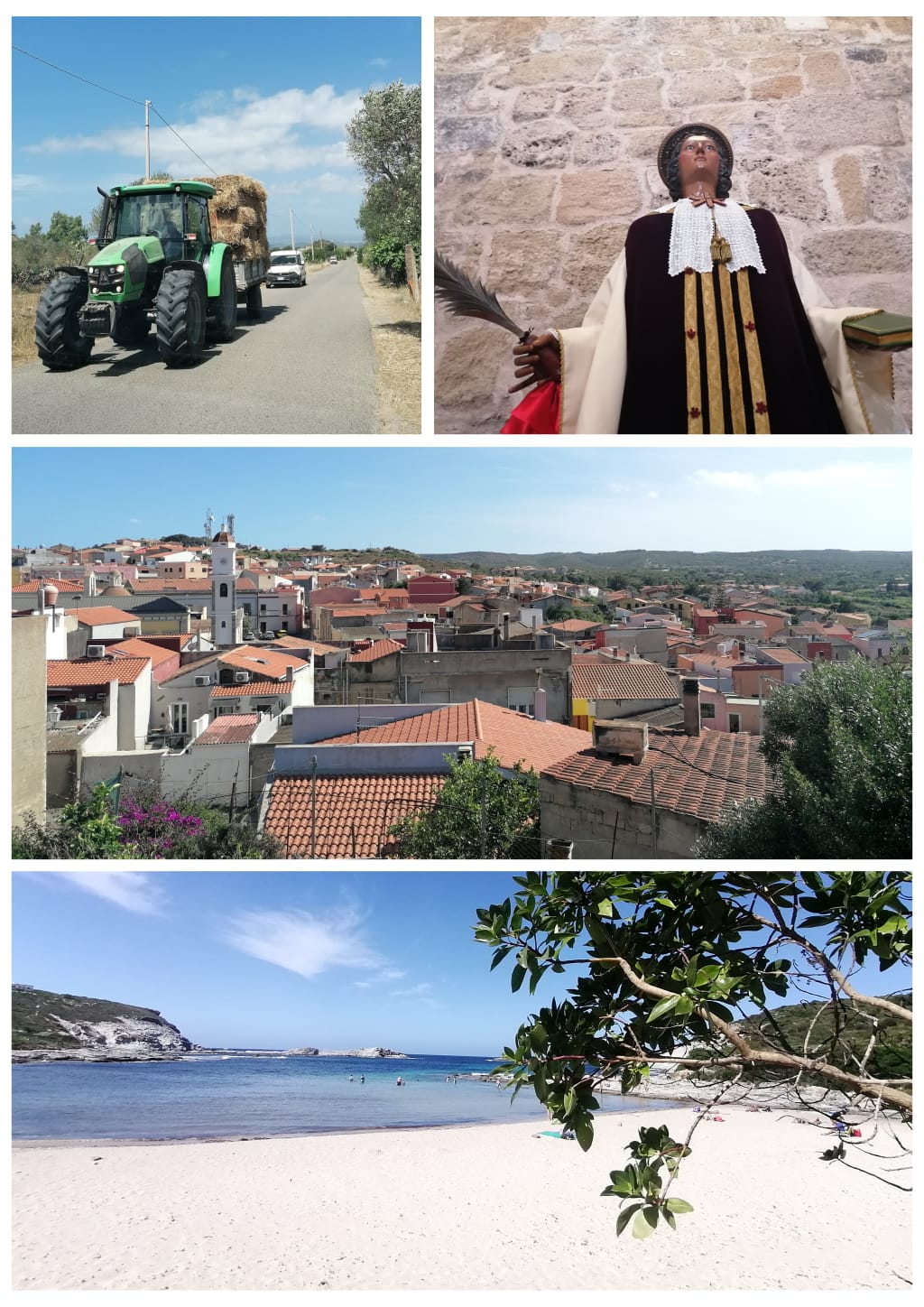
SARDINIA | SANT’ANTIOCO: Sardinia, like Cape Town, is ruled by the wind 💨 – the S/SE sirocco from the Sahara, the SW libeccio from the Atlantic and the NW mistraele from France, to name the main protagonists. We outfoxed the mistral this morning on a west coast beach called Cala Sapone.
We then made the pilgrimage to Sant Antioco’s mother church, the Basilica di Sant Antioco Martire, named for the “Moor Saint” who is credited with bringing Christianity to Sardinia. The original 5th-century church was built over his tomb. His 2,000-year-old bones are on display and for €10 a person you can take a guided tour of the only catacombs in Sardinia, which housed the remains of Christians who wanted to be interred around his burial site.
Saint of the Day
Sardinia’s patron saint, Antiochus of Sulcis, was born in Mauretania (modern-day N Algeria/Morocco) at the end of the 1st century. A scientist and physician, he was tortured for his beliefs – some 70 years after the crucifixion – and exiled by the Romans to Sant’Antioco, known to them as Plumbaria for the extensive deposits of lead found there. Forced to labour in the lead, silver and zinc mines, Antiochus founded the first Christian community in Sardinia. He died in 127 AD, a Roman prisoner, at prayer in his cave.
DAY 45: (12 June 2026)
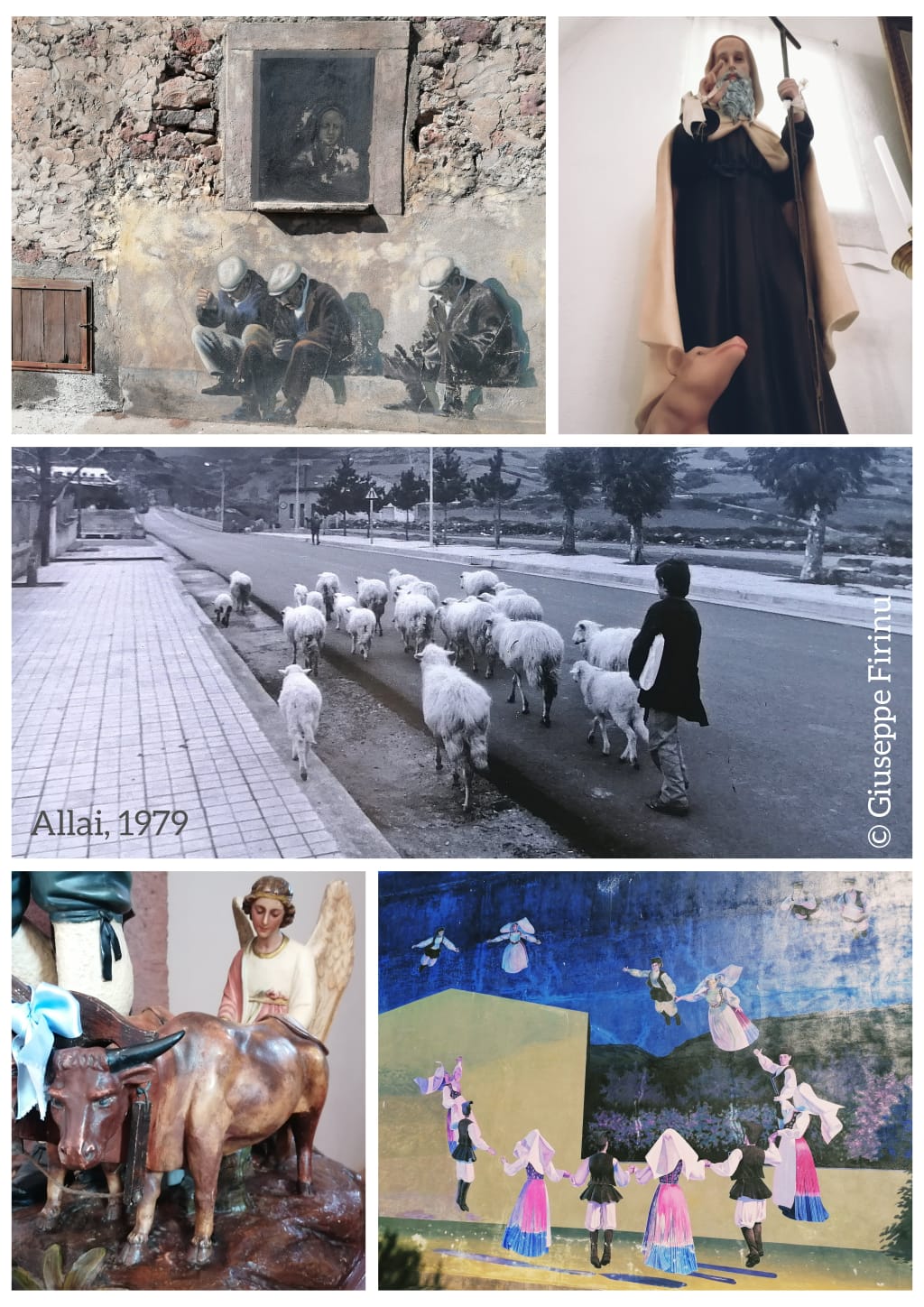
SARDINIA | ALLAI: In Tanzania, you have to go backwards to go forwards. In Sardinia, you have to go around to go straight. We meandered, seemingly aimlessly, playing bingo with the designated numbers of the country roads and pinball with the roundabouts, through gently undulating farmlands and fields of wild carrot (daucus carota).
From a village farm stall, we came away – inadvertently – with 2 litres of vino rosso poured out of a steel tank into a plastic water bottle, with a walnut pastry thrown in for free, and from a factory shop outlet, three wedges of goat and sheep pecorino plus two jars of free cream cheese, before arriving in the hamlet of Allai (pop. 333).
Allai is a settlement so ancient that the origins of its name are lost to time. I’m going with ‘garlic’ (Latin); other contenders are ‘el-Alah’ (home of God) or the Phoenician for ‘valley’. Built from the local pink trachyte stone, the statuary inside the 16th-century church speaks to ancient agrarian rhythms. Allai was the first historic centre in Italy to receive the international certificate for the ‘Village of the Stars’ for the clarity of its skies. The village is dotted with wooden star beds, which we intend to try out … if we can stay awake long enough – sunset is at 21:00. 😴
DAY 46: (13 June 2026)
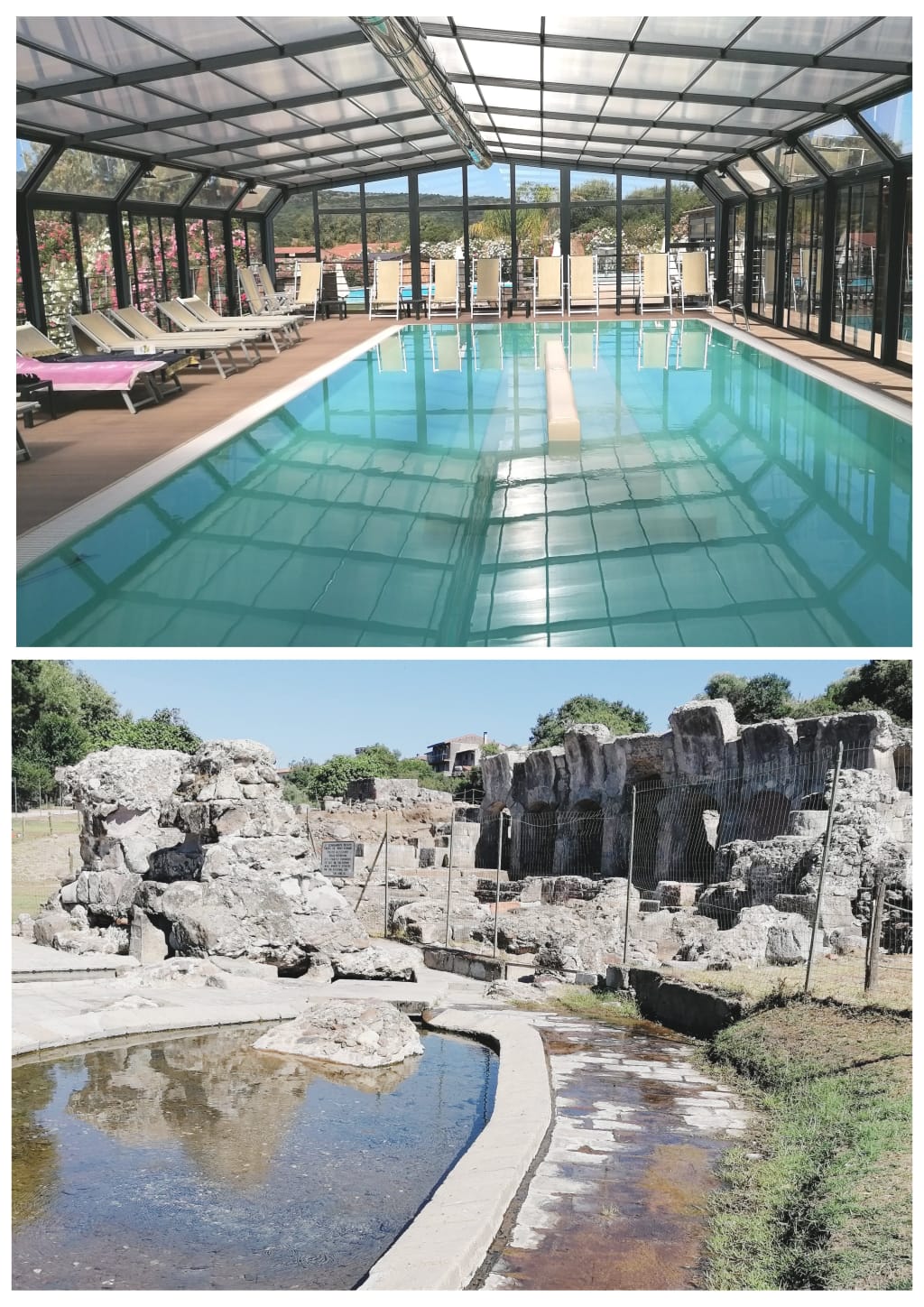
SARDINIA | FORDONGIANUS: Some 13 kilometres northwest of Allai lies Fordongianus (pop. 800). Its population during Roman times was two to five times larger due to its military significance. The ruins of the first-century Roman Baths are a relic of the town’s former glory. In the Byzantine era (6th-11th C), the Eastern Roman Empire designated the town the official seat of the supreme military commander of Sardinia’s armed forces.
Fast forward 1,000 years – the Sardegna Grand Hotel Terme is the largest spa facility in Sardinia. Its hotel can host up to 445 people for events and the spa facility itself can cater for 300 to 400 people per day. Today, we were joined by a scant 20 people enjoying the half-day special – €30p/p with a coffee and croissant thrown in.
DAY 47: (14 June 2026)
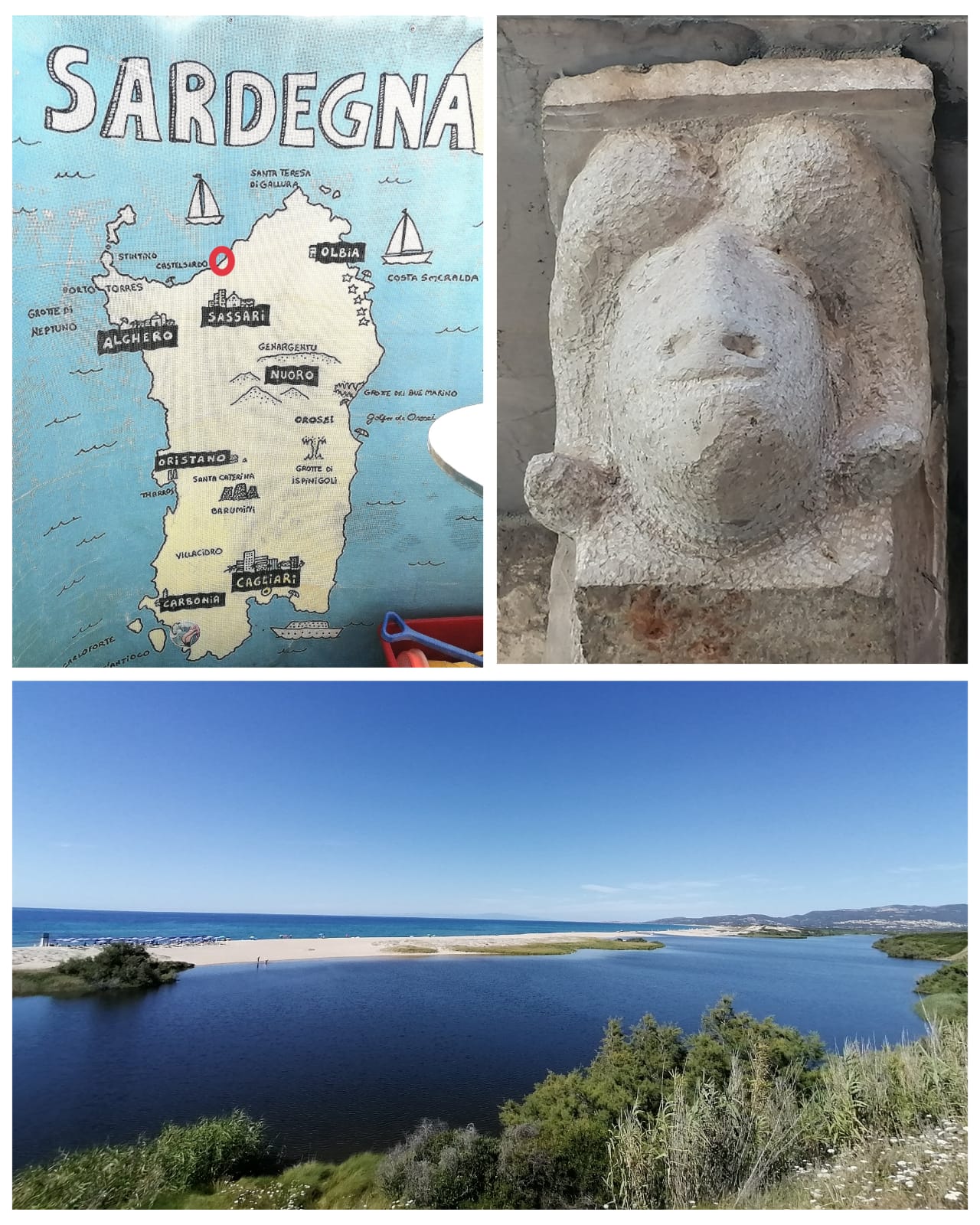
SARDINIA | LA CIACCIA: Heading for the north coast, we cut through the rural heartland of Sardinia today, with no time for detours, despite the enticing signs for nuraghi, petroglyphs, churches and cheese – which, being a Sunday was not for sale, as the farm stalls and mom-and-pop shops take the day off and the supermarkets close at 13:00.
It’s hay-baling season in the hinterland as the small-scale farmers harvest fodder for the sheep that make up 50% of the island’s agricultural production but you won’t find a lamb chop anywhere – it’s all about the milk not the meat. Pecorino Sardo is the premium aged sheep’s cheese for which the island is famed, and rightly so, in our short but tasty experience. We have yet to come across the illegal cheese of ill repute – Casu Marzu – a sheep’s cheese fermented by live fly larvae (Piophila casei). Watch this space …
Dish of the Day
Pecora means ‘sheep’ in Italian. Home to over 4 million sheep – nearly 45% of Italy’s herd – Sardinia is renowned for its pecorino cheeses, particularly Romano and Sardo DOP, two of the six varieties found in Italy.
Named for its 2,000-year-old origins in the countryside outside Rome, Romano can only be made legally in Lazio, Grosetto in Tuscany and Sardinia, which is the largest producer.
Lamb or kid rennet is added to the heated milk of ewes. After being dry salted, the cheese is left to mature for 8 months, during which time it is turned, cleaned and massaged with oil to prevent the crust cracking before, finally, being dyed brown with special clays.
Richer and less salty than the Romano, Sardo DOP dates back to the late 1700s and is made from the unpasteurised milk of the Sardo breed of sheep, which is matured in brine and then gently wood-smoked.
DAY 48: (15 June 2026)
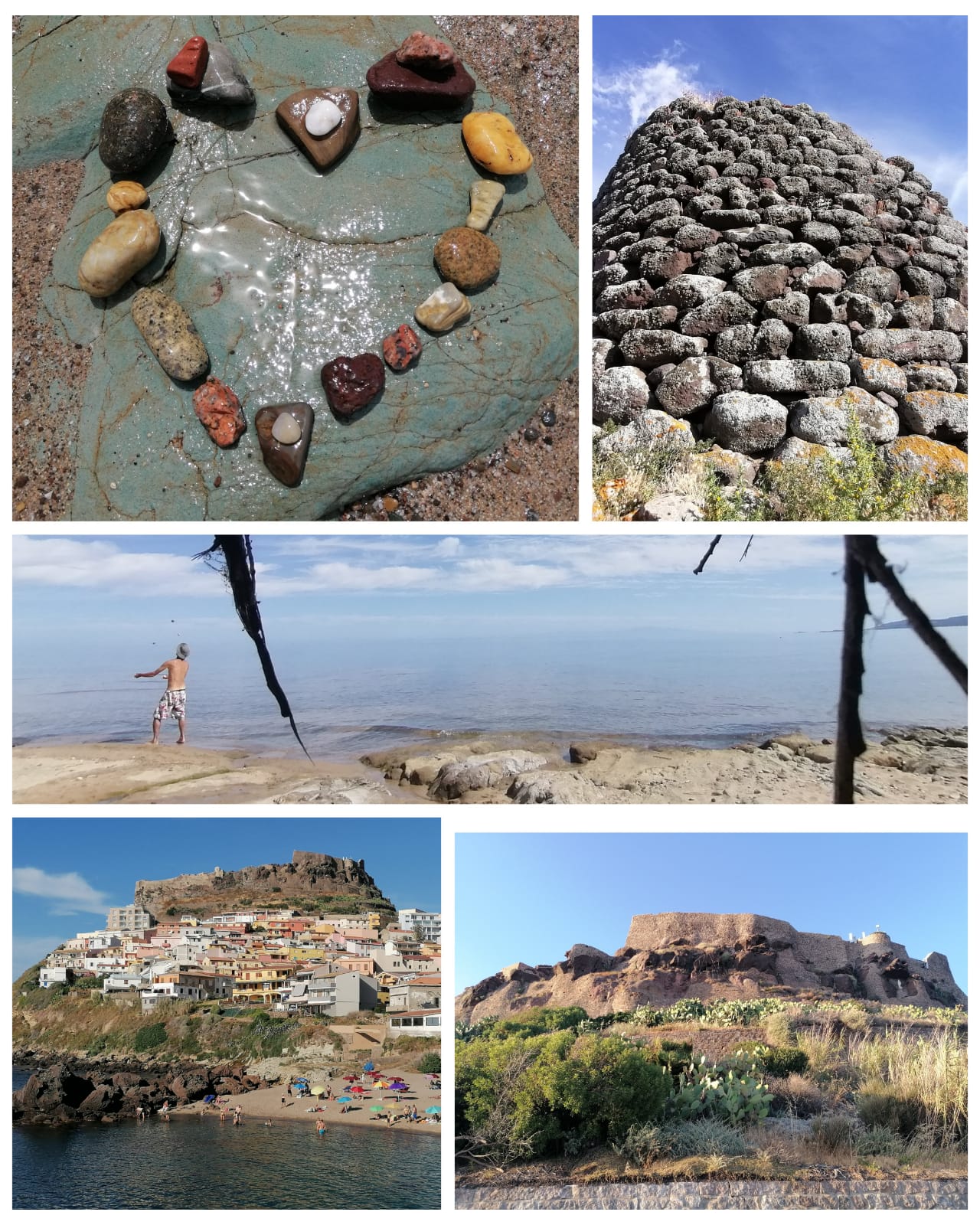
SARDINIA | LA CIACCIA: Set among the vineyards, olive groves and natural woods (bosco) of the north, La Ciaccia is a seaside suburb with everything the holidaying Italian needs – a well-stocked supermarket with bakery and deli, a pizzeria and gelateria and a beach bar at the start of a nine-kilometre sweep of beach, flanked by the inevitable freshwater lagoon. Sardinia has nine RAMSAR wetlands of international significance.
In the vicinity are rivers, mountain lakes, hot springs and the picture-perfect Castelsardo, another of Italy’s ‘Most Beautiful Villages’, which grew up around a medieval castle built by a family from Genoa.
We found the only shade to be had on a windless morning with a glassy sea on which a spear fisherman floated motionless. Fast ferries from Porto Torres plied the waters, heading perhaps to Rome, France, or even Barcelona. The hills of French Corsica shadowed the horizon, dusted with cloud like confectioner’s sugar. Latin bar beat rhythms drifted on the currents. So did we.
Underwater, fish flitted on a shallow reef adorned in filigreed crustaceans and feathered in greens and browns and gold, and an octopus masqueraded as a rainbow rock.
Our modest studio apartment was upgraded to a two-bed, two-bath cabana with a two-sleeper couch. Feel free to pull in …
DAY 49: (16 June 2026)
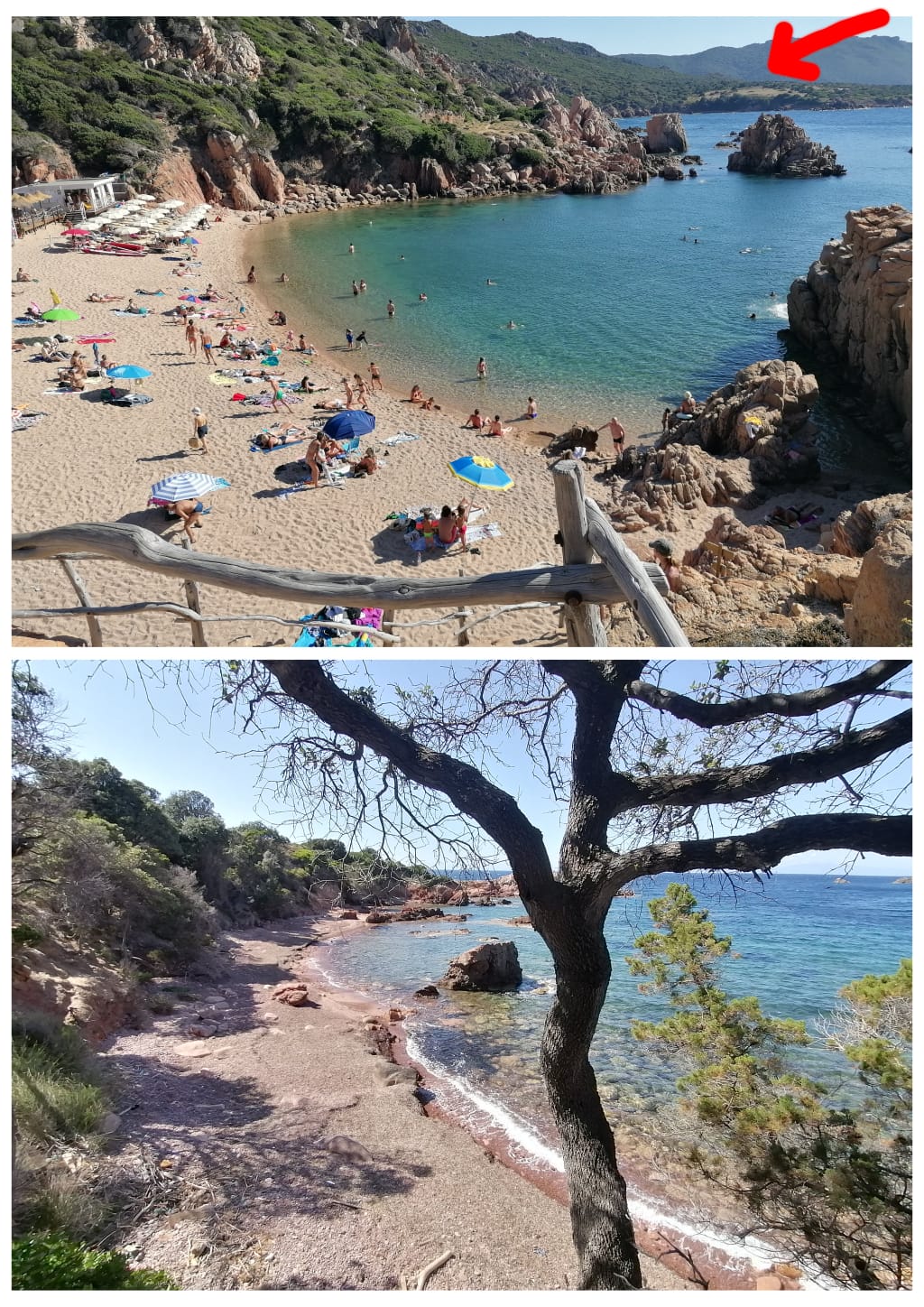
SARDINIA | LI COSSI: In contrast to the sweep of beach on our door step, Costa Paradiso, an hour’s drive away on the north-east coast, is a wonderland of weather-sculpted, rosy rocks and boulder-strewn coastline. The pink-pebbled sand carries the tang of iron. Reached by a kilometre-long, cliff-hugging footpath, the drawcard is the sandy beach of Li Cossi, its blind river and its wind-protected, translucent, fish-rich bay. We passed up the inevitable rent-a-day-bed-and-umbrella-lido and hiked the cliffs for another click, through coastal thicket that smelled like buchu, where we found a deserted, seagrass-fringed, pebbly beach edged in nature’s shade, with water seeping from the rocks. Another day in Paradise.
DAY 50: (17 June 2026)
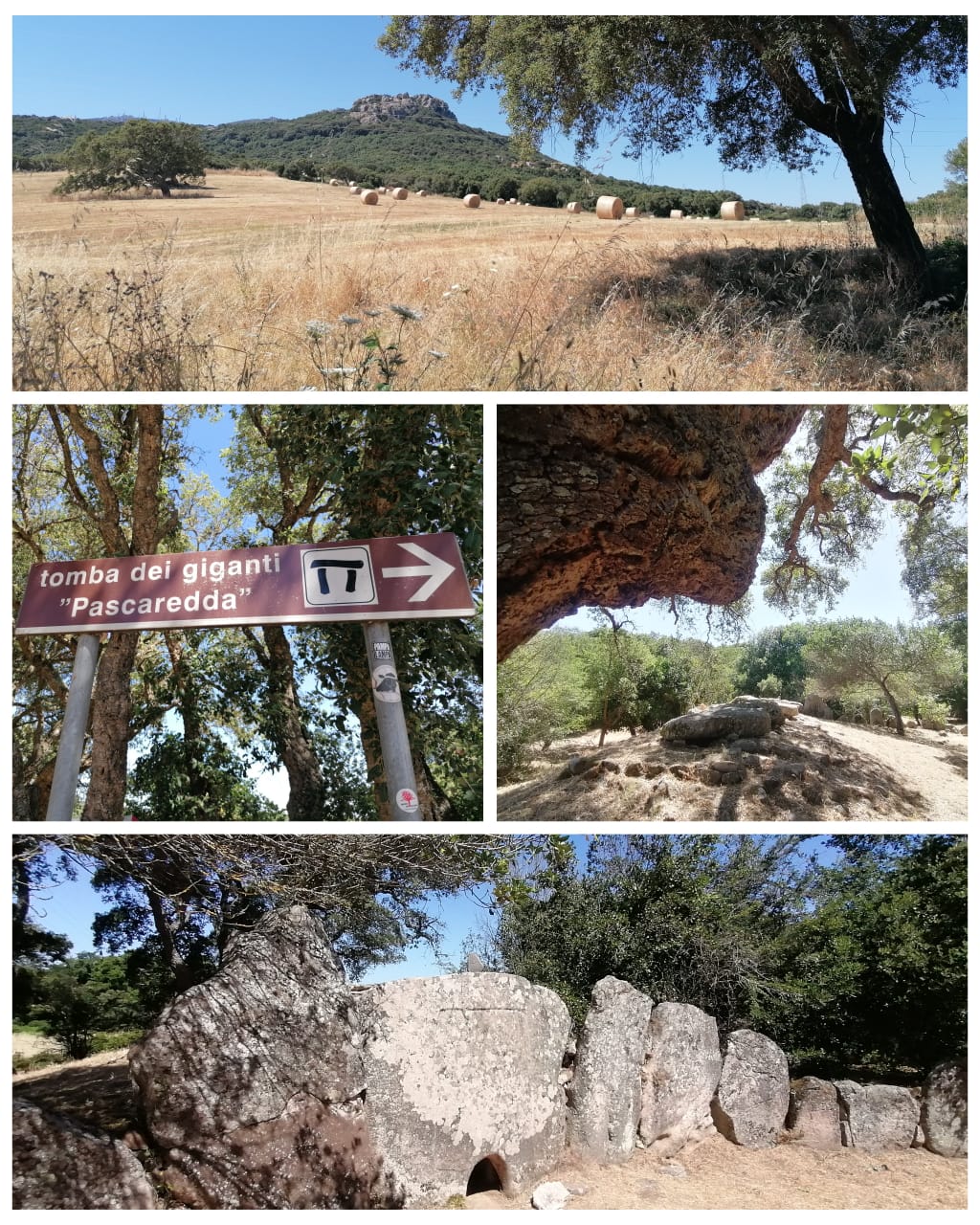
SARDINIA | CAPO COMINO: Sardinia is full of surprises. Bound for the east coast, we travelled across the northern interior on quiet roads through sparsely settled countryside. Towering balancing boulders of granite, reminiscent of Nyanga in Zimbabwe’s Eastern Highlands, gave way to dense forests of cork oak (Quercus suber L) for which the Gallura region is renowned. Cork trees are first harvested at 25 to 30 years of age. This is the male removal (demaschiatura) of the bark, which can be as much as 60 centimetres thick. Subsequent female harvests happen at 10-year intervals.
Then, a sign caught our eye. We parked the car at the edge of a hay field and were escorted by a friendly dog down a country lane, over a wooden bridge, to a clearing among the recently harvested cork trees to find the dog’s owner sitting on a bench – an elderly New Age Merlin playing mystical music on his cellphone.
The island is dotted with prehistoric burial barrows, called ‘Tombs of the Giants’ – whether named for the people who built them or for the size of the rocks used is unclear. The Nuraghe people of the middle Bronze Age built this tomb around the 16th–17th centuries BC and used it until the 12th century BC.
Church bells have given way to sheep’s bells. We find ourselves, this evening, on a hippy homestead called Funtaneddas – a smallholding with a sea breeze near Capo Comino, on a stretch of coastline our Sardinian host, Antonio, described as ‘savage’ by which, we take it, he means ‘wild’. Or does he? 👀
DAY 51: (18 June 2026)
SARDINIA | CAPO COMINO: Like Sicily, Sardinia, by virtue of its distinct history, heritage and language (Sardo) is one of five ‘special statute’ regions of Italy that enjoy a measure of financial and administrative independence.
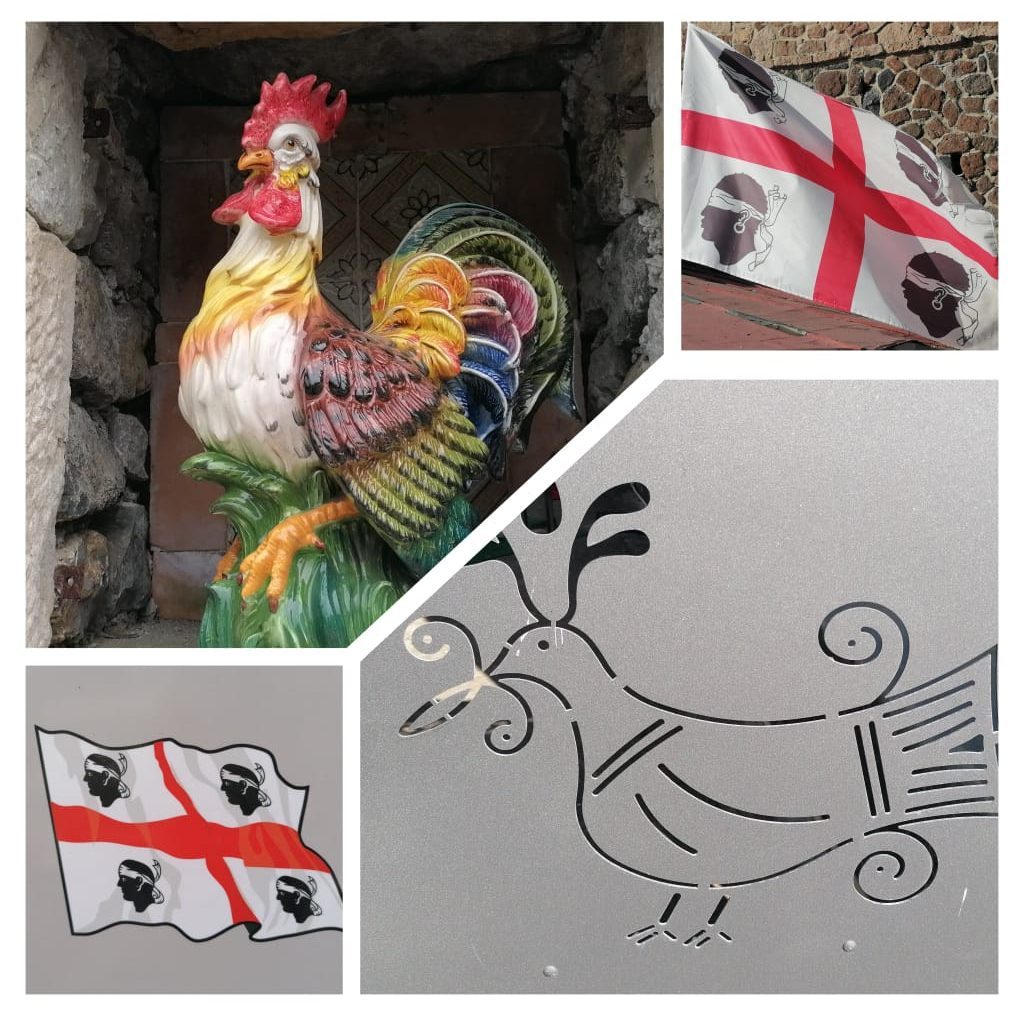
Like Sicily too, Sardinia has its own flag – the medieval, mysterious, mutable and controversial Quattro Mori (Four Moors). The Aragonese Crown ruled Sardinia from 1324 to 1479. Whether the flag symbolises four defining victories by the Catalan-Aragonese in Spain or the four Moorish leaders of legend that fell in the Battle of Alcoraz – aided by Saint George as legend has it – is unsettled, but the flag inarguably commemorates the defeat of the Moors in Spain, which changed the historical trajectory of Europe. Over the centuries, the heads have faced right, then left; crowns gave way to blindfolds, which became bandanas.
As emblematic of Sardinia as its flag is the pavoncella – the migratory Northern lapwing (Vanellus vanellus) – which has been part of the island’s iconography since the Byzantine 6th century. Vanellus is the Latin diminutive for ‘winnowing’ and for ‘fan’, and thus the bird is associated with fertility, prosperity and good rains and is portrayed – highly stylised and in many different mediums – with a fan-shaped tail and regal crest. In this instance, art imitates life but lightly, and it is only the initiated who can distinguish the pavoncella from the Mediterranean gallo (rooster) 🐓.
Out of consideration for those feeling the pinch of a southern hemisphere winter, we will spare you today’s Beach Report … On second thoughts, for those of you in need of a slice of summer …
DAY 52: (19 June 2026)
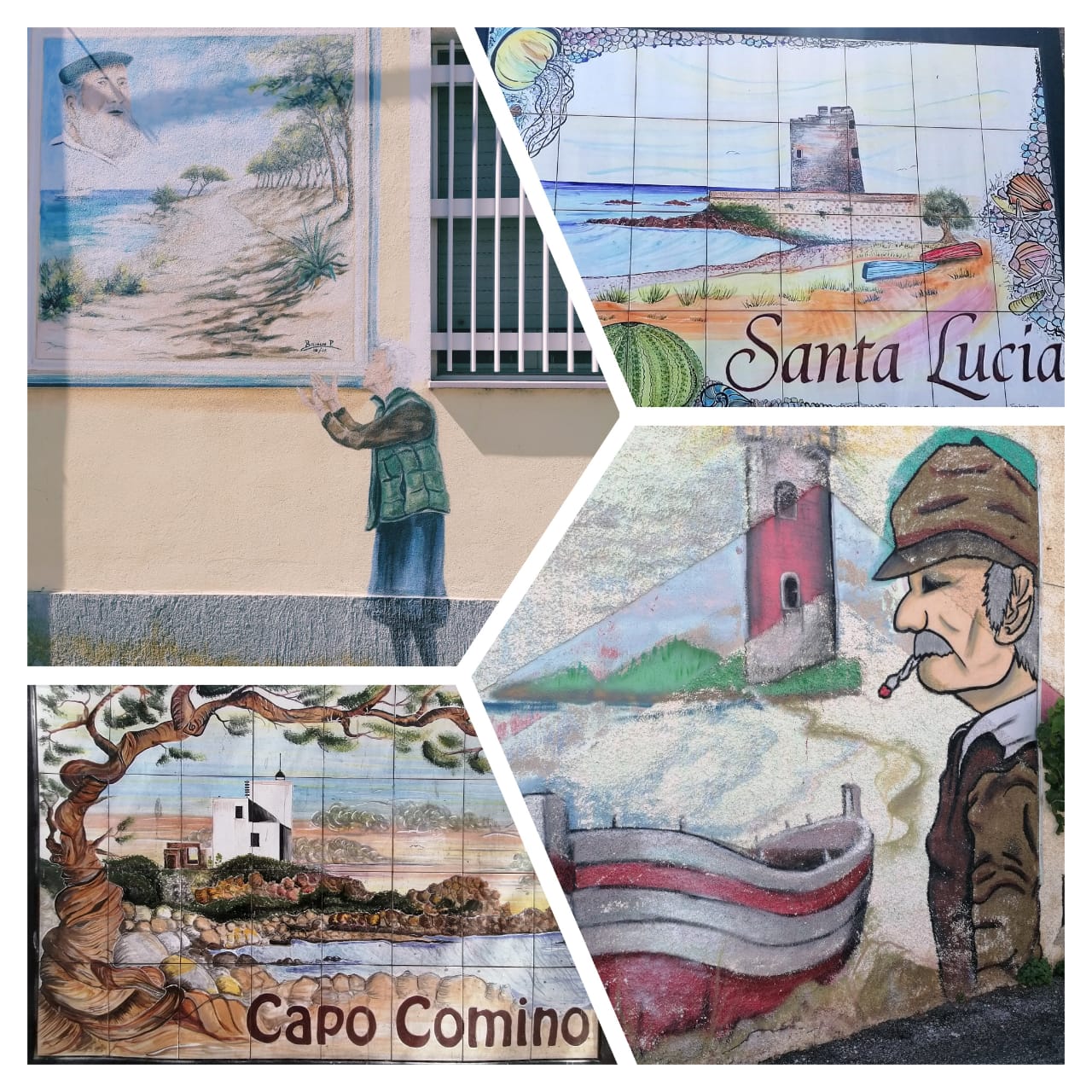
SARDINIA | CAPO COMINO: We explored the coast north of Capo Comino today, diverted by the street art of the seaside hamlet of Santa Lucia and a nearby deserted beach of sandy stone.
DAY 53: (20 June 2026)
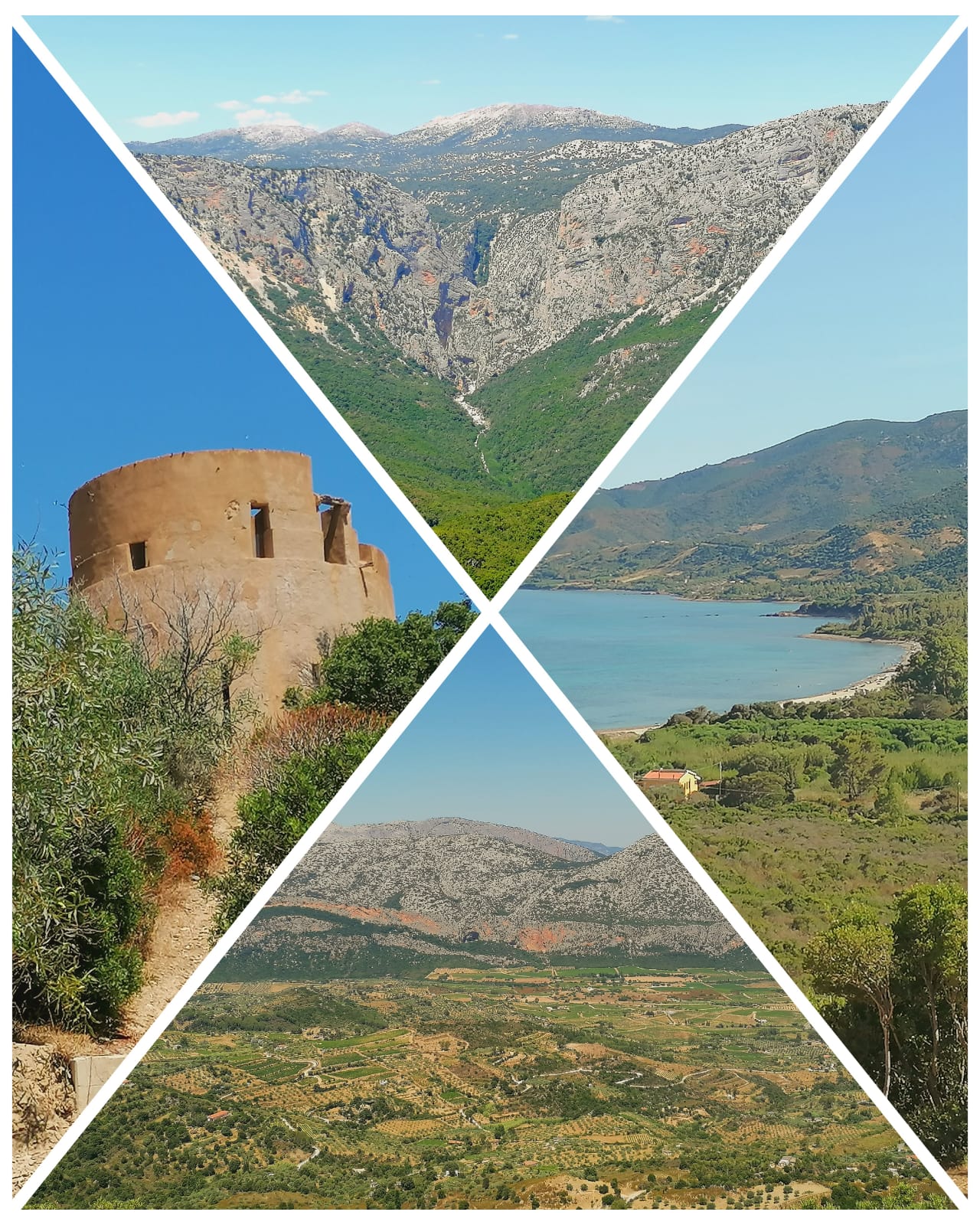
SARDINIA | HOTEL PUNTA MOROS | LOCALITA SAN GIOVANNI DI SARRALA: Distances on Google maps bear no relation to travel time – this is a lesson one soon learns driving in southern Italy, and Sardinia is no exception. Road conditions and distractions add unforeseen dimensions to any planned journey. You would think that after seven weeks in Italy, we would know that by now. But …
Our route planning was complicated by no internet connection, so follow the main road, right? With a mere 150 kilometres to traverse, we envisioned a slow meander south down the east coast, a stop off for lunch and a swim at a beach that caught our eye. None of the above materialised.
Sidetracked by signs advertising Europe’s tallest stalagmite (38m), a medieval church with prehistoric ruins and a beach that was emblazoned on billboards along the highway when we first made landfall on the east coast – none of these detours panned out – not least because these alluring signs never come with distances.
And then we climbed – at an average speed of 35km/hr – up the corkscrew curves of the Passo Genna Silano and over the Supramonte with its river-carved ravines, montane forest and moonscape peaks, to an altitude of 1,017 metres, without any villages for 50 kilometres – other than a farm selling goat’s milk pecorino, before slaloming back down again, having, by now, been overtaken by siesta with no lunch to be found. Lee had to ‘make do’ 😉 with an espresso and a gelato.
The day took another unexpected turn when, six hours later, we checked in at our backwater country hotel and were greeted by a South African from Jo’burg. Katya married a Sardinian in South Africa, divorced him in Sardinia and is still here after 16 years. We are the first South African guests. [IMG_20260620_172903]
DAY 54: (21 June 2026)
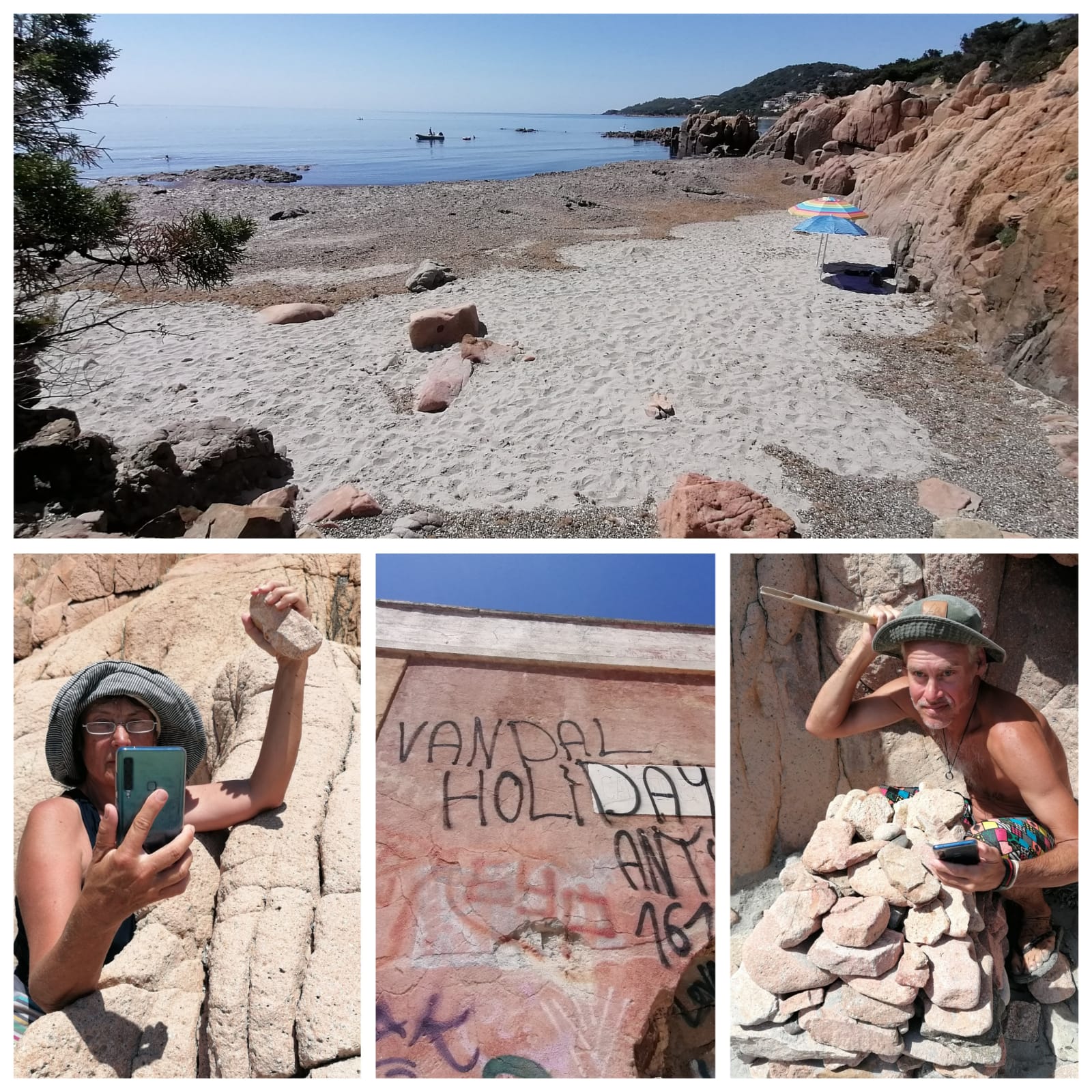
SARDINIA | FOXI MANNA BEACH: Even on a Sunday, we didn’t break a sweat finding our own private beach. The heat, however … We spent the day planning our assault on Rome under our ombrelli – which have multiplied, thanks to Katya.
DAY 55: (22 June 2026)
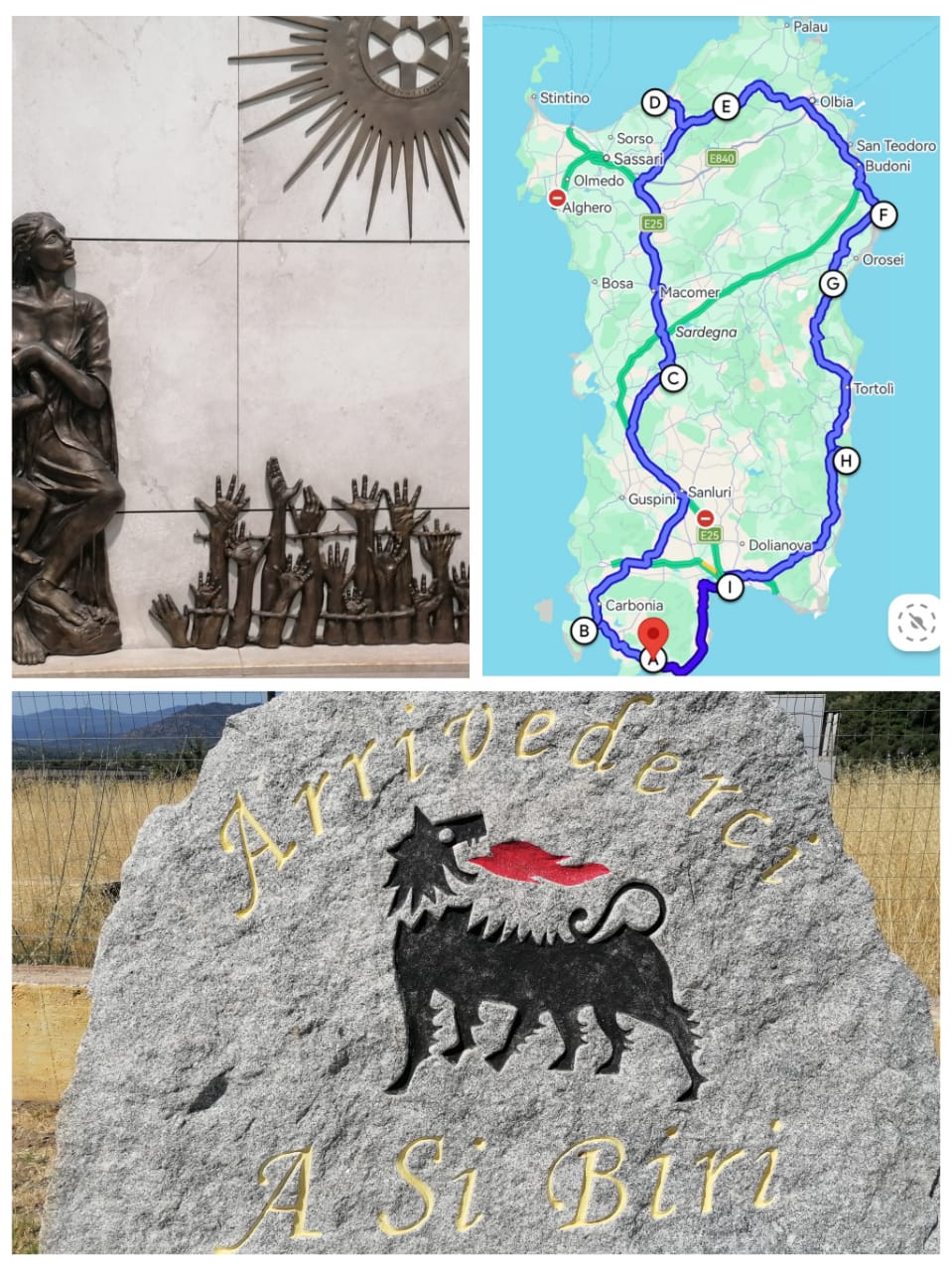
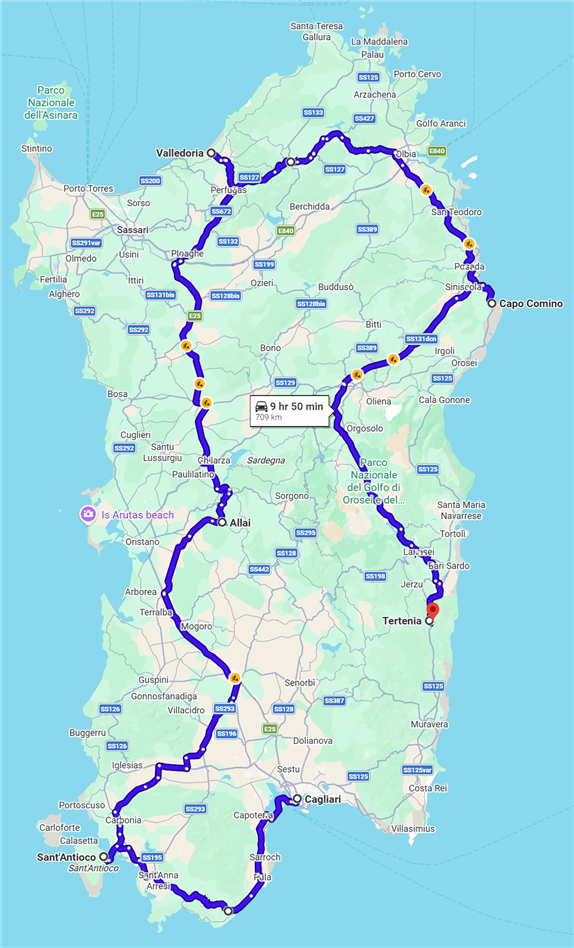
SARDINIA | SOUTH-EAST COAST: After 2 weeks and 1,292 kilometres of driving up, down and around Sardinia, we returned the rental car to Cagliari today, taking the scenic route – naturally – down the east coast.
The rollercoaster roads, splashed in pink, white and cerise oleanders, sweep us past spiaggias (beaches) and scoglias (cliffs), capos (capes) and calas (coves), hillside villas and seaside villages in hues of cream and rust and sand set against a sea of turquoise and tanzanite and tourmaline.
The island and its laid-back, down-to-earth people – the depth of history, the height of art, the eye for beauty, the love of life – and their dogs – have stolen our ❤️❤️❤️ We’ll be back.
ROME
DAY 56: (23 June 2026)
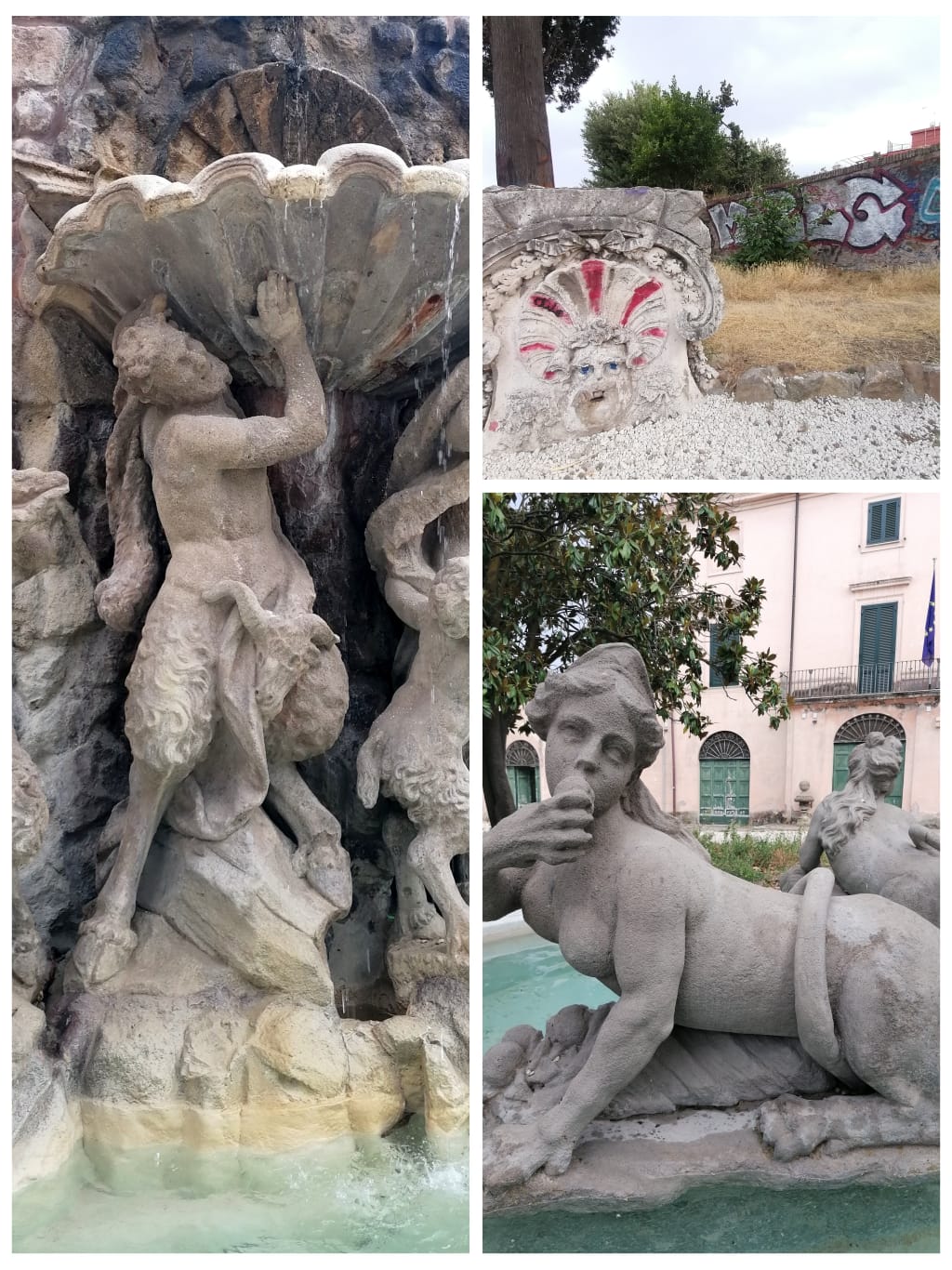
ITALY | ROME (LAZIO): During the reign of the Emperor Trajan (98-117 AD), there were as many as 1,300 fountains in Rome. Almost 2,000 years later, in the nearby public park of Villa Sciarra, some fountains still flow, providing a mosquito breeding ground in the sweaty heat of a Roman summer. Neo-classical statues muscle their way through the overgrown shrubbery, miraculously unmolested by graffiti guerrillas.
Our hour-long evening flight out of Sardinia was delayed and we checked into our overnight accommodation near Rome’s quiet, rural airport of Ciampino after 22:30 last night. We took the train into Rome’s main Termini Station this morning, and finally landed at high noon in Giancolense, Rome’s most densely populated suburb, which translates into we could lower a basket to the pastry shop, bakery, produce market, bar, butcher, cafeteria and supermarket and never leave our terrazza. We have stocked up on gelato and Prosecco … just in case.
Saint of the Day
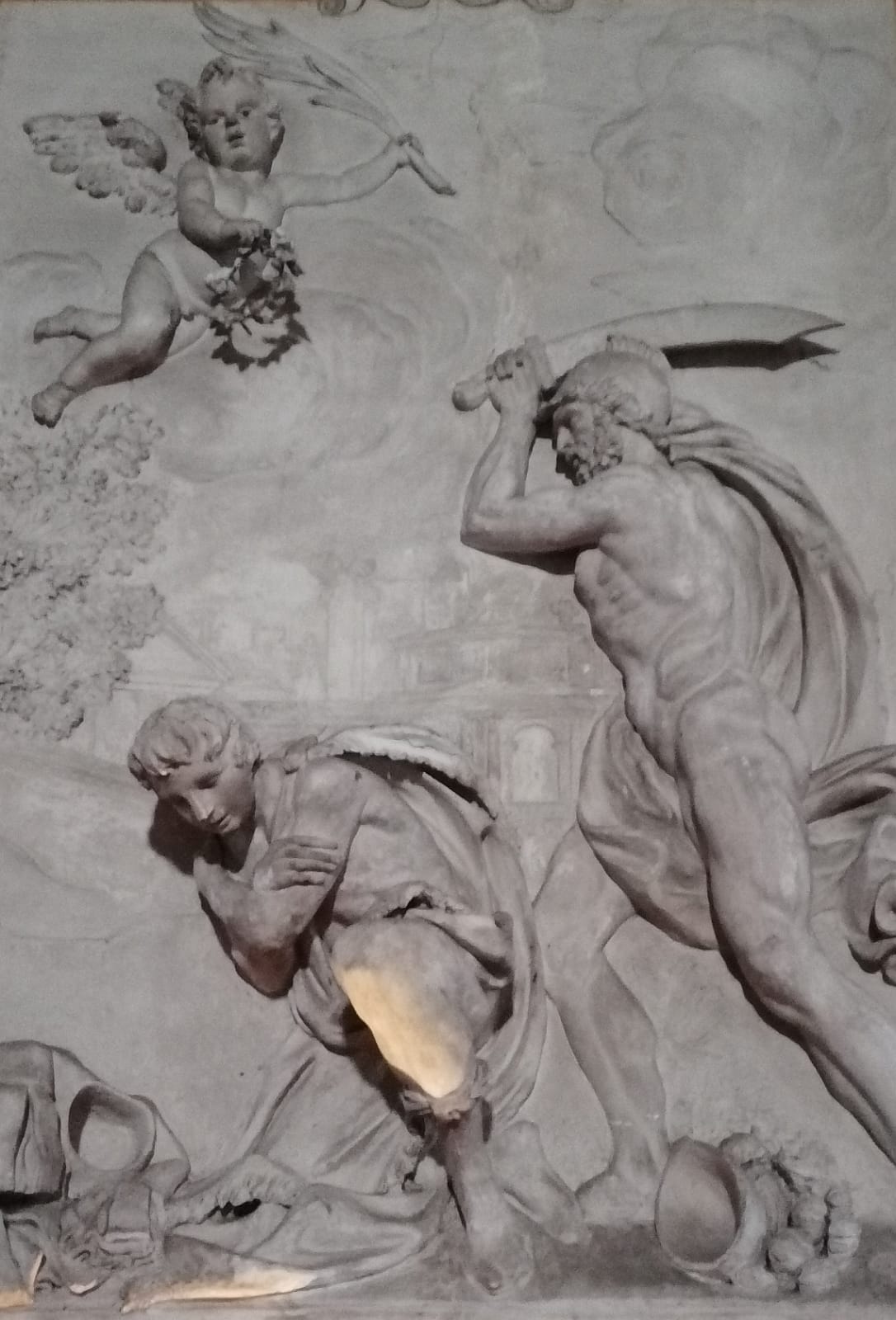
The Basilica di San Pancrazio, with its early Christian catacombs, dates back to the 6th century. It was built on the burial site of the 14-year-old Turkish-born martyr – and patron saint of children – who was beheaded in the Diocletian persecutions (c. 303 AD), along with his uncle who had fostered the orphan in Rome. A fragment of his head is purportedly in the reliquary on display. We were the only visitors.
Basilicas are churches recognised for their historical, architectural or spiritual importance and granted special ceremonial privileges by the Pope. There are four major basilicas, all in Rome – Saint Peter’s, Saint John Lateran, Saint Mary Major and Saint Paul Outside the Walls.
Globally, there are over 1,800 minor basilicas, of which the Basilica of Saint Pancras is one.
DAY 57: (24 June 2026)
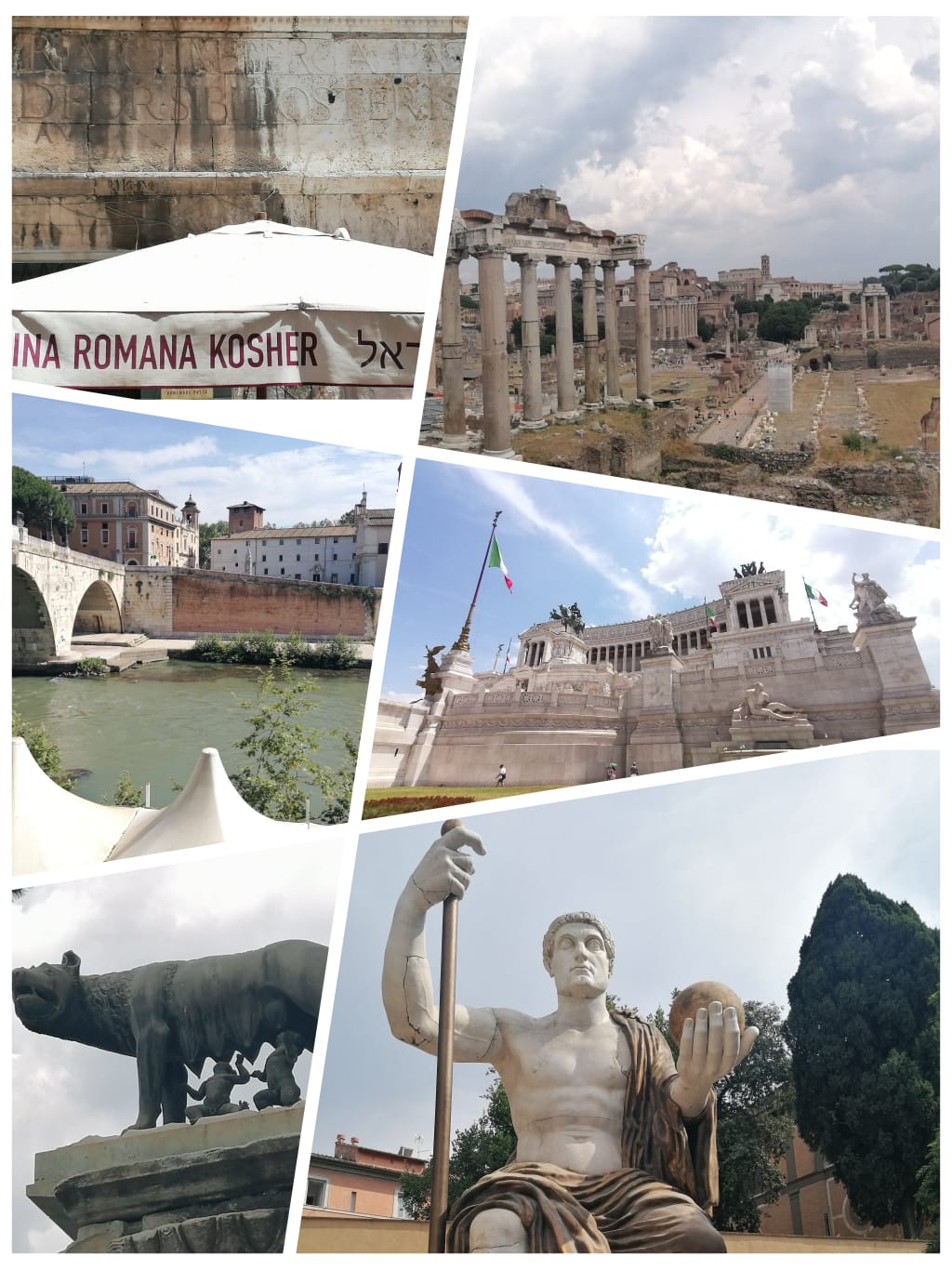
ITALY | ROME: On our first full day in Rome, we covered less than 1% of the Tourist Map, and walked and climbed some 15 kilometres in a swampy heat that made for excellent sales in iced water and hand- and battery-powered fans. It was worth every drop of sweat.
We crossed the Tiber River at the Island, with an unscheduled stop at the Basilica di San Bartolomé All’ Isola, dedicated to contemporary martyrs of the Catholic Church slain by Fascists, Nazis, Communists, the Sicilian mafia and South American drug dealers. Missionary John Bradburne, killed in Zimbabwe in 1979, is one of those remembered.
Just over the river is the Jewish Ghetto (1555-1800s) – built around the 2nd-century BC ruins of the Circus Flamius – with its kosher restaurants, palatial synagogue and brass pavement plaques commemorating those deported to Auschwitz.
Having travelled a couple of 100 metres in distance and a couple of millennia in time, we stumbled upon the 16th-century Roman Baroque Palazzo Mattei di Giove, and another hour vanished.
Then the Vittoriana – the monumental 19th-century marble tribute to a united Italy’s first king, Vittorio Emanuele II (1820-1878) … and another couple of hours evaporated.
The rest of the day delivered the massive replica of the ancient Colossus of Constantine on the Palatine Hill and 124 marble steps to ‘St Mary of the Altar in the Sky’ (Santa Maria in Aracoeli) – dating to the 6th century and built on the site of a Roman temple to Juno – where we sheltered from a cloud burst to find choir practice underway by youngsters from Grand Rapids, Michigan USA.
And we didn’t spend a cent. 👏 👏 👏
Saint of the Day
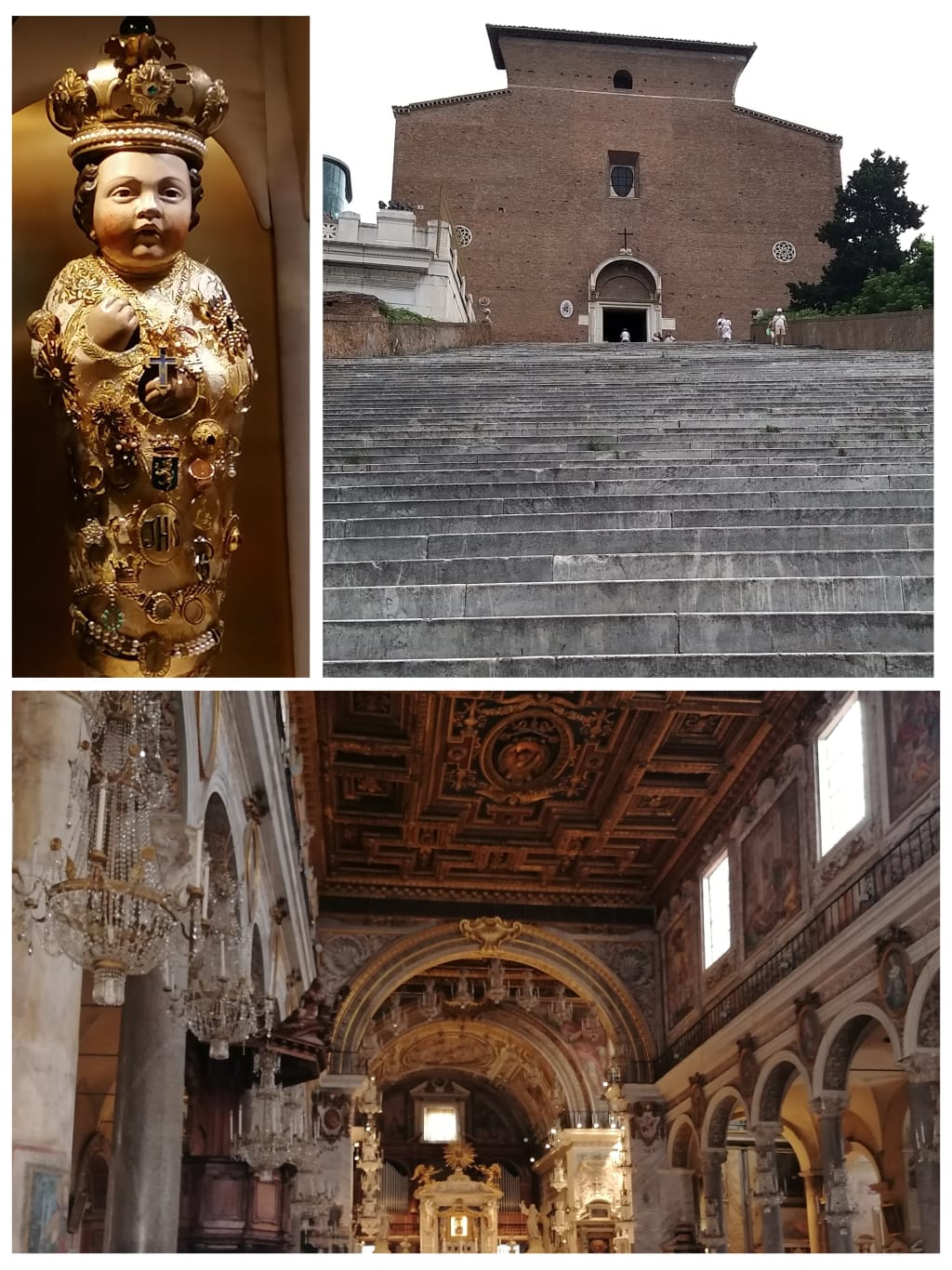
‘At dusk, on the Feast of the Epiphany, the whole city is to be found on the Capitoline Hill to receive the blessing of its tiny, great king.’
The Holy Bambino of Aracoeli was carved from an olive tree from Gethsemane by a Franciscan friar in the late 15th century with the miraculous assistance of an angel who helped with the paint job. Forced by a storm to throw the statue overboard on his return to Rome, the case came ashore at the port of Livorno in the wake of the ship.
Stolen by a Roman matron and returned when she fell gravely ill, ransomed by an 18th-century nobleman to save it from immolation by Napoleón’s troops, the original statue disappeared on 1 February 1994 and is still missing.
DAY 58: (25 June 2026)
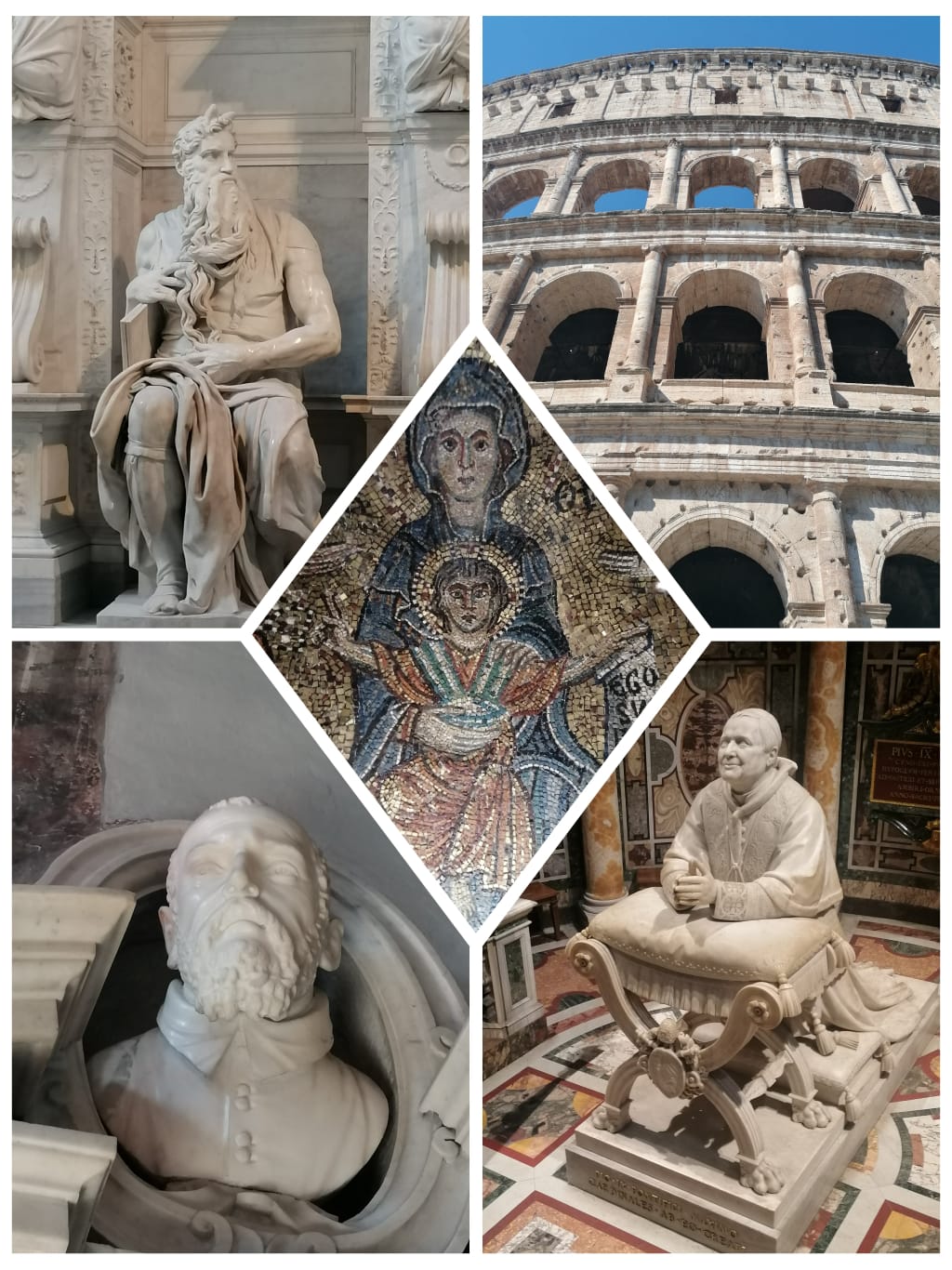
ITALY | ROME: The Colosseum (72–80 AD), funded by the loot from Herod’s Temple in Jerusalem, the Arch of Constantine (315 AD) – the Emperor who legalised Christianity and dealt the death blow to paganism – the chains that bound Saint Peter in Jerusalem from which he miraculously escaped, wood from the Holy Manger, the column on which Jesus was flagellated, one of Rome’s oldest churches, one of Bernini’s earliest works, Michaelangelo’s Moses and a gelato flavour called ‘snowfall’, expressly commissioned by one of the city’s four papal basilicas – just another day in Rome.
Day 59: (26 June 2026)
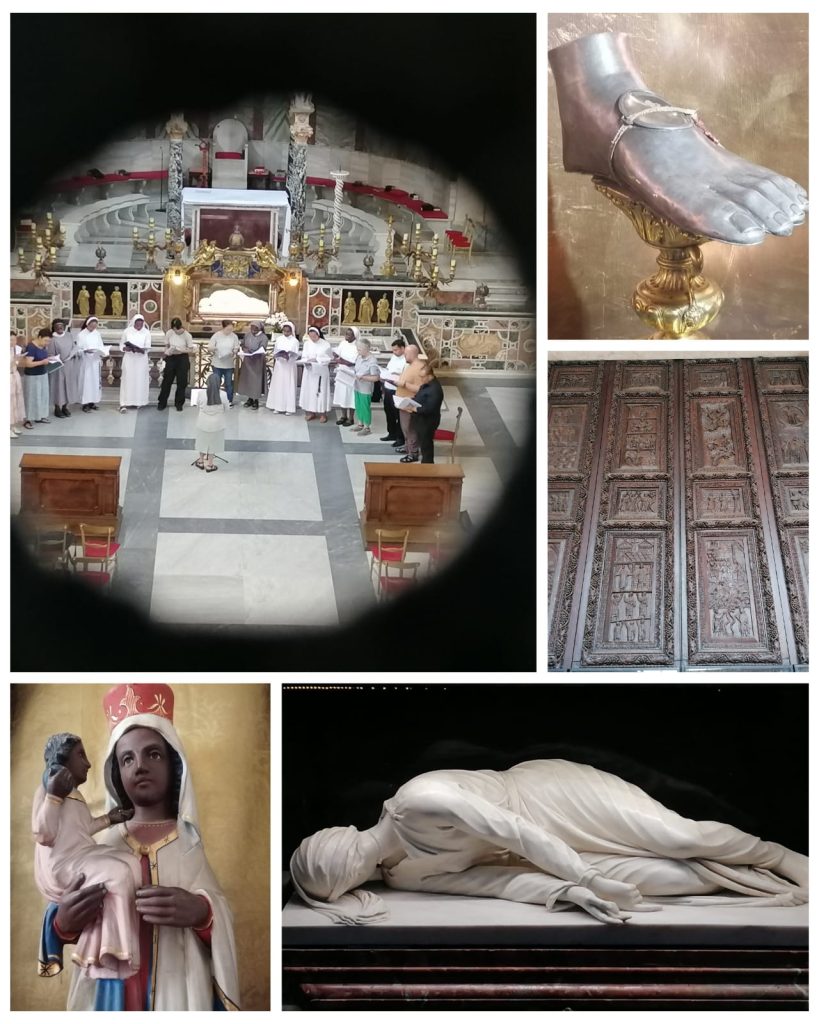
ITALY | ROME: More marvelous mosaics, medieval masterpieces, Mary Magdalene’s foot, virgin martyrs impervious to putrefaction, convent choir practice, a saintly supermarket and Benedictine bottle store, the world’s oldest wooden Christian artefact – the original 5th-century cypress doors of the Basilica of Santa Sabina – and Saint Peter’s Basilica, but only from the outside, as it was shutting up shop.
Saint of the Day
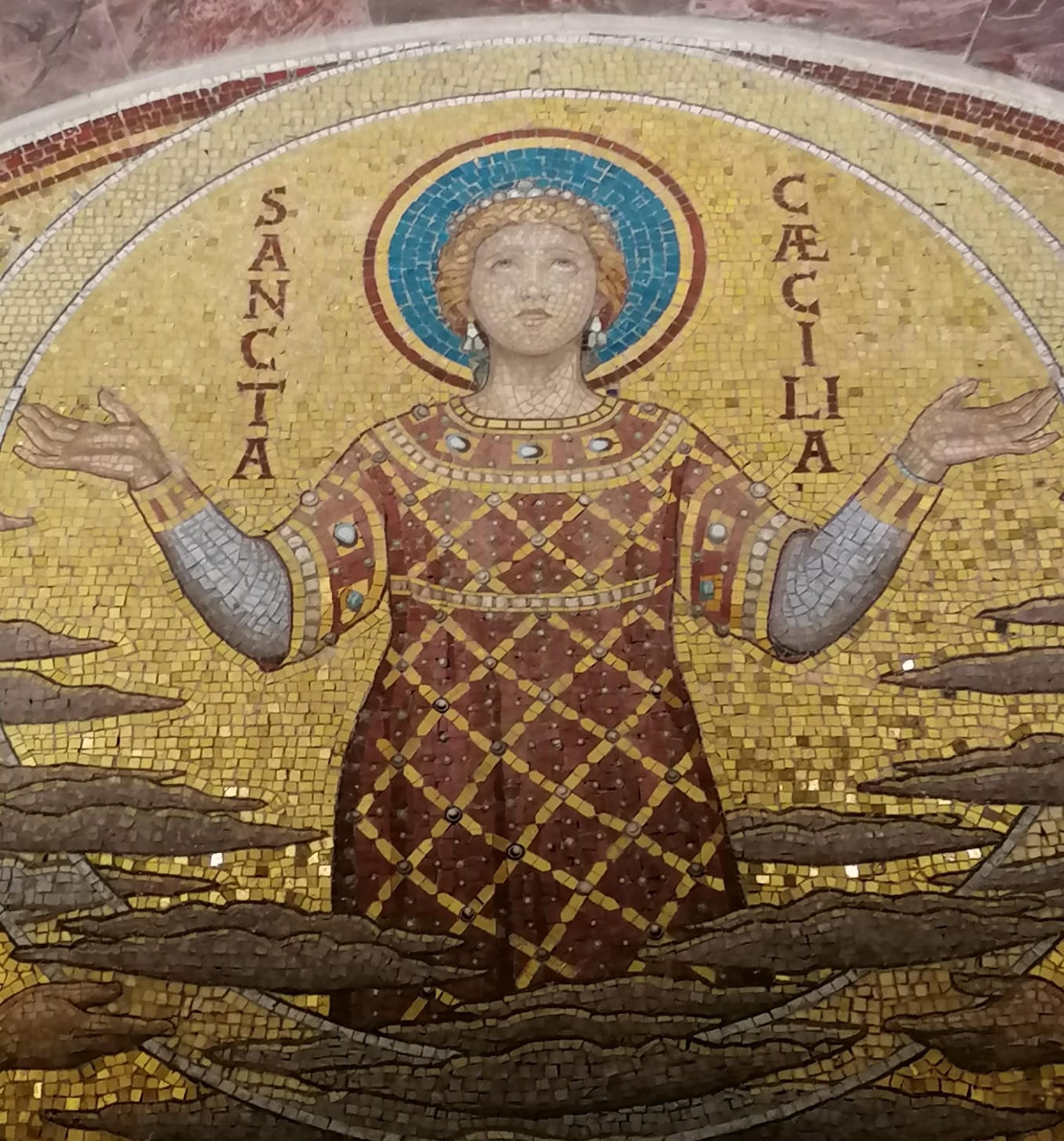
The patron saint of music, Cecilia was a 3rd-century Roman noblewoman who is said to have survived for three days after three attempts to decapitate her. Some 1,300 years later (1599) when her tomb was opened, she looked as though she was sleeping, which is how S. Madero portrayed her in the famous sculpture at the altar of Santa Cecilia in Trastevere.
Day 60: (27 June 2026)
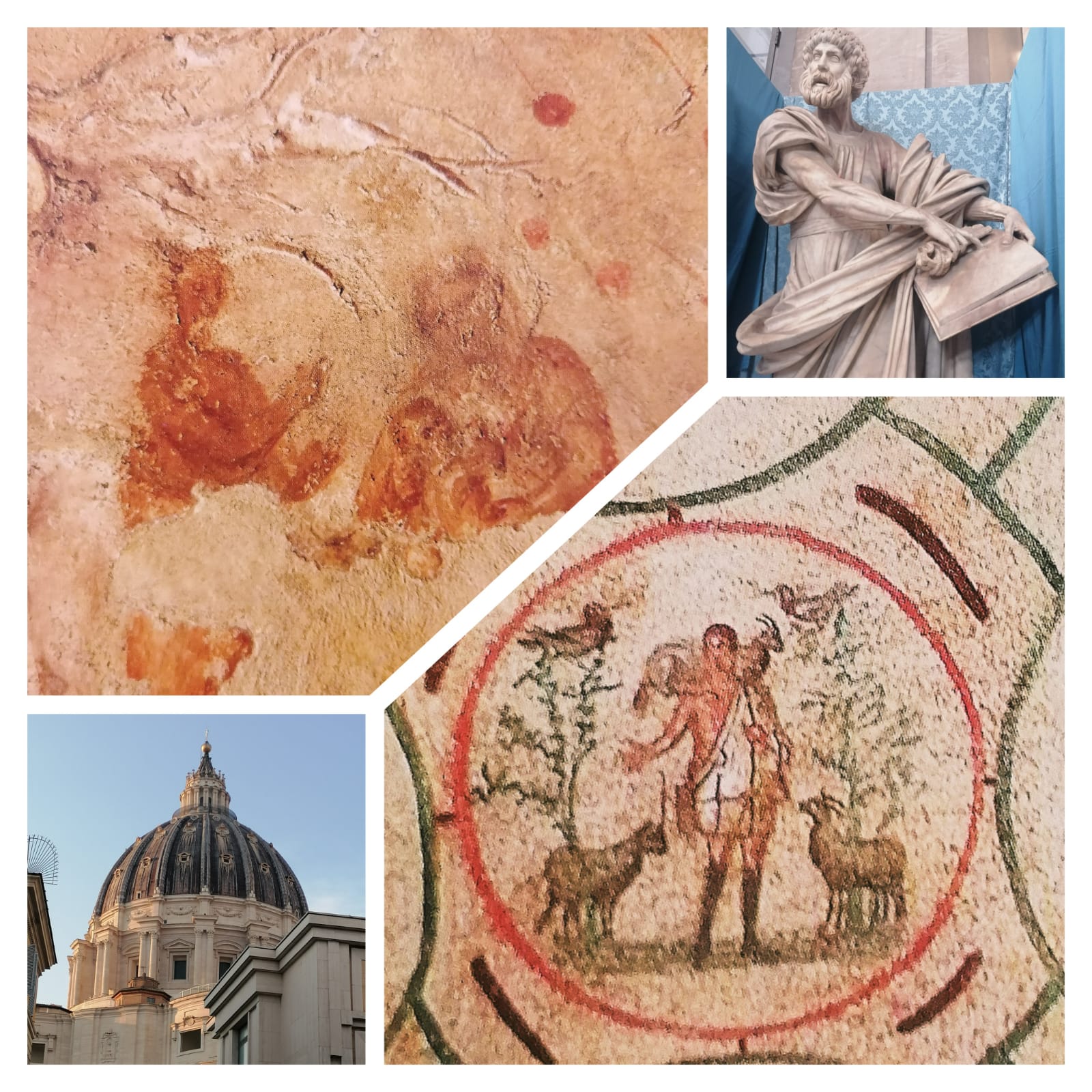
ITALY | ROME: From the overweening splendour of St Peter’s Basilica in the papal enclave carved out of a united Italy for the sake of peace by Mussolini in 1929 – a peace for which the Italians are still paying; 0.8% of their personal income tax goes to a designated recognised religion – we went underground to find the Roman roots of Christianity.
Some 30 years after Christ’s crucifixion, Emperor Nero needed a scapegoat for the Great Fire of Rome in 64 AD. In this first wave of persecutions, the disciple Peter and the apostle Paul met their deaths by upside-down crucifixion and decapitation by sword. John was exiled to the Greek island of Patmos by the Emperor Domitian at the end of the first century AD. The attempt to stamp out this anti-pagan, egalitarian threat to the Empire reached its zenith in the ‘Great Persecution’ of Diocletian (303-311), before Constantine legalised freedom of religion with the Edict of Milan in 313, and sounded the death knell of the old ways.
The persecutions, an edict that banned burials within the city limits and the desire to be buried together, drove the Christians – and others – underground. There are 60 catacombs around Rome. The Catacombs of Priscilla, named for a complicit Roman convert, held 44,000 early Christian graves, dating from the 2nd and 3rd centuries, tunnelled into an ancient tufa mine, 13 kilometres long and 20 metres deep. We saw but one kilometre: the common burial niches and arched alcoves of the martyrs stacked seven-deep along both sides, with a second floor below.
Some of the earliest Christian art was painted by oil lamp on the tunnels’ walls and roofs, including the oldest known depiction of Mary dated ~230 AD. The imagery and iconography pre-dated Constantine and the vision of the cross that promised him victory. The fish and the anchor are etched into the stones with which they closed the tombs. Peter was a fisherman after all.
Above ground is Villa Ada Savoia, once the estate of the House of Savoy and today one of the largest parks in Rome. On 25 July 1943, Mussolini was arrested at the royal residence here on order of King Victor Emmanuel III.
https://www.liturgicalartsjournal.com/2022/09/the-paleochristian-art-of-roman.html
Day 61: (28 June 2026)
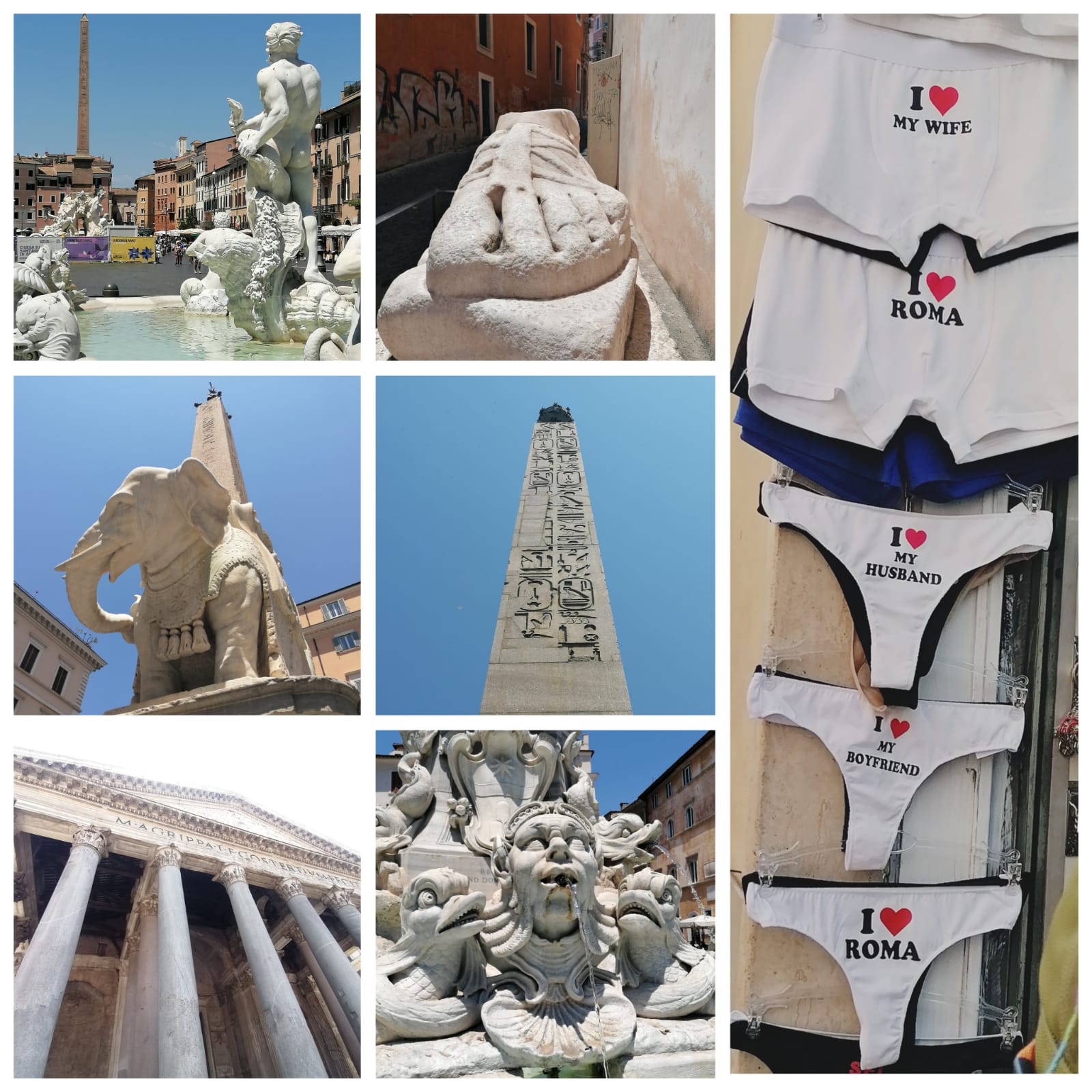
ITALY | ROME: We saved the star turn for last, walking the well-trodden tourist route of the Centro Storico – along with much of North America it seemed – although, being a Sunday, it was less busy than normal.
Rome’s renowned fountains splashed and sparkled but did little to ameliorate the sweltering heat. At the Trevi – Rome’s largest and most famous – a whistle warned you off even if you’d bought a ticket to get close enough to cast a coin into the waters. Fed by an aqueduct built in 19 BC, 3 million litres of water flow into the fountain from a spring 22 kilometres distant.
Sheltering in the shade cast by 18th-century palazzos, we admired intricately carved Roman and cryptically carved Egyptian obelisks – one mounted on the back of a small elephant carved by Bernini. 13 still stand out of the 48 that once pierced the plazas of Imperial Rome.
After 1,000 years, the Pantheon’s massive colonnaded portico is still standing. The facade gives credit to its progenitor Agrippa (27-25 BC). The first pagan temple to be made over to the Christians – in the 7th century – the interior is the Church of Saint Mary and the Martyrs.
Too many churches, too little time. There are more than 900 in Rome.
In the uniquely Gothic church of Santa Maria Sopra Minerva, white-robed Dominican monks sang mass in the Chapel of Pope Clemens VII, the Medici pope at the time of the 16th-century sack of Rome by German Lutherans. He was so unpopular that “had it not been for the intervention of his nephew, Cardinal Ippolito de’ Medici, the body would have been dragged round the streets on a meat-hook.”
“That’s a banging church,” one young Briton exclaimed in passing. Says it all, really.
NORTHERN ITALY
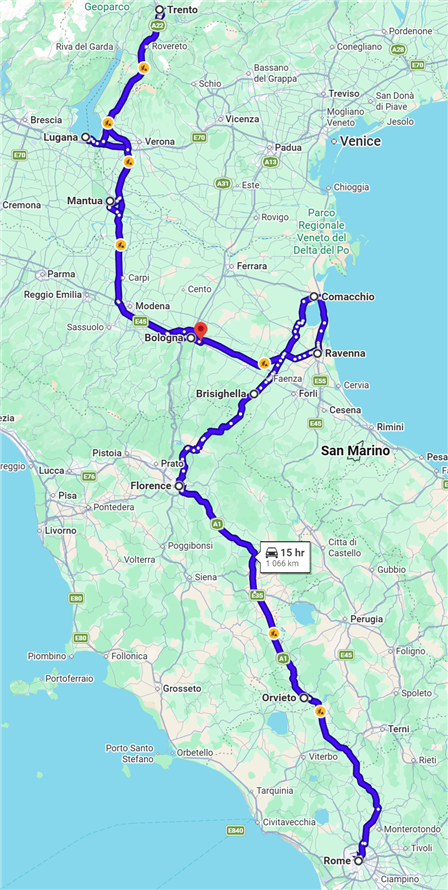
Day 62: (29 June 2026)
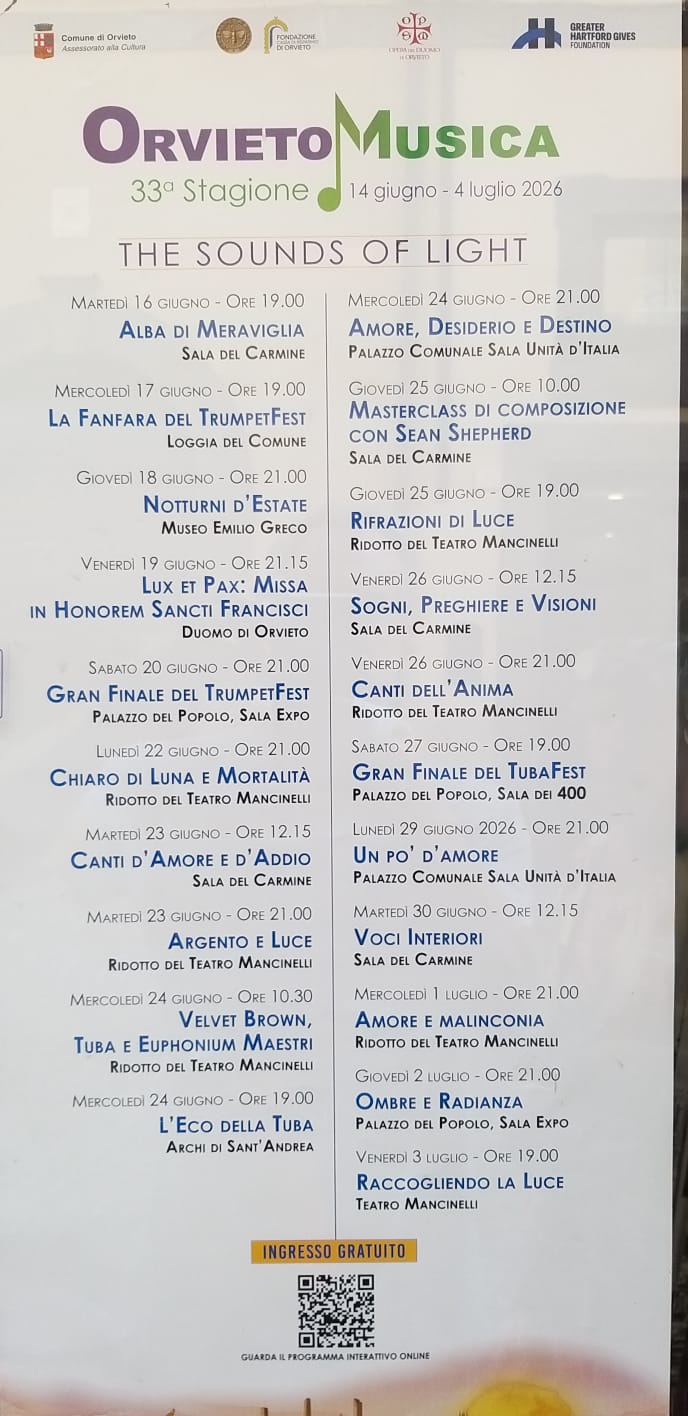
N. ITALY | ORVIETO (UMBRIA): Dripping with sweat in a delayed train with no air-con at Rome’s Tiburtina Station this morning having running out of data, we had no idea that a fellow passenger from Pennsylvania, who hot-spotted us, would lead us to the 33rd Orvieto Chamber Music Festival, where we found ourselves tonight. Her daughter is a soprano on a summer opera programme in Italy and was part of this evening’s lineup, which featured young vocal and instrumental musicians from around the world, performing a repertoire entitled ‘A Little Bit of Love’, ranging from Brahms and Beethoven to Bernstein. Entrance was free and so was the Prosecco. 🇮🇹 😍
Day 63: (30 June 2026)
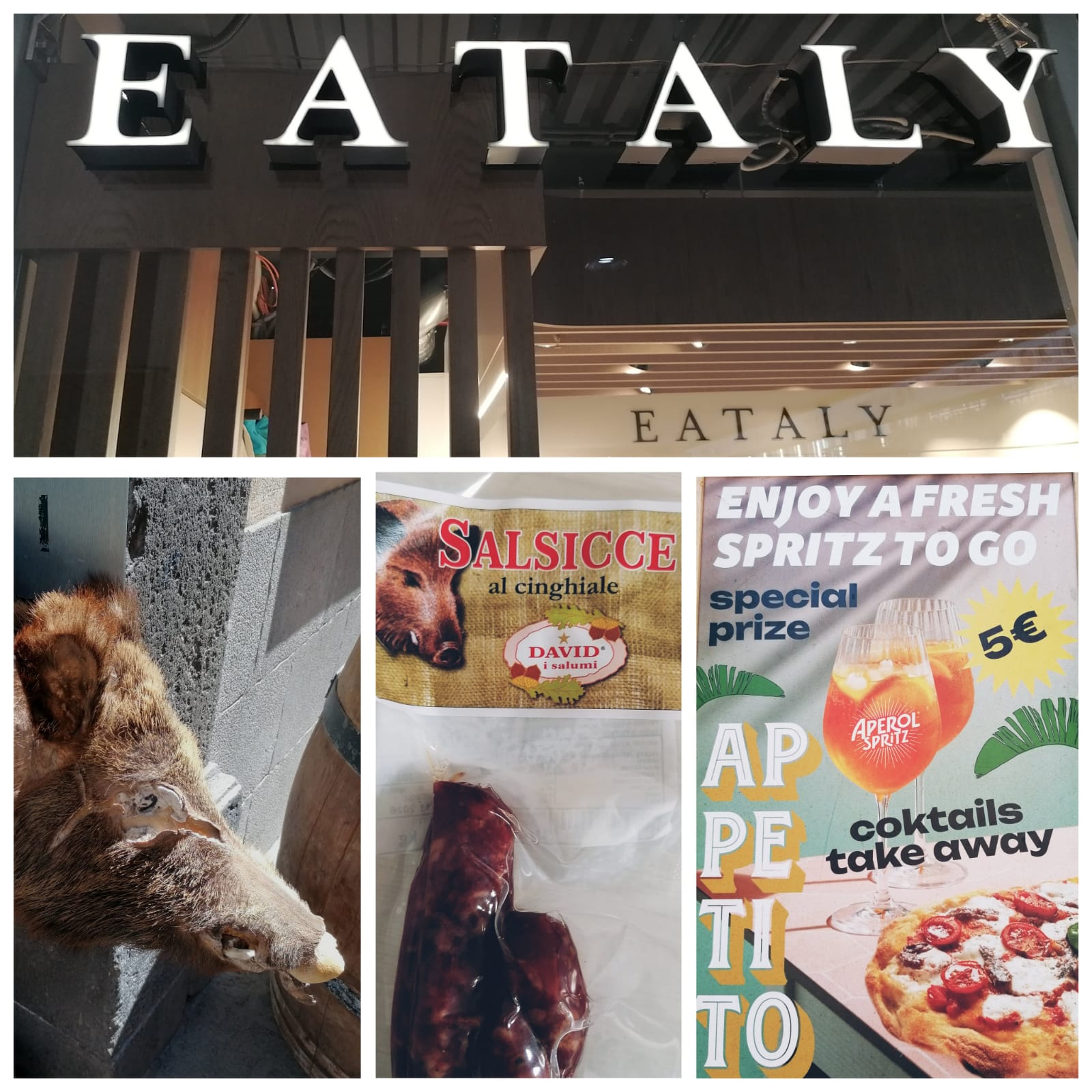
N. ITALY | ORVIETO: A morning farmer’s market, a midday music concert, and an afternoon’s meander through the medieval alleys and churches of Orvieto was the metronome of our day. Along with the violins, violas and violincellos, regional delicacies struck a high note – wild boar salami sausage and truffle-infused spread, salsa and pesto sprang unbidden into our shopping bag. Oh, well …😋
Dish of the Day
Umbria’s mountainous forests harbour buried culinary treasures. Truffles (tartufi) are the much-prized mushrooms that grow among the roots of the poplar and willow, turkey oak and hornbeam. Truffle-hunting, using trained dogs or pigs to root out the tubers, is an ancient Umbrian tradition. While some 7 to 8 species of truffles ripen throughout the year, black truffles (Tuber melanosporum vittadini) are Umbria’s speciality while Orvieto is rich in white truffles (Tuber magnatum pico). As high heat destroys their delicate aroma, white truffles are either served raw, sprinkled on bruschetta or into salads, while black truffles can tolerate moderate heat and are finely sliced or ground into pasta sauces or risottos.
Day 64: (1 July 2026)
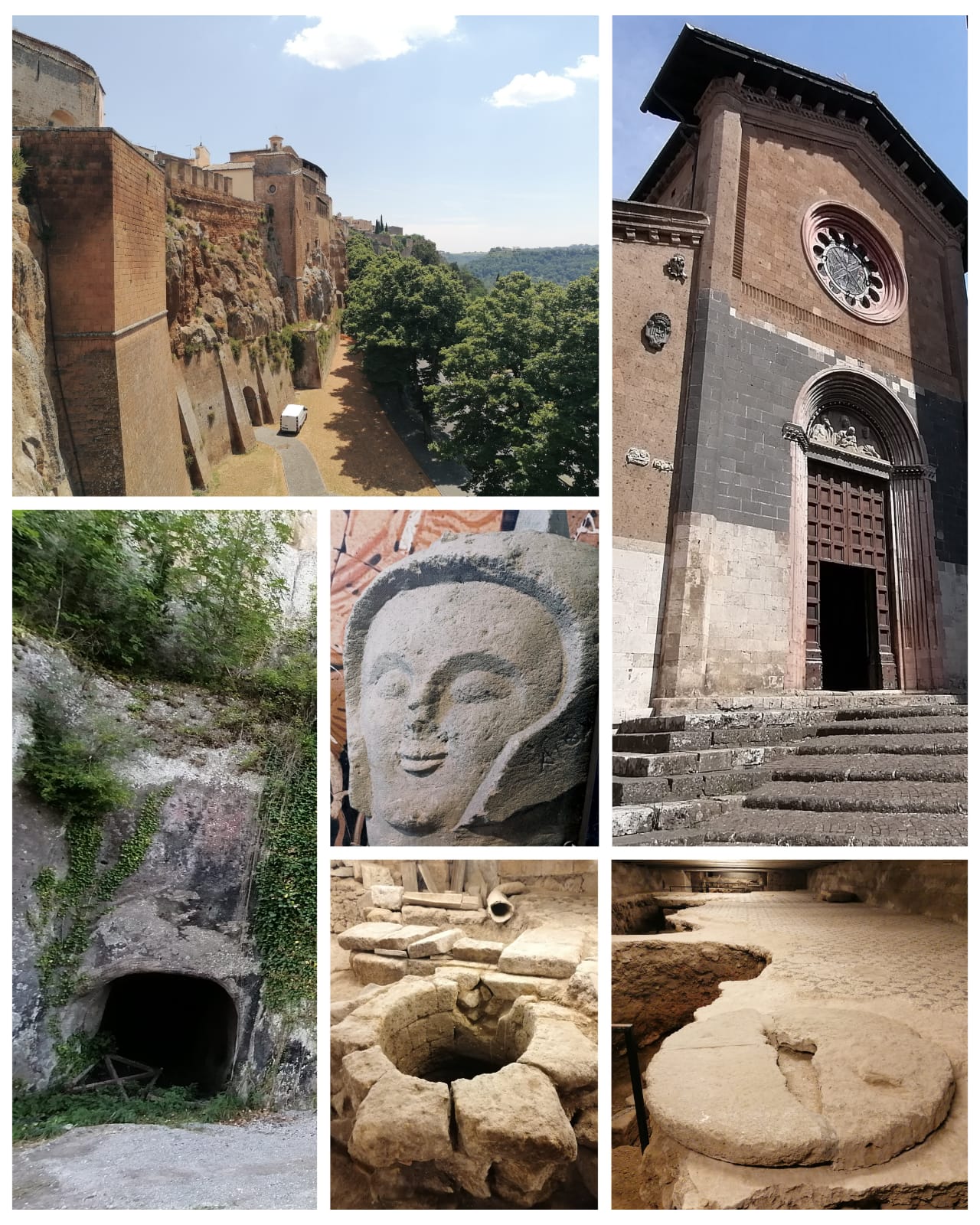
N. ITALY | ORVIETO: Mountains and hills make up more than 75% of Italy’s landmass. There’s not a lot of flat ground. Thus, over the millenia, people have built vertically on top of earlier settlements.
Nearby Bolseno Lake was once a volcanic crater that disgorged the tufa massif on which Orvieto had its roots. Today, we went underground to find them, into the tunnels and caverns hollowed out of the soft rock.
Under the 11th-century church of Sant’Andreas, 3,000 years of history are exposed, from the Middle Bronze Age, 8th-century BC basalt Etruscan roads and iron-melting furnaces, wells and cisterns – some as many as 60 metres deep, to the recycled Roman marble and porphyry used by 6th-century Christians, who built their church over an Etruscan Temple and a Roman Forum. “Orvieto,” said our archaeologist guide, “is like a washing machine”, wash, rinse, repeat.
Day 65: (2 July 2026)
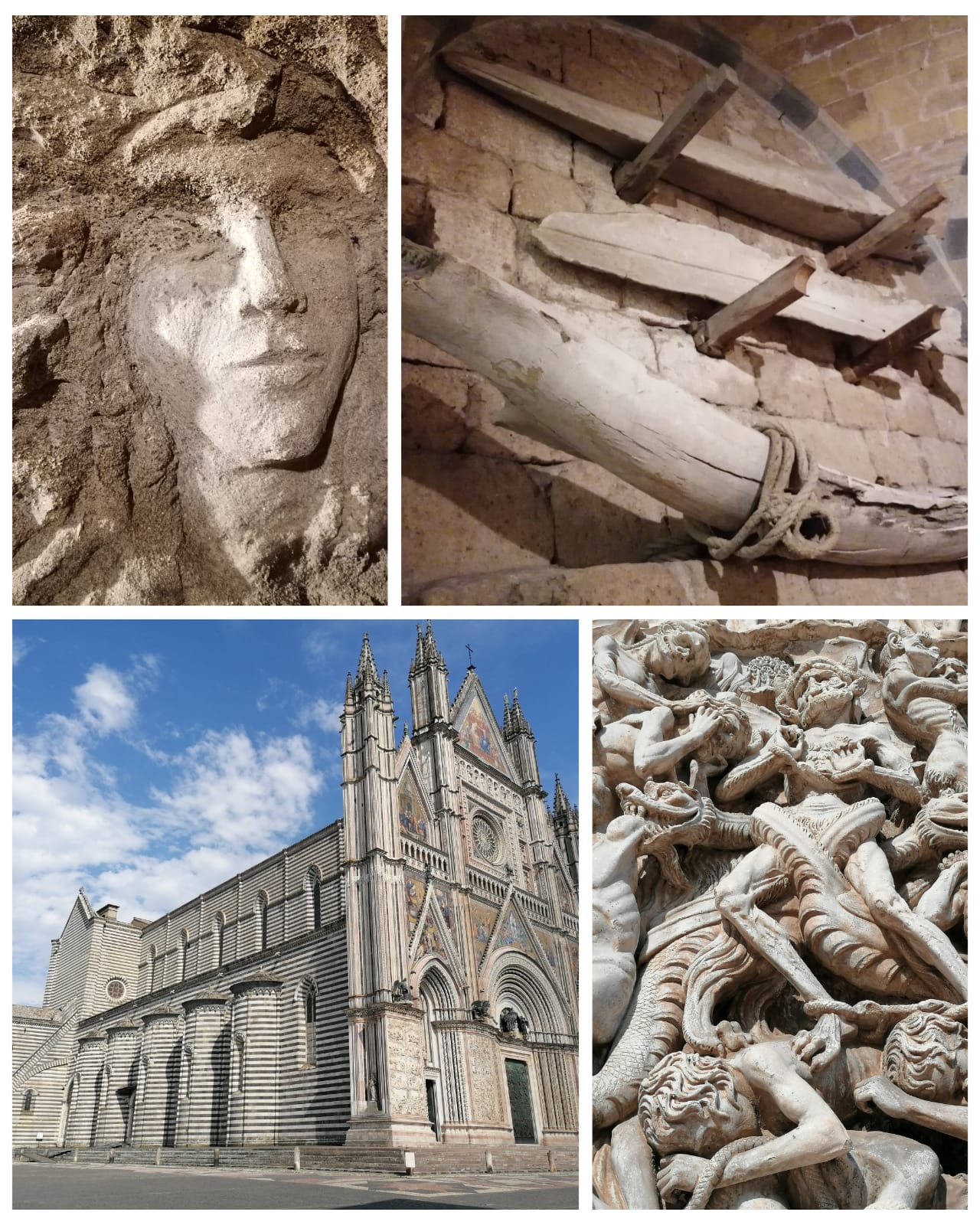
N. ITALY | ORVIETO: We awoke to a cannonade as a thunderstorm broke the back of the heatwave. We descended once more into Orvieto’s underworld, this time through a 1962 pastry shop-turned-restaurant. Eight metres below street level, Hadrian’s Labyrinth (Il Labirinto di Adriano) is a subterranean world that was concealed under the floor of a wine cellar. At 500 m2, it is one of the largest and most complex out of 1,200 such man-made cavities.
While there is an obvious advantage in living on top of a natural fortress, the disadvantage is how to get to the ground water when you’re more than 50 metres above it. Etruscan, Medieval and Renaissance wells and cisterns bear testimony to human ingenuity and industry. Nature contributed a 250,000-year-old cave, and a 220,000-year-old fossilised tree and an unknown sculptor shaped stone into fantasy.
The afternoon was spent in Orvieto’s Duomo, arguably the “most beautiful cathedral in Italy” – a 13th-century Gothic masterpiece of mosaics, marble bas-reliefs, two-tone stone and stained glass windows. From the laying of the first foundation stone to the saying of the first mass took a mere 7 years, the speed of construction, helped perhaps, by the Maurizio Clock – the oldest mechanical clock in Europe (1347/8), devised to keep the cathedral workers on deadline.
Most intriguing of all was the three fossilised ‘dragon ribs’ of unknown provenance in the church’s basement – likely whale bones, but the last time the Tyrrhenian Sea lapped at these shores was three million years ago.
Day 66: (3 July 2026)
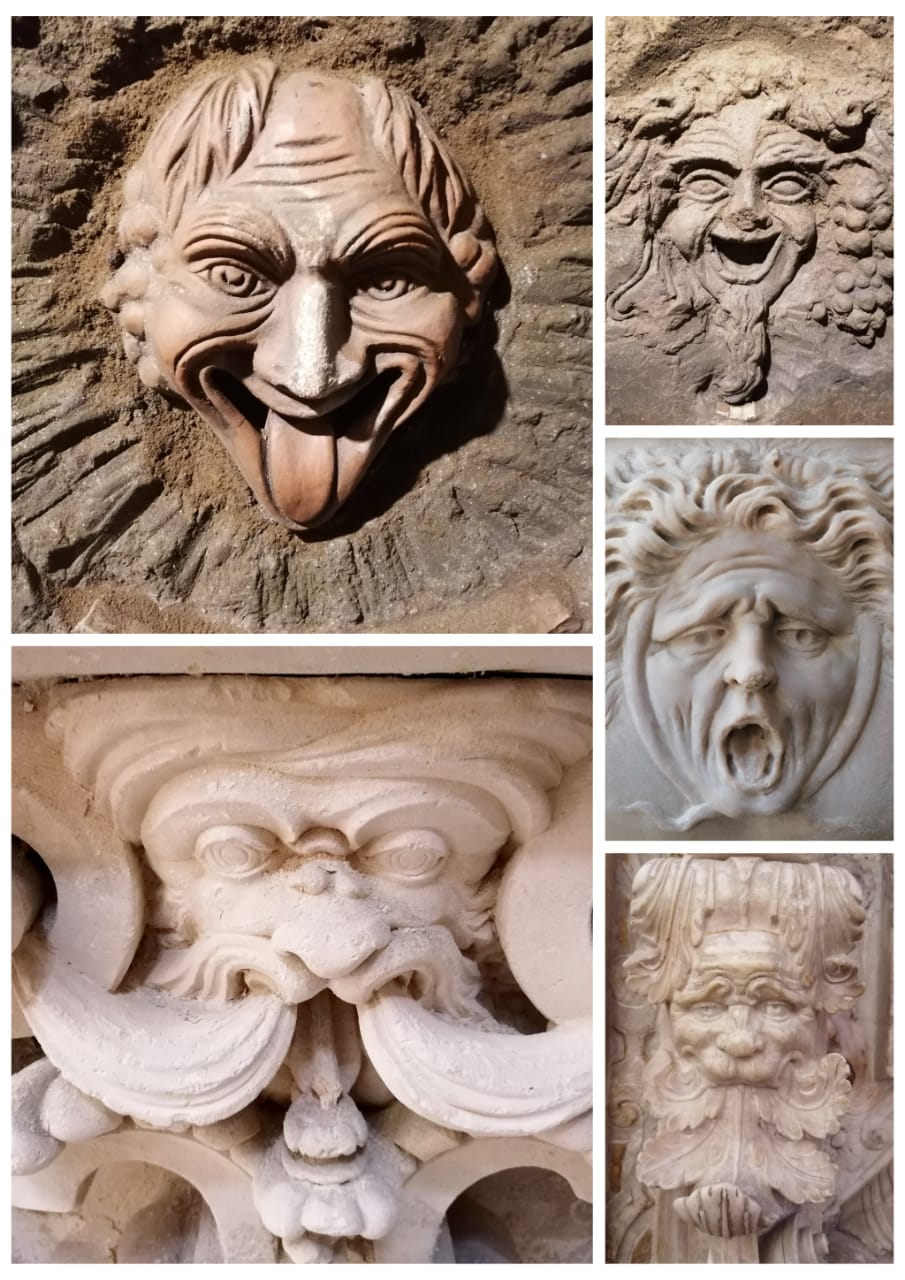
N. ITALY | FIRENZE (TUSCANY): Two short bus hops to the Orvieto Station, a two-and-a-half-hour regional train – quick, clean and comfortable – and a 30-minute local bus on which our tickets were checked by uniformed officials for the second time in 2 months – brought us to our monolocale (studio) with a view of Florence’s historic centre – the epicentre of the Renaissance – and its Duomo. The dome of the Cathedral of Saint Mary of the Flower – which took 140 years to complete (1296-1436) – is the largest masonry dome ever constructed. The Pantheon’s dome held the record for 1,308 years.
Which is all well and good but Florence in summer is hot, humid, mozzie-ridden and costly. The challenge – to find Firenze Gratis and how to avoid the afternoon 🥵. The ace up our sleeve is that we are here for the first Sunday of the month when entry to the big-ticket tourist attractions are free – and come with air-con. 😮💨
Day 67: (4 July 2026)
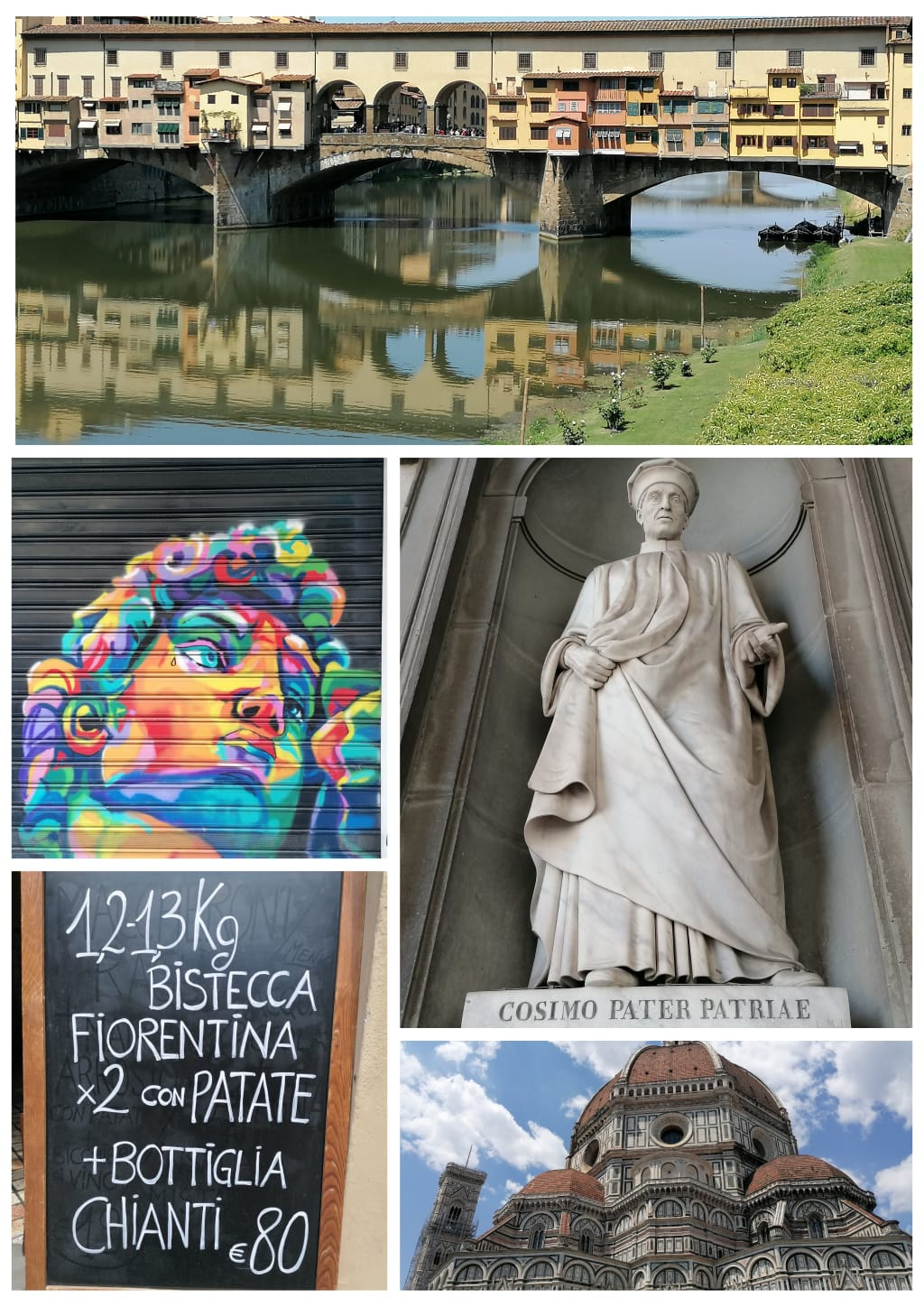
N. ITALY | FIRENZE: Trading on its illustrious past, Florence is underwhelming at face value, primarily because the 1966 flood wreaked more damage on the city than did WWII. Its artistic heritage was brought indoors and housed in over 60 museums and galleries. Appreciation now requires deep pockets. The streets are bland, grubby and featureless, sans balconies, window boxes or washing.
However, the Tuscan city’s history of murder, war, reprisals, revenge and executions set in motion by the power-hungry papal bankers changed the world. The Medicis kickstarted the Renaissance, giving us Michelangelo, Leonardo da Vinci, Donatello, Brunelleschi’s Dome, the Sistine Chapel and the Mona Lisa, to name but a few heavy-hitters.
In 1743, Anna Maria Louisa, the last of the Medici line, bequeathed 500 years of priceless art, high-end collectables and the family palazzos to Florence.
In turn, the city has made its mark on Italy’s culinary heritage with hefty steaks – and a price tag to match – and lampredotto, a sandwich (panini) with a filling made from the fourth stomach of the cow.
Day 68: (5 July 2026)
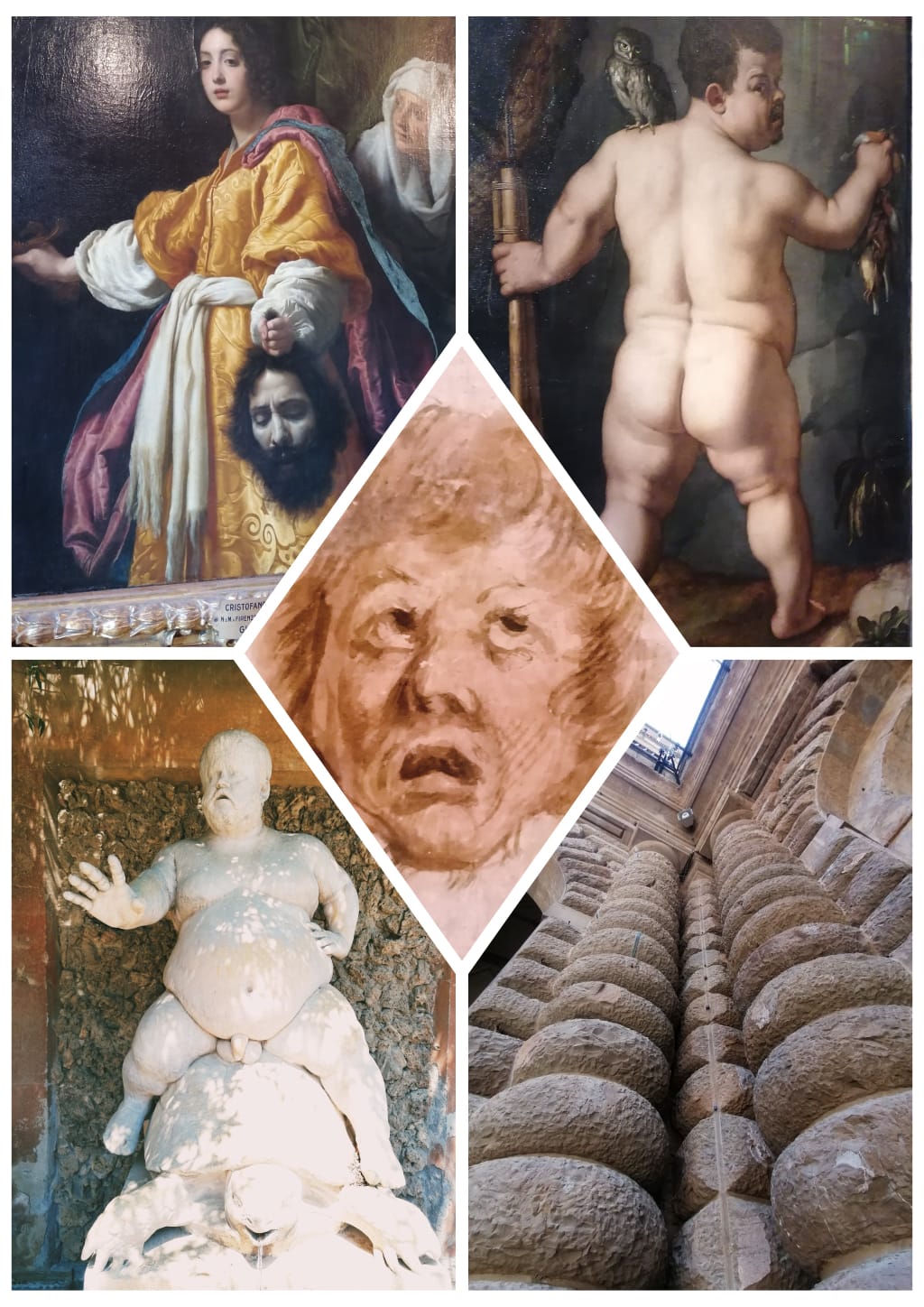
N. ITALY | FIRENZE: We took advantage of Free First Sundays to save ourselves €26p/p for Florence’s largest museum. The Palazzo Pitti was commissioned as the residence of a 15th-century Florentine banker but he died before he could move into the austere, unrelentingly symmetrical, stone fortress.
It was bought in 1549 by Eleonora di Toledo, the wife of Grand Duke Cosimo I Medici. She established the Boboli Garden, but also expired before taking occupation. It was only under her son that the Palazzo became the permanent residence of the Medici family and home to their mind-blowing 🤯 private art collection. Today, the Palatine Gallery showcases more than 500 mainly Renaissance paintings but it was Cosimo’s favourite dwarf ‘Morgante’ and Eleonora’s bizarre artificial grotto that stole the show, putting the ‘rock’ into Baroque.
Day 69: (6 July 2026)
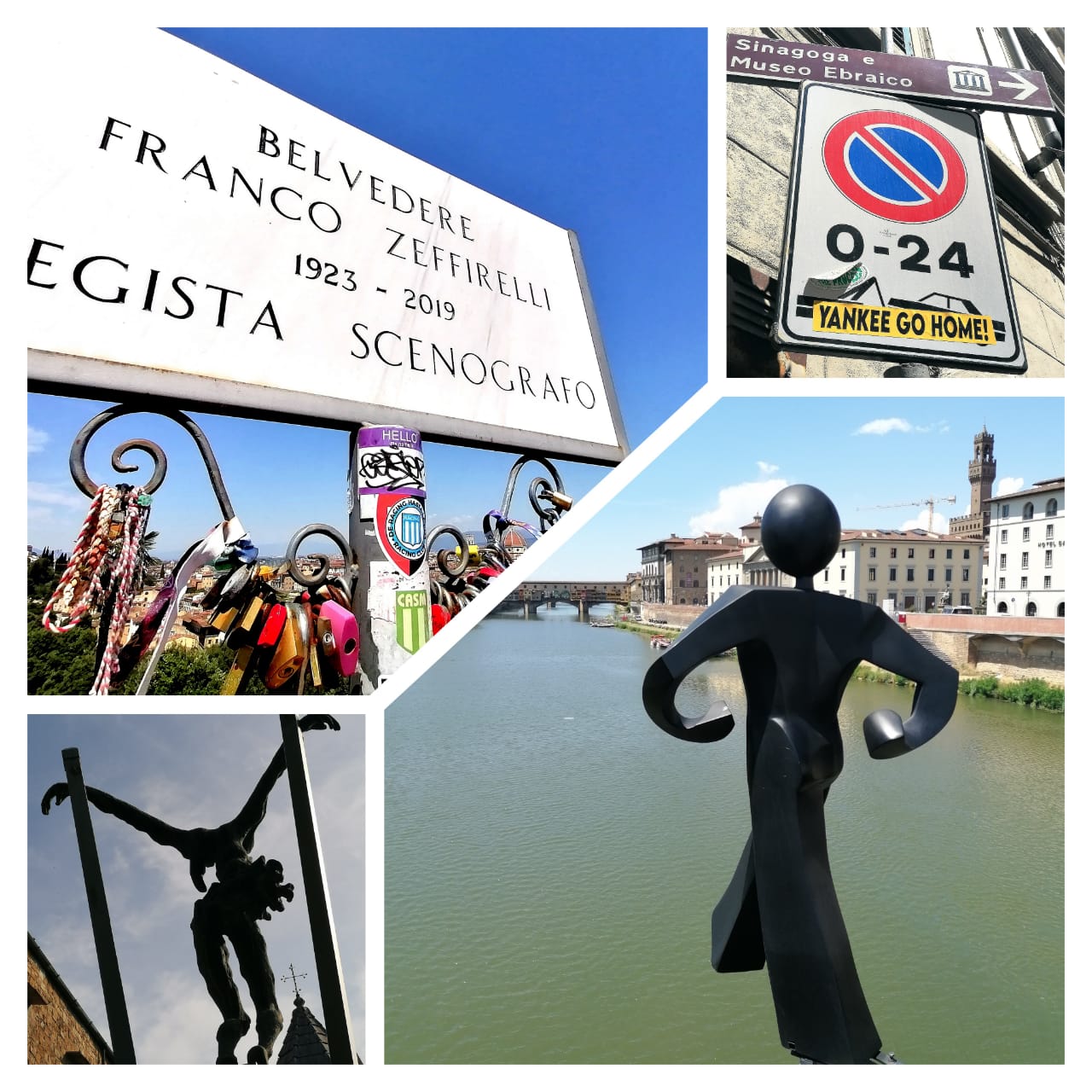
N. ITALY | FIRENZE: An early start this morning meant we beat the crowds to San Miniato with its iconic Firenze views, joining happy couples and their photographers taking pre-wedding pics.
It is, however, the dead who have the best seats in the house. The monumental Cimitero delle Porte Sante, with its ornate capellas and statuary, is a museum, an art gallery and a 🦟 breeding ground. A Who’s Who of the Dead, those interred and immortalised in stone include generals and war heroes, dukes, duchesses, writers, artists and legendary movie director Franco Zefferelli.
The adjoining Basilica of San Miniato al Monte is one of Florence’s oldest and most beautiful churches, with 12th-century mosaics, 14th-century frescoes and a 13th-century marble floor mosaic of the Zodiac, which has absolutely nothing to do with the 12 disciples.
Changing tack, our visit to the 19th-century Jewish synagogue and museum was scuppered before we could shell out the €9 p/p for tickets as they wouldn’t let me take a pen inside for “security reasons”. What’s a writer without her pen? We left … which encapsulates the sentiment of some locals, expressed on stickers plastered throughout the Old City – ‘Yankee Go Home’. After this conversation between an Italian tour guide and his American clients overheard on the Piazzale Michelangelo, who can blame them?
“Florence was the capital of Italy for 5 years.”
“Oh, was it?”
“And so was Turin.”
“Oh, really?”
“And now Rome.”
“Oh, is Rome the capital?” 🤔
Day 70: (7 July 2026)
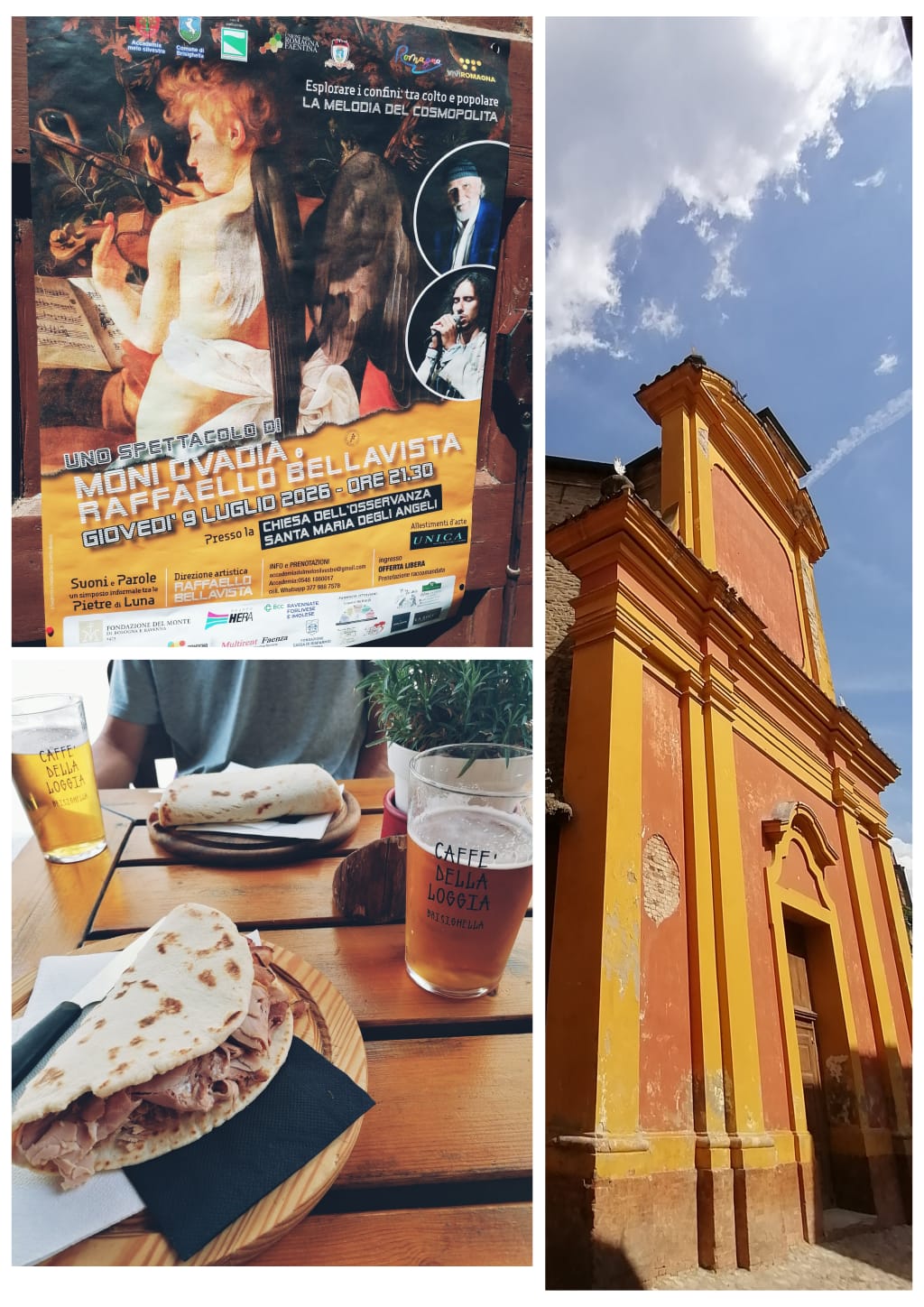
N. ITALY | BRISIGHELLA (EMILIA-ROMAGNA): In Italy, in summer, you can gauge how hot a place gets by when the siesta ends and life returns to the streets. Leaving the dripping, itchy heat of Florence behind us on a two-hour train ride into the Apennines of north-east Italy we thought we were climbing into cooler climes. However, in Brisighella – another of Italy’s ‘Most Beautiful Villages’– commerce is a morning-only affair.
We managed to find an open bar to have a late lunch. Bread varieties are as numerous as pasta shapes and the piadini is Emilia-Romagna’s contribution – a flat bread pioneered by the Etruscans more than 2,000 years ago. We inadvertently ordered a draught beer each that cost as much as the roast pork sandwich (€6 /R120), before retreating to our air-con apartment like locals and waiting for the sun to subside.
Nightlife starts with sunset, after 21:00. There seems to be a host of cultural events on, most of which we seemed to have missed although Thursday looks promising … 🤞🏼
Dish of the Day
Bread goes back some 30,000 years but it was the ancient Greek and Romans that introduced free standing ovens and commercial bakeries. To this day, Italy’s love affair with bread finds expression in more than 350 regional varieties that incorporate wheat, semolina, malt or rye in flat breads, sweet breads, griddle bread and rusk bread, sourdough, fried dough and buttery brioche, shaped into rings and stars and flames, twisted, knotted, stuffed, twice-baked and woodfired. Dense loaves are sold by weight in the local bakeries (panetterie or forni), which are the first shops of the day to open their doors. Get there early.
Day 71: (8 July 2026)
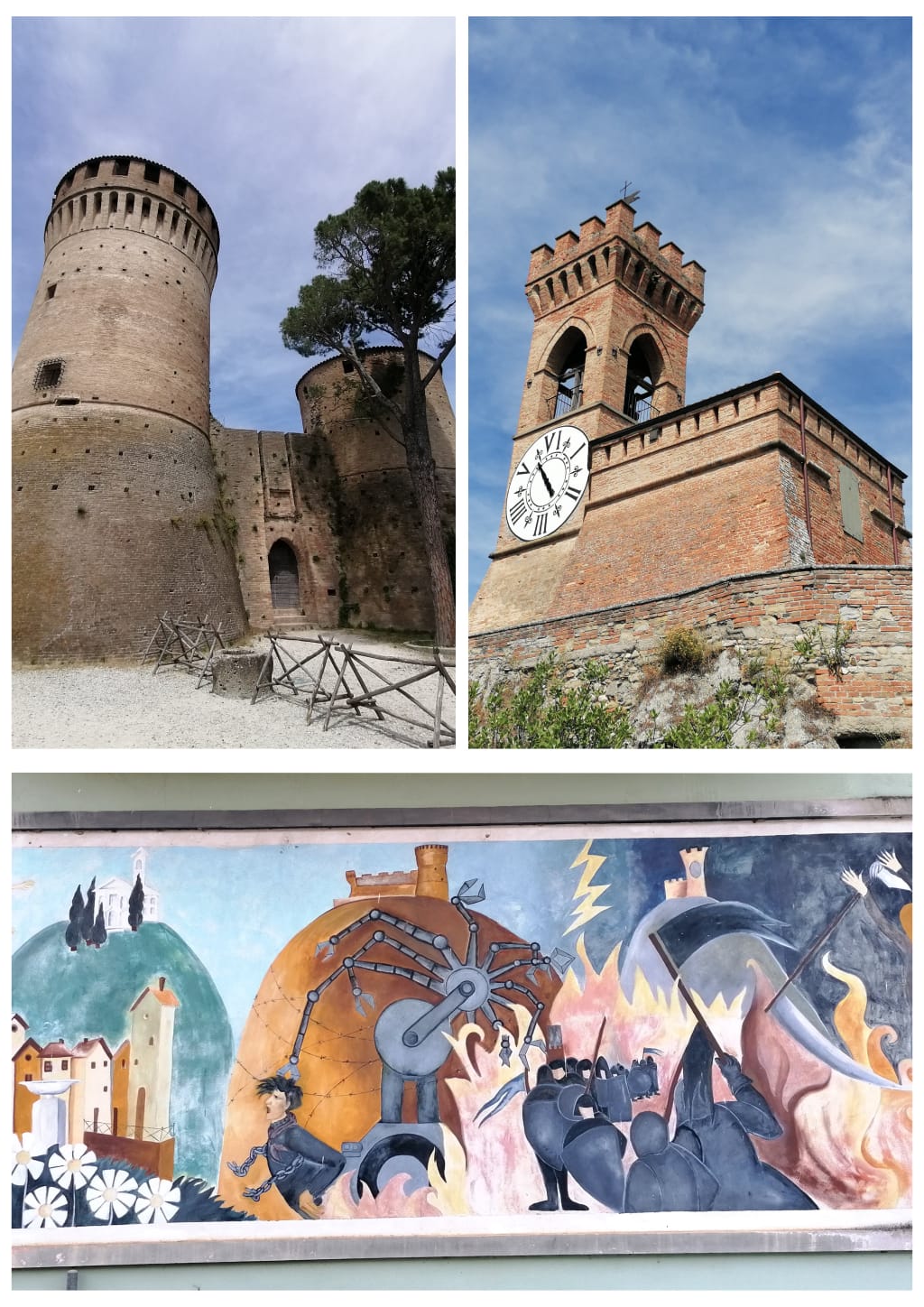
N. ITALY | BRISIGHELLA: The three hills of Brisighella, topped with the Rocca – a 14th/15th-century feudal castle and Venetian keep – a 19th-century clock tower that replaced the fortification built by Brisighella’s founder, a warlord who earned himself a place in Dante’s hell – and the 18th-century Sanctuary of Monticino – speak to Italy’s violent and devout past, and a present in which the Catholic Church continues to occupy the moral high ground.
The multi-layered history of the village is illustrated in the elevated archways of the Donkey Road, which began as a defensive rampart in the 14th century, was covered over and made into homes heated by the stables below, and also served as a passageway for pack animals transporting plaster from the gypsum quarries above the village. Today, they are apartments (with garage!) that fetch between €100,000-€140,000 (R2m-R2.8m).
https://www.idealista.it/geo/vendita-case/via-del-borgo-brisighella-ravenna
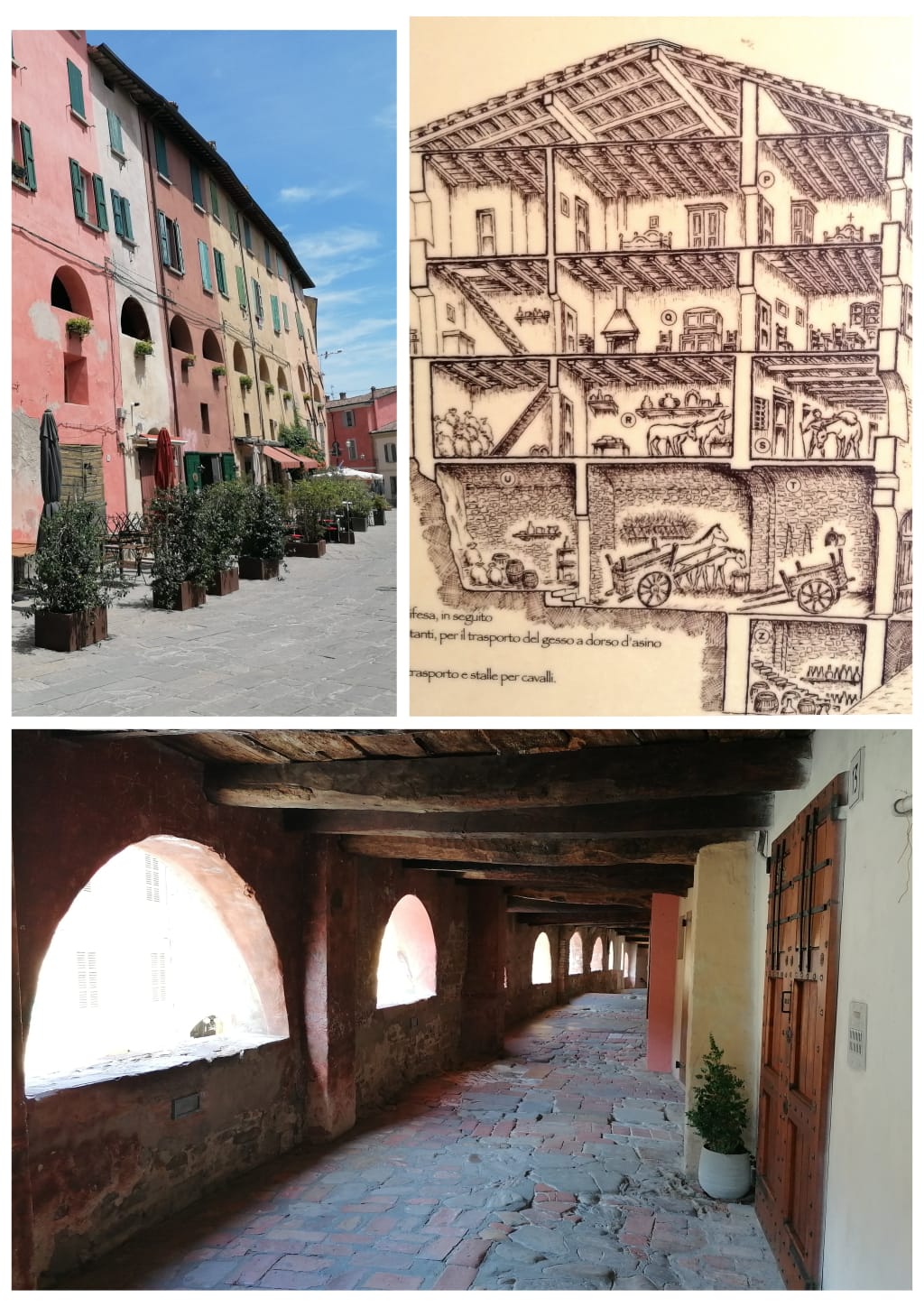
Day 72: (9 July 2026)
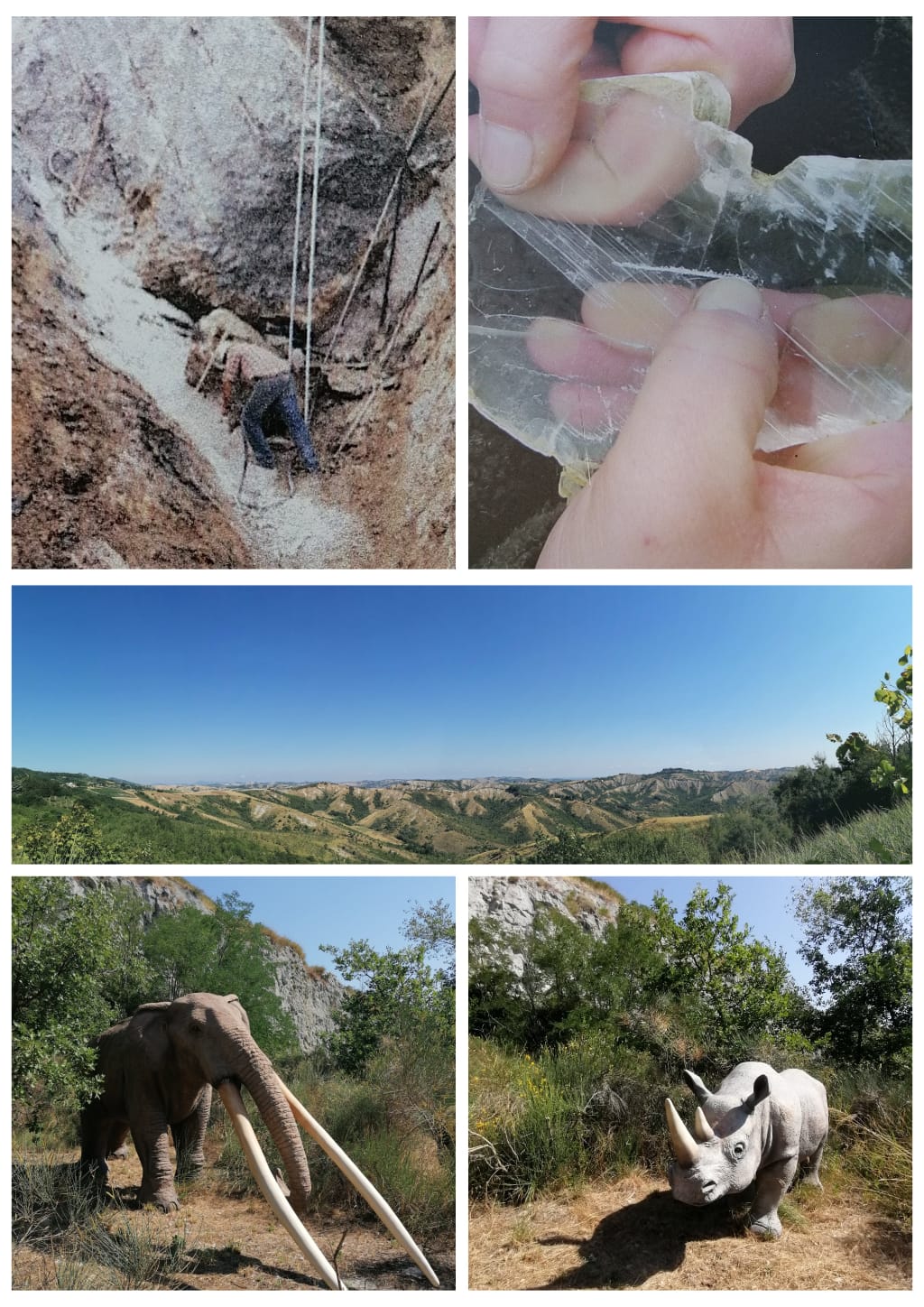
N. ITALY | BRISIGHELLA: Today, we dug a little deeper than Brisighella’s cliff-top attractions and unearthed a rich seam.
Some 6 million years ago, the Mediterranean Sea and the Atlantic Ocean were cut off from each other and sea water evaporation caused crystallized salt deposits of gypsum – a mineral that is also a rock. Soft and flaky, it is fired and ground into a powder used in plaster, fertilizers and by the Ancient Romans for window glass (lapis specularis). The 40-kilometre long Gypsum Vein (Vena del Gessu) has been mined since the Middle Ages. The Monticino quarry only closed in the early 1990s.
When the Mediterranean and Atlantic connected once more, some 5 million years ago, the Emilia-Romagna region became a wide shallow sea and in the muddy clay, fossils of fish, sharks and whales have been found, which may explain the fossilised whale bones found under Orvieto’s Cathedral (see Day 65). The tree-lined savannah at the foot of the gypsum hills, criss-crossed with small streams, was home to mastodons, bicorne rhinos, monkeys, aardvarks and crocodiles, whose descendants survive today in Africa and South-East Asia.
Fast forward to WWII and the surrounding Lamone Valley saw heavy fighting; the front was the Senio River, less than 20 kilometres away. Brisighella was liberated by Anders’ Army – the 2nd Polish Corps, which had been formed from the survivors of Stalin’s Siberian labour camps – on 29 November 1945. Emilio-Romagna was the final battleground; in May 1945, the Axis forces surrendered to the British 8th Army.
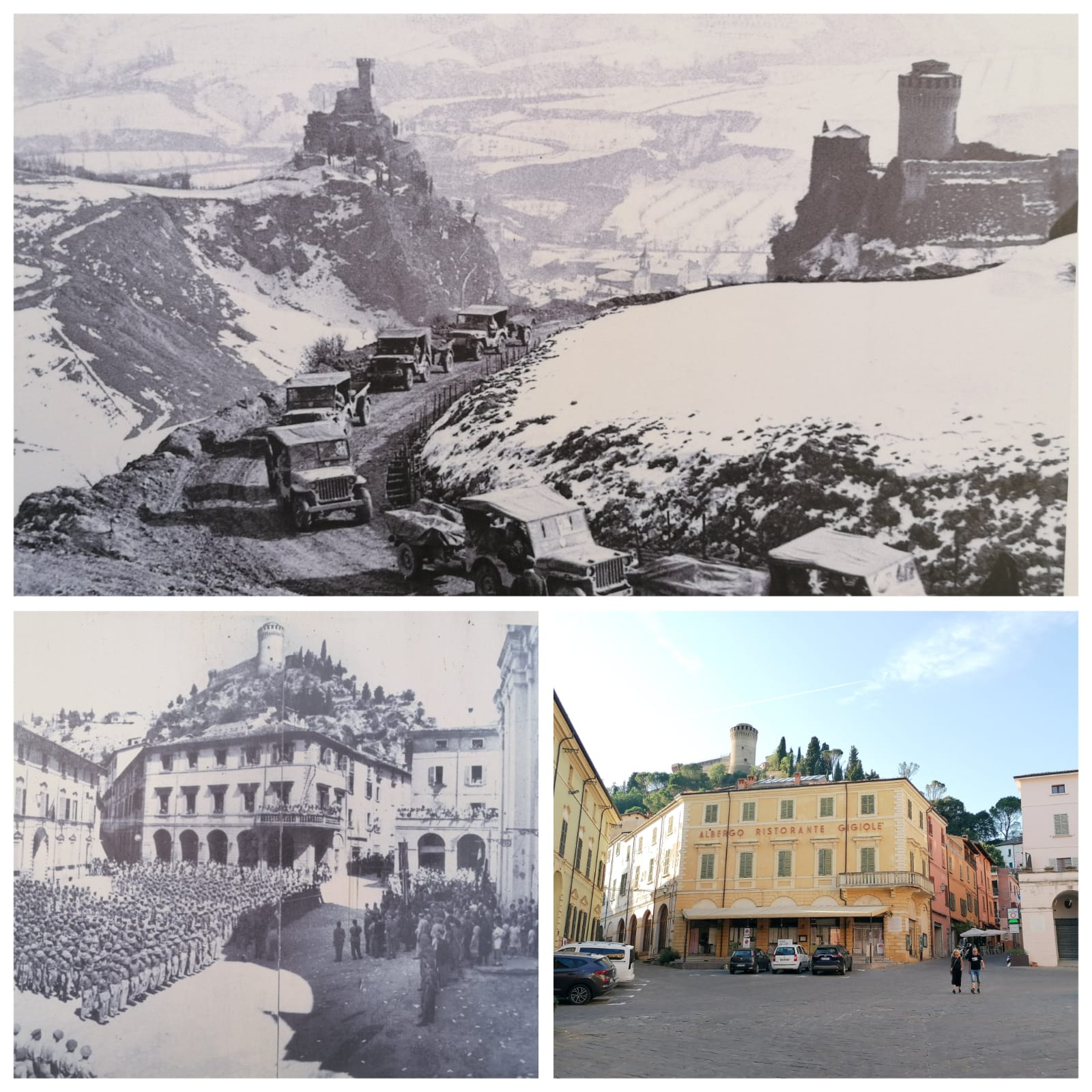
Day 73: (10 July 2026)
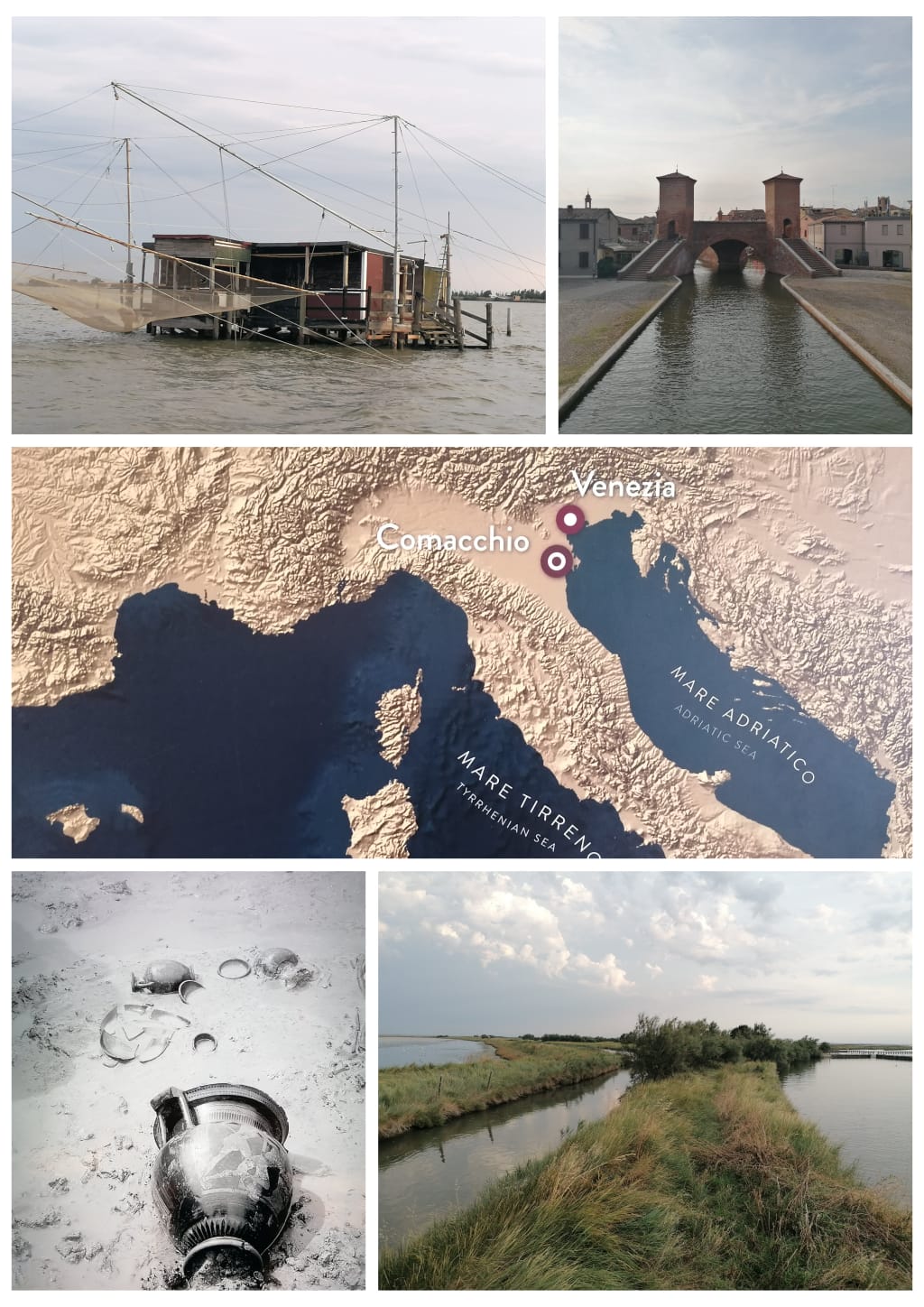
N. ITALY | COMACCHIO: Eschewing the heat and high-season crowds of Venice, we are in ‘Little Venice’ in the Po Delta, Italy’s largest wetland – and UNESCO Biosphere Reserve – where the country’s longest river (652km) empties into the Adriatic.
The river mouth has shifted over the millennia. Back in the 5th century BC, it was 5 kilometres west, at the Etruscan port of Spina – its residuum dug from the mud in the 1920s and ‘50s. Today, the mouth is 42 kilometres north-east of Comacchio.
A sunset boat cruise to explore the shallow, brackish Comacchio Lagoon proved to be a lot like home – herons, egrets, terns, flamingos, and oyster catchers, albeit with white breasts. The family fishing shacks, with their capenta-like rigs, are recreational. Sadly, we are too early for the year-end eel migration and an explosion of invasive blue crab in 2023 wiped out Europe’s #1 producer of farmed clams.
Day 74: (11 July 2026)
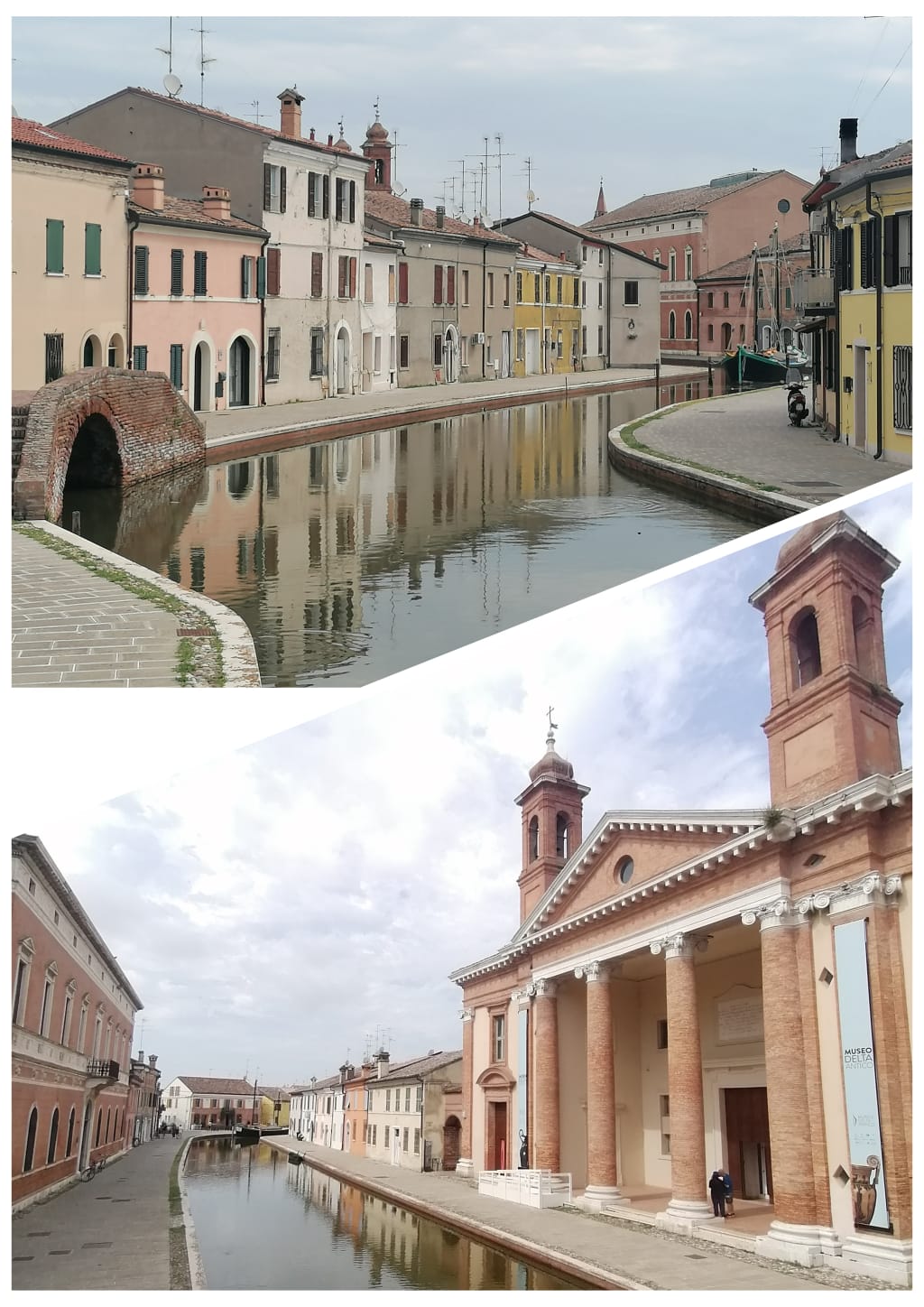
N. ITALY | COMACCHIO (EMILIA-ROMAGNA): The Po Delta has been catching and cooking the eels that swim up from the sea in Spring for many hundreds of years. The first marinating plants date to the 17th century. Live eels were collected in large wicker baskets and spit-roasted on wood fires, stewed in a tomato/vinegar broth or marinated in vinegar. Sofia Loren was the poster girl for Comacchio eel (anguilla) in 1955. The eels are still going strong. 💪
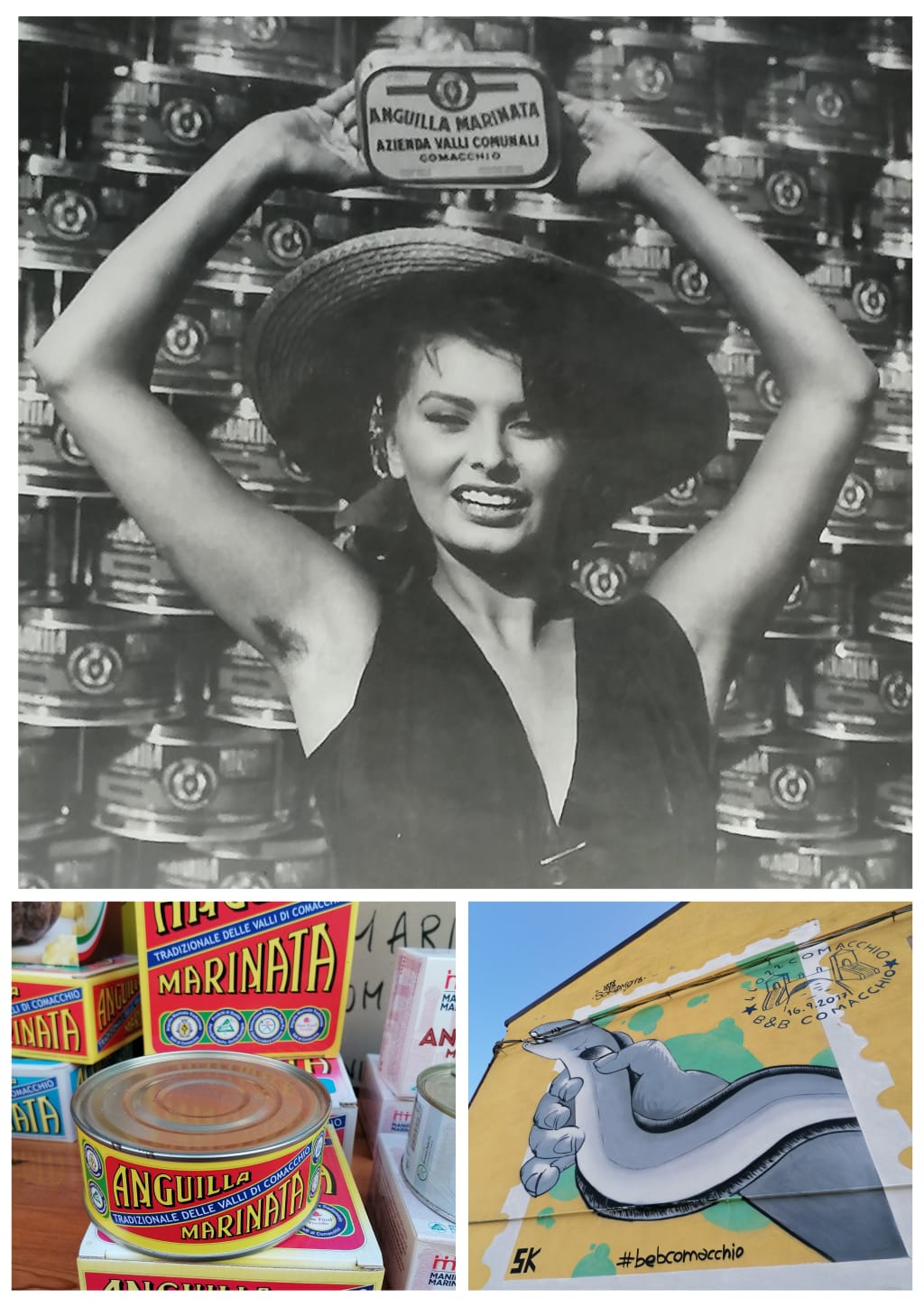
Day 75: (12 July 2026)
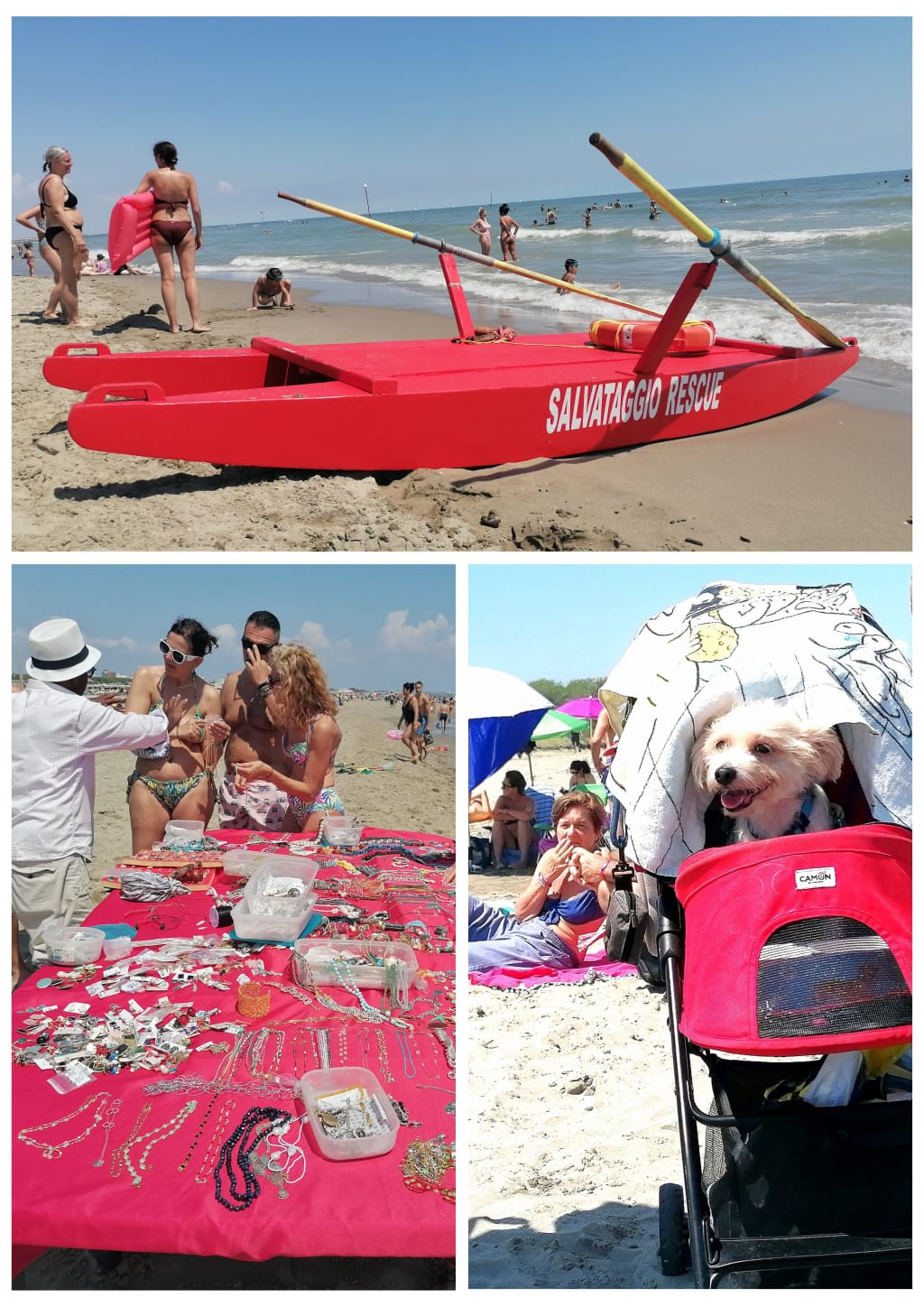
N. ITALY | LIDO SPINA: Summer sightseeing in Italy is a sticky, sweaty, scratchy business. The mountains and their medieval villages, the marble monuments, rock towers and clock towers, cathedrals and Corinthian columns are camera-clicking marvels but the sun-soaked stone and windless humidity turn the country into a giant, outdoor sauna.
We took a break today from the hot rocks and headed for the breezy beach and the warm shallow waters of the Po Delta’s Adriatic coast. Under an oleander tree, next to a beach bar, we found the only free shade in a 5-kilometre stretch of Lido-Land and hit the Happy Hour jackpot with two Aperol spritzes for the give-away price of €10 (R200). Salute 🥂
Drink of the Day
The fizzy orange cocktail, Aperol Spritz, is Italy’s big sipper. This success story began in the 1800s. The local Italian wine was too intoxicating for the Austro-Hungarians who found themselves in the Habsburg Kingdom of Lombardy-Venetia and they diluted it with a spritzen of water. Towards the end of the 19th century, in France, the apéritif became popular – a modern take on a medieval medicinal concoction of herbs and roots steeped in wine and alcohol. In 1919, two brothers in Padova (Padua), in Italy’s Veneto region, came up with Aperol, an Italian take on the apéritif. In the 1950s, Padova bars began to add a shot of bitters to their wine spritzers: Cynar, Select, Campari, China Martini and the local Aperol. Television popularised Aperol, which became a national brand and, by 2019, replacing still wine with sparkling, Aperol Spritz was in the top ten of the world’s bestselling cocktails.
Day 76: (13 July 2026)
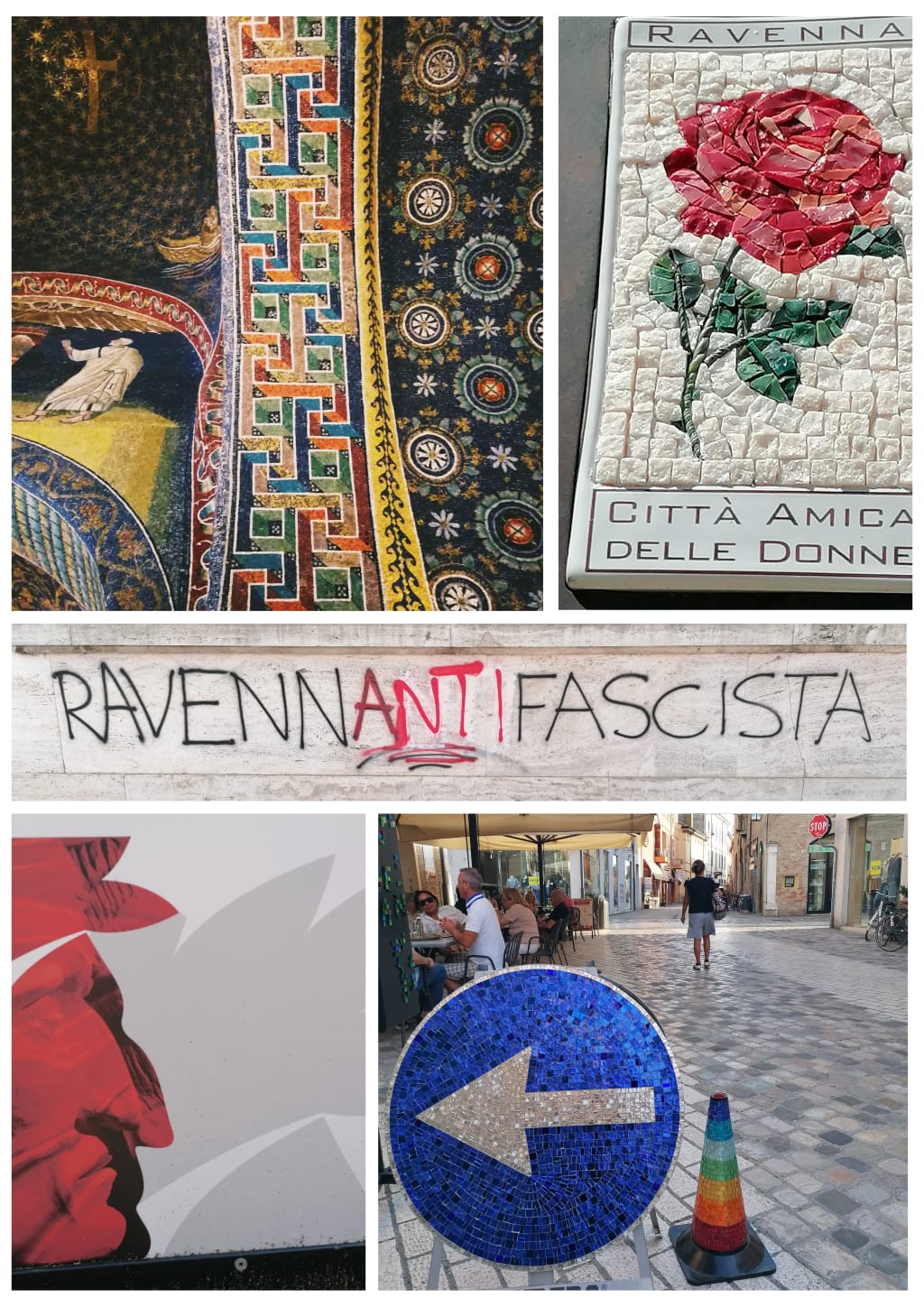
N. ITALY | RAVENNA (EMILIA-ROMAGNA): In 49 BC, Caesar crossed a little stream between Rimini and Ravenna and changed the course of history; between the 5th and 8th centuries it was the capital of the Western and Eastern Roman Empire under the Romans, Ostrogoths and Byzantines; the Father of the Italian language, Dante Alighieri, exiled from Florence, died here in 1321; in the 1920s Ravenna was part of the fascist vanguard that delivered Mussolini to power.
Today, it is the mosaic mecca of Italy, thanks to the 5th- and 6th-century mosaics that adorn the World Heritage basilicas, baptistries, churches, chapels and mausoleums that are Ravenna’s Ode to Light. Cole Porter was so inspired that he composed ‘Night and Day’.
Music may come closest to ‘expressing the inexpressible’ and a picture may be worth a thousand words but none can do justice to the elaborate exquisiteness that bequeathed ‘byzantine’ to the English language.
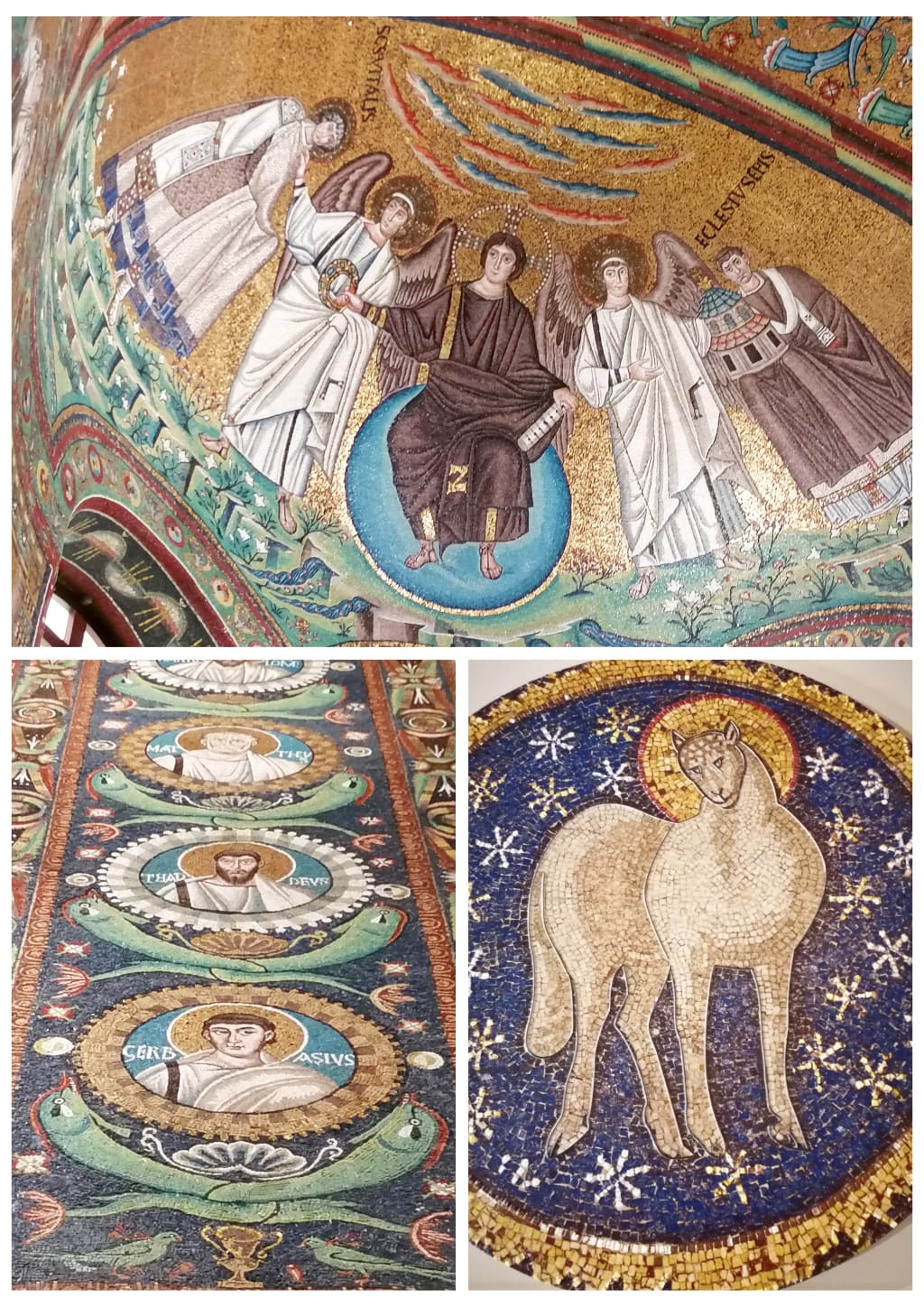
Day 77: (14 July 2026)
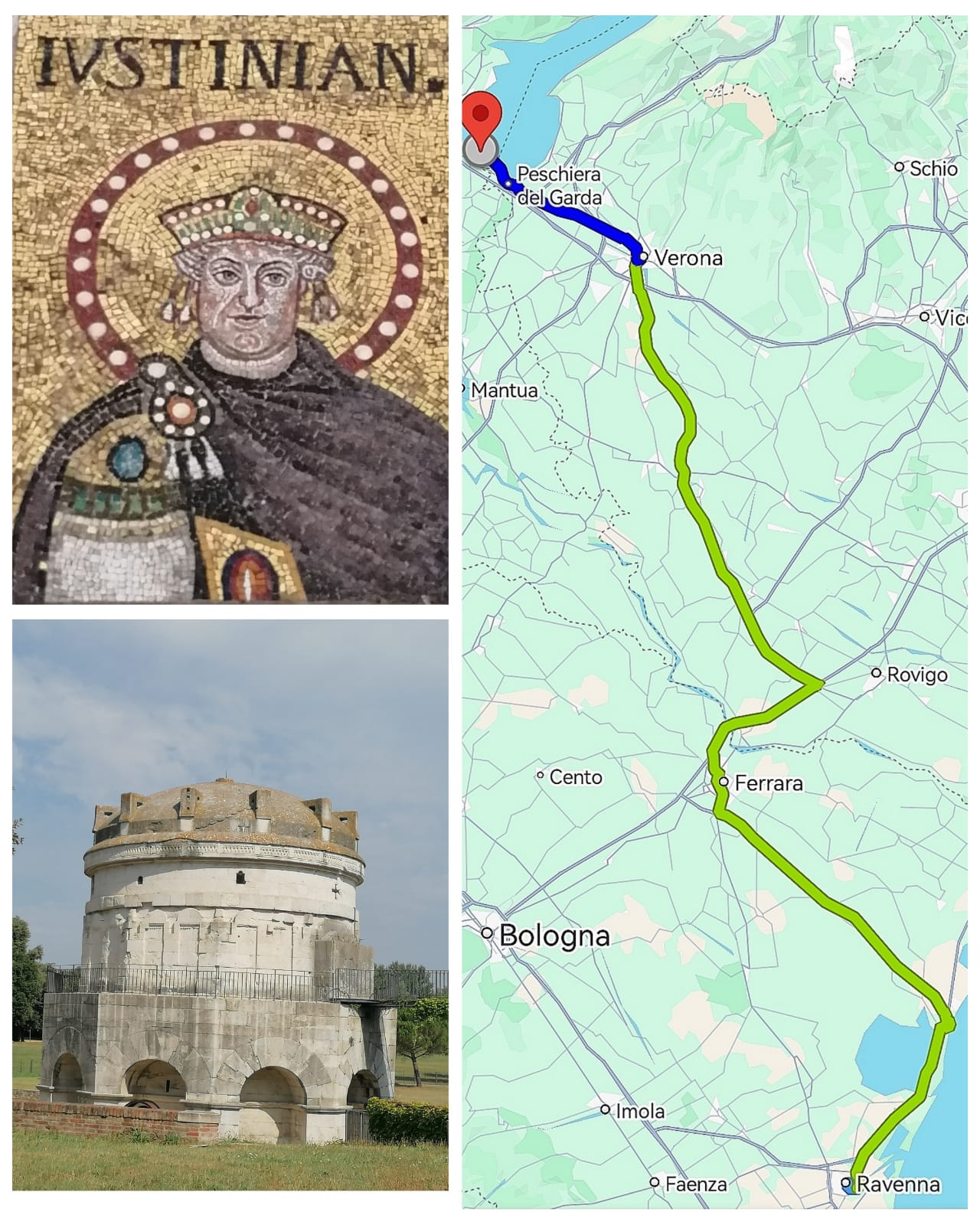
N. ITALY | SIRMIONE (LOMBARDY): We spent the morning exploring more of Ravenna’s treasures, including the Basilica of Sant’Apollinare Nuovo, built by Theodoric the Ostrogoth (454-526), whose monolithic, domed tomb still stands, although his remains disappeared with the Byzantine conquest.
The victors erased the court officials from the wall mosaics, leaving only the hands behind and perpetrated identity theft on Theodoric’s mosaic portrait by overlaying the Emperor Justinian’s image – or possibly just adding his name to Theodoric’s face. The church was bombed by an Austrian seaplane during WWI. The mosaics survived.
Seven hours, and three bus rides later, we traded the Adriatic Coast and Po Delta for Italy’s biggest lake. Lake Garda, in Northern Italy, sprawls at the foot of the Dolomites and nudges the Alps. We are surrounded by vineyards and holidaying Europeans. The heat is more African than Alpine.
Day 78: (15 July 2026)
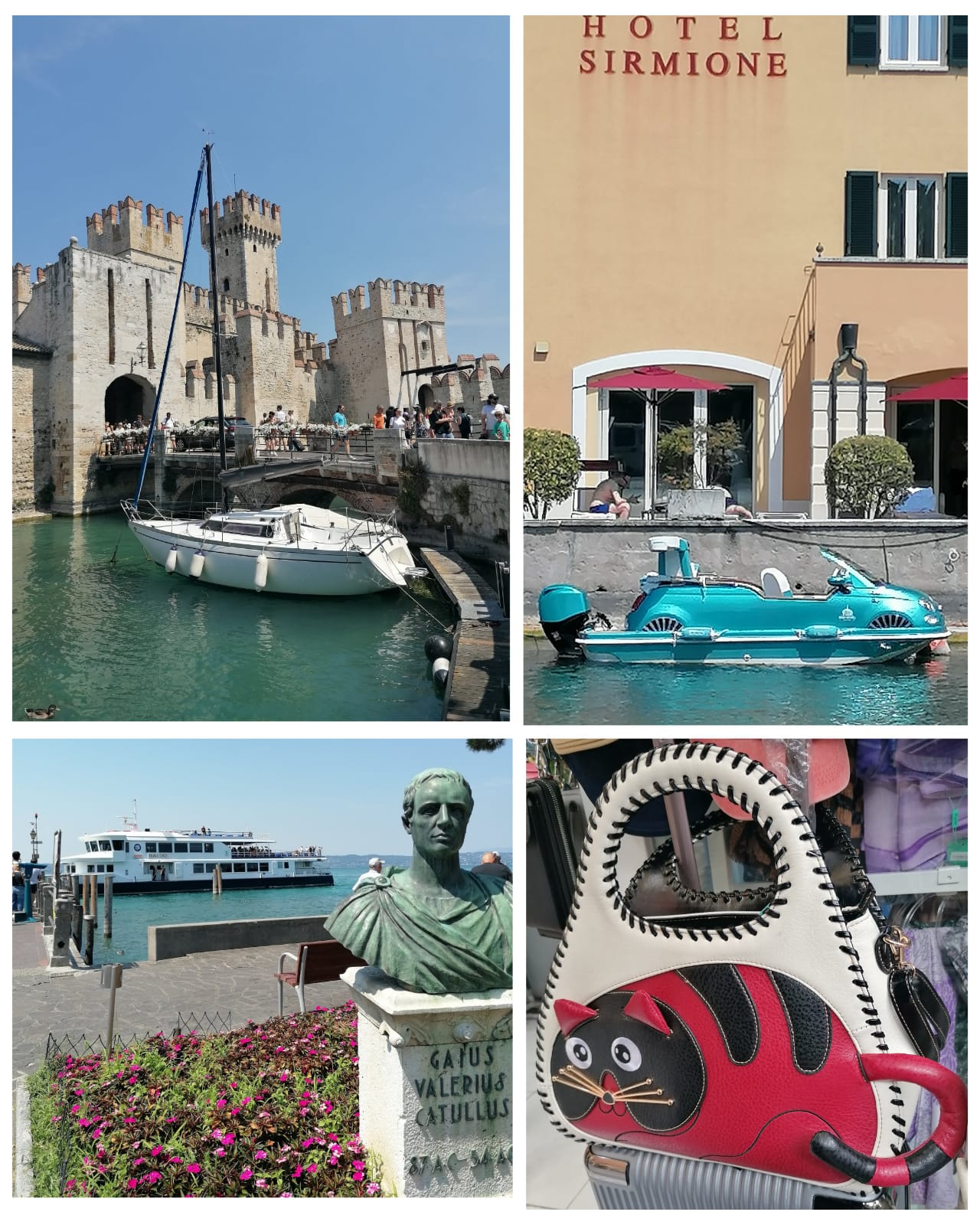
N. ITALY | SIRMIONE: The cool, clear waters of Lake Garda brought welcome relief from the heat and, like its birds, we dipped and dived and ducked 😉 as we strolled around the peninsula, putting 16 kilometres on the clock.
Sirmione has other attractions beside the lake: the photogenic 13th-century fortress of Rocca Scaligera, the haunting 14th-century frescoes in the 8th-century church of San Pietro in Malvinas, the hilltop ruins of an ancient Roman villa and the holiday villa owned by Greek/Italian opera singer Maria Callas and her Italian husband in the 1950s. The hot spring resort (terme), alas, is closed until Friday.
Day 79: (16 July 2026)
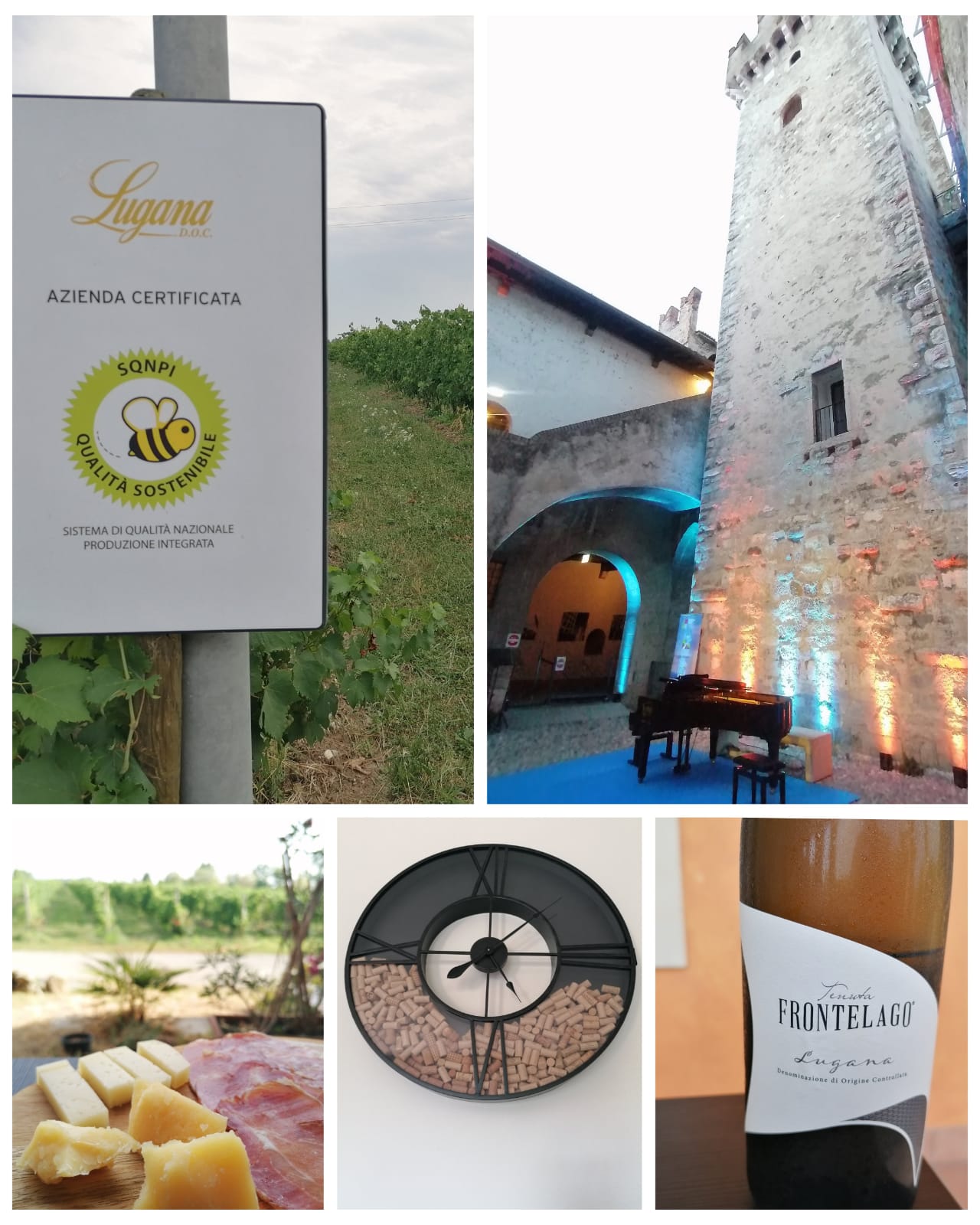
N. ITALY | SIRMIONE: A slow day in the shade and the shallows; don’t judge us – a succession of heatwaves has been rippling through Europe. The Dutch have been closing schools and public pools; the Brits are battling >30°C temperatures with no air-con and four workers have died in the vineyards, prompting a temporary ban on field work between noon and 16:00.
The Lugana DOC (Denominazione di Origine Controllata), which is Italy’s highest certification of quality wines, is renowned for its white wines made from the Turbiana grape. There are 200 wine producers in this region, which straddles the border between Lombardy and Veneto. We ventured out of the shade after 17:00 to visit one of Sirmione’s nine vineyards, the 13-hectare Tenuta Frontelago. Grape growers turned wine makers, this brother-and-sister start-up lost 50% of their 2023 harvest to a 15-minute hailstorm, which ripped off the roof of the new cellar and smashed the solar panels that had been installed three days prior. They ‘pressed’ on and produced 10,000 hand-harvested bottles in 2025. We came away with one – €11 is a trifling amount to pay for the pain and passion that went into the heritage-shaped bottle with its sugar-cane cork.
A free classical music concert by Master Class violin and flute students in the courtyard of the castle rounded out the day – two of the virtuoso violinists were Asian girls under the age of 10. 😲
Day 80: (17 July 2026)
N. ITALY | TRENTO (TRENTINO-ALTO ADIGE): After 80 days, we have arrived at the northernmost point of our Grand Tour. Rumbling grey skies and online warnings of extreme thunderstorms this morning put paid to our plans to take the afternoon ferry the length of Lake Garda.
By the time we had checked out, the clouds had cleared, our bus was delayed and the slow train from Verona was slower than usual. However, we didn’t feel shortchanged, trading lake views for pitch-roofed villages with onion-domed churches in the vine-covered foothills of Alpine peaks.
Trento is the Gateway to the Italian Alps and has a distinctly German flavour. From 1814-1919, the Trentino region was part of Austria/Austro-Hungary until it was annexed by Italy after WWI. It gained special regional autonomy after WWII. Some 30% of the population speak German (Bavarian) as their mother tongue.
At the covered market next to our apartment we met Federico, the butcher, who had spent three months in Graaf-Reinet with the veld-to-fork chef, hunter and guesthouse owner Gordon Wright.
Over an impromptu tasting of his charcuterie, he provided some insight into why meat is so expensive in Italy – his fillet, for example, was not overpriced at €48/kg (R900).
Land goes for €1,000/m2. He rents 6 hectares for his 60 cows – some are Piedmontese, a much prized breed. The cows venture out of the barn for an hour a day. Up the mountain, at an elevation of 1,050 metres, he has 30 hectares on which he grows feed, which he cuts once a year. It takes a month of going up and down by tractor to harvest the hay. Much like Sara at the Sirmione vineyard, Federico typifies the Italian artisanal producer, passionate about the product wrestled from the unforgiving climate, the rugged terrain and the bureaucracy of the EU.
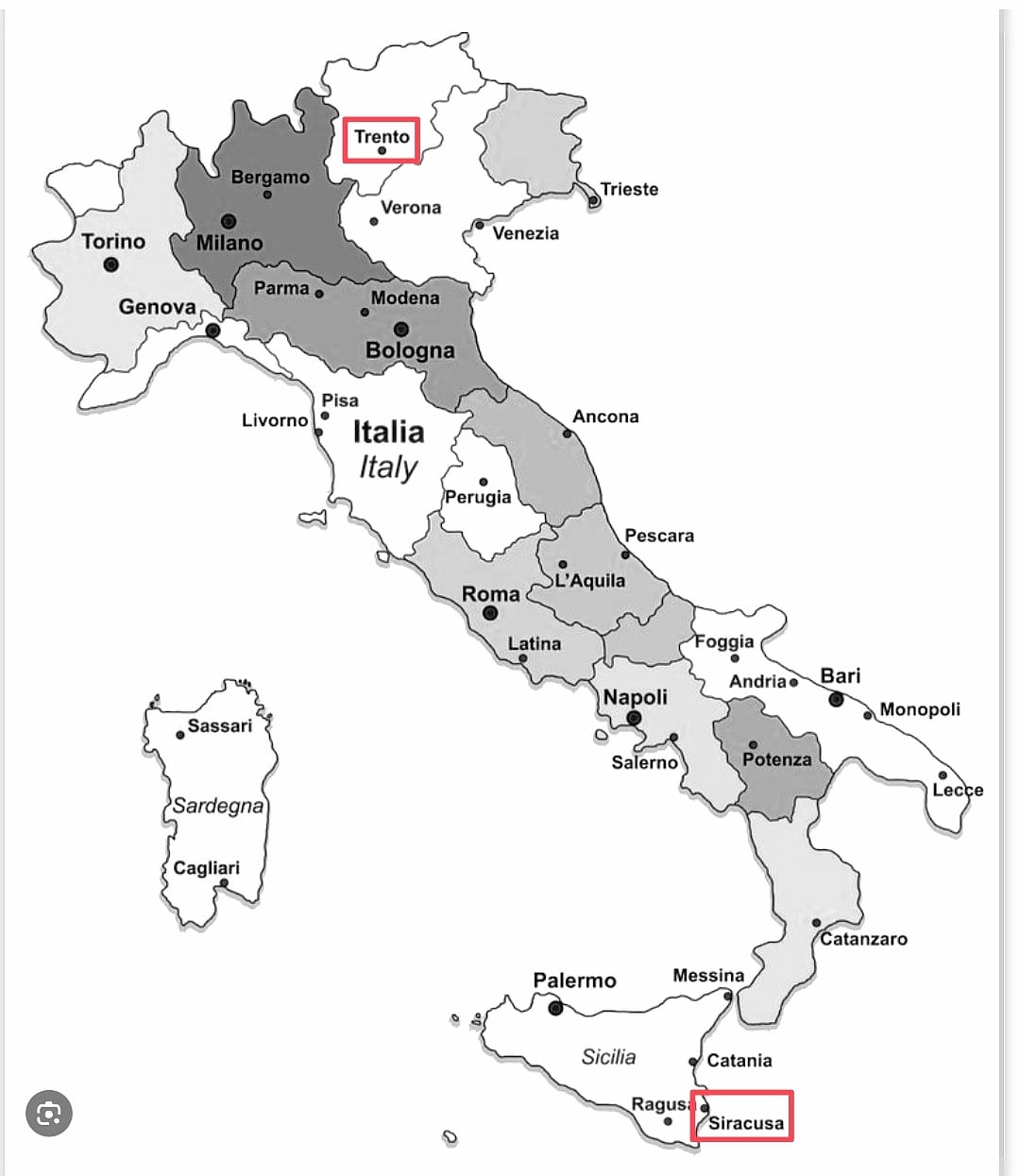
Day 81: (18 July 2026)
N. ITALY | TRENTO: Trento, in Roman times, was known as Tridentum, for the three peaks which form the backdrop to the glacial valley of the Adige River – Italy’s second longest after the Po.
We zig-zagged up Monte Bondone (2,181m) by bus – the winter ski slopes are currently flowery meadows – to the Viote Alpine Botanical Garden, which cultivates >1,500 high-altitude species. The surrounding forests are home to most of the Central Alps’ brown bear population – 60 at last count in 2017. A thundershower drove us into the Rifugio where we sat out the rain with Italian coffee, Torte Linzer and Strudel de Mele. Guten appetit.
Ex Saint of the Day
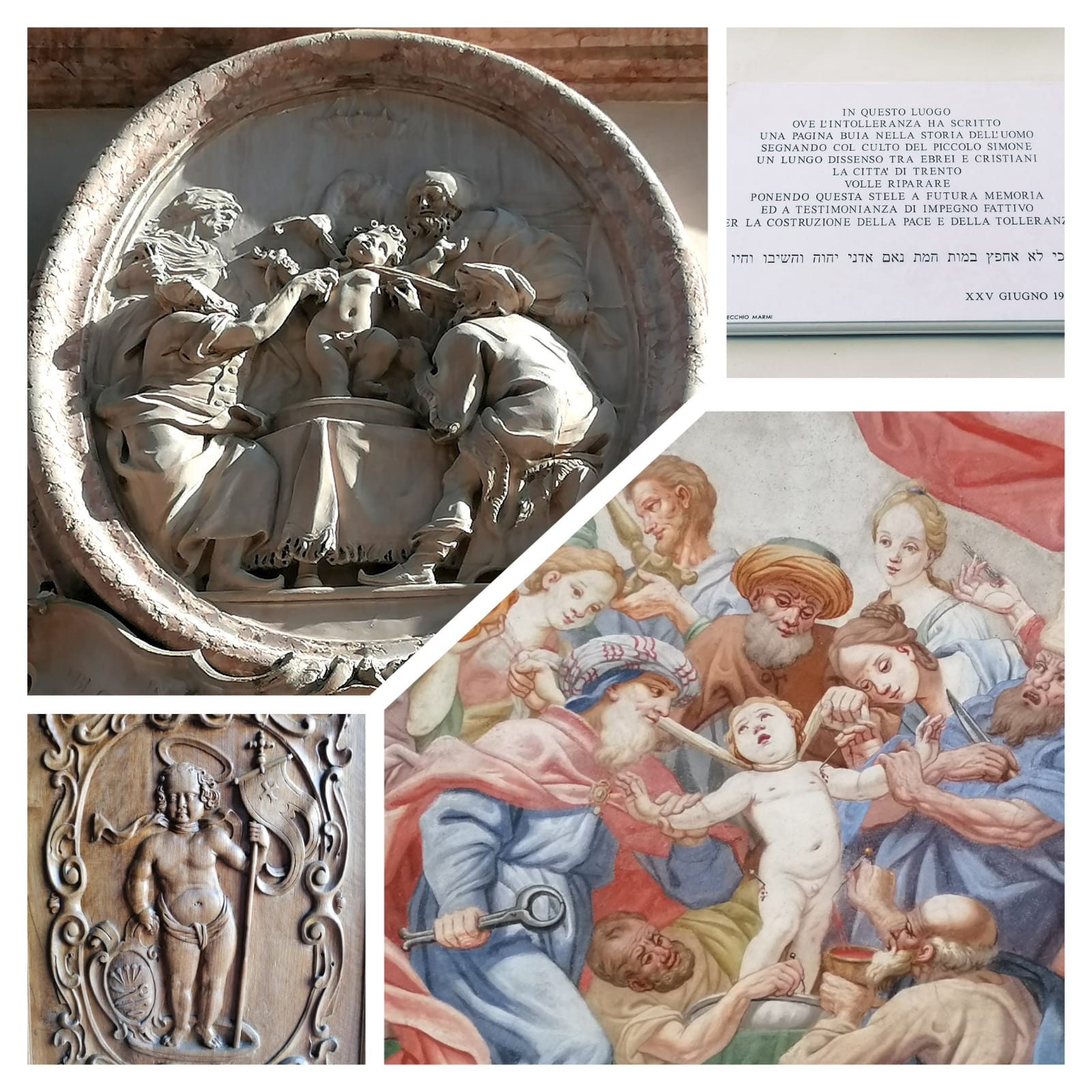
A Hebrew inscription on a plaque dated 1992, on the wall of the erstwhile Jewish synagogue, commemorates the righting of an ancient wrong perpetrated against Trento’s Jewish community in the 15th century. It took 500 years to set the record straight.
On Good Friday on 24 March 1475, Simonino (Simon of Trent), the two-year-old son of Andreas the tanner went missing. Two days later, his body was found in the moat of a house belonging to Samuel the Jew. Rumours of ritual infanticide were fanned by the authorities and the Church, and fuelled by contradictory autopsies, hearsay evidence at trial, and confessions wrung from torture. Confiscated property, imprisonment, executions by guillotine and fire followed, and all Jews were banished from Trento.
Within a week of his death, Simonino’s first miracle was reported; his remains were displayed in a church; chapels were built to celebrate him, and he became the patron saint of Trento, until 1965, when the Cult of Simonino was suppressed by papal decree. The Jews officially returned to Trento in 1992.
Day 82: (19 July 2026)
N. ITALY | TRENTO: Day by day, the longer we stay, the more Italian we become.
A viewpoint accessed by cable car, an exhibition in a tunnel, and midday mass in English along with the African and Asian diaspora, took up the morning. The afternoon’s programme featured a collation of cheese, charcuterie, sun-dried tomatoes, zucchini and walnut paté at home over siesta followed by another museum, a gelato and a quick shop for salmon and wine at the only supermarket nearby that isn’t closed on a Sunday evening.
The Italians are consummate conservators, custodians, curators and consumers of the history of Christendom and the West. Thanks to our stellar accommodation, we made the most of our Trentino Guest Pass, saving ourselves €34 in tickets.
The Piedcastello Gallery houses temporary exhibitions in two decommissioned tunnels. As Trento was involved in the Winter Olympics earlier this year, the Games featured in a stunning audio-visual, interactive and extensive presentation.
The Novacenti Trentino 1914-1972 museum focuses on the region’s turbulent trajectory from being part of the Austro-Hungarian Empire, to its annexation by Italy in 1919, and the German minority’s struggle for rights and protections under the aggressive Italianisation of Mussolini’s fascist regime. The Second World War brought Nazi occupation, Allied bombardment, and massacres perpetrated by a vengeful German army in retreat. The 1972 Statute of Autonomy devolved significant economic, social and cultural powers to the two provinces, Trentino and Alto-Adige (SüdTyrol) that make up this northern border region of Italy, which is much like a swan – pretty and placid on the surface with a lot going on underneath.
Day 83: (20 July 2026)
N. ITALY | MANTOVA (LOMBARDY): We left Trento this afternoon, with fresh chanterelle mushrooms in our day pack, after a morning spent in Trento’s historic Plaza del Duomo.
The Romanesque-Gothic Cathedral of San Virgilio, begun in 1212 over an earlier church, was the birthplace of the Counter Reformation. In response to the Protestant Reformation kickstarted by Martin Luther in the early 1500s, Pope Paul III instigated a council, which met in Trent three times between 1545 and 1563.
Alexander Farnese, before becoming the head of the Catholic Church, had sired four illegitimate children, made his teenage grandchildren cardinals and was an ardent believer in astrology.
Although he epitomised the immorality, nepotism and superstition that Luther had railed against in the Renaissance popes and clergy, Pope Paul III, seeking unity and reform, became the first Pope of the Counter Reformation, responsible for laying the foundation for the Catholic Church as it is today, and, in effect, making the rift between Catholic and Protestant permanent.
Work on the railway line to Brenner on the Austrian border, which was a target of Allied bombers in WWII, disrupted our travel plans, but Trentalia put on a bus, and then another, and we arrived just after siesta, in Mantova (Mantua), birthplace of the Roman poet Virgil but perhaps better known as Romeo’s place of exile after the killing of Tybalt.
Day 84: (21 July 2026)
N. ITALY | MANTOVA: Charles Dickens, “leaving the marshy water behind, approached the rusty gate of stagnant Mantua” in 1844. Since the earliest documented Etruscan settlement among the “reeds and rushes” of what is now Piazza Sordello, the oldest part of the city, the natural and urban landscape has been transformed by human imagination and ingenuity.
In 1190, the Minicio River was channelled into four artificial lakes – of which three remain – and the Rio Canal, which brought boats from Venice and the northern lakes, laden with fish, “leaving the scent of the sea in Mantua”. The colonnaded 16th-century Pescherie (Fish Market) lasted until the 1940s.
In the 15th and 16th centuries, the ruling Gonzaga princes who, after a bloody palace coup, reinvented themselves as patrons of the arts, regenerated and extended the medieval city and built an entirely new one, 32 kilometres away, according to the Renaissance principles of humanistic reason, harmony and the idea that man is the measure of all things”. Along with Sabbioneta – “one of the best examples of the ideal city in Europe” – Mantova is a World Heritage site. A 14-year-old Mozart played in the newly built Baroque Teatro Scientific del Bibiana. Andrea Mantegna (1431-1506), the pioneer of trompe l’oeil (the art of creating a 3D perspective on a 2D surface) was an artist of the Gonzaga court.
Continuing the tradition of higher learning, it was Graduation Day in Mantova, and neo laureati (new graduates), crowned with laurel wreaths – in a nod to Apollo, the Greek god of intellect – criss-crossed the Piazza Sordello, under the benign gaze of the 1227 statue of Virgil.
On the neighbouring Piazza della Erbe, the simple, unadorned symmetry of the city’s oldest church, the Rotonda di San Lorenzo (11th/12th C.) is in stark contrast to the overwrought opulence of the 15th-century Basilica of Sant’ Andrea, built by the Gonzaga to house the “precious blood of Jesus Christ”, by tradition brought to Mantova by Longinus, the Roman centurion who thrust his spear into Christ’s side. The blood is kept in two gold chalices in a safe altar protected by an elaborate system of keys divided among city officials, and guarded by volunteers.
Saint of the Day
The Spanish-born Saint Lawrence is a patron saint of Rome. Appointed by Pope Sixtus II as the first Archdeacon of Rome, he was entrusted with the Church’s purse strings and the distribution of alms to the poor. In August 258, Emperor Valerian issued an edict that all Christian leaders be executed if they refused to worship the Roman gods. Ordered to surrender the Church’s wealth, Lawrence handed out as much as he could to the needy and then presented some of the city’s indigent and afflicted to the prefect saying, “Here are the treasures of the Church.” A spelling error may have led to the legend that he met his death on the coals of a giant gridiron, making him the patron saint of cooks and tanners. More likely, he was beheaded, as was the Pope.
Day 85: (22 July 2026)
N. ITALY | MANTOVA: The history of the Palazzo Ducale is the history of Mantua – from a medieval fiefdom to a Renaissance showpiece, from decline to preservation.
After expelling the Bonacolsi ruling family, the Gonzaga family took over the Palazzo Ducale and, over generations, enclosed 35,000m2 of medieval town within palace walls.
The Gonzaga were collectors as well as patrons of Renaissance artists, musicians, engineers, scientists, humanists and mathematicians. They were also dog lovers, an Italian passion undimmed from their day to this. Patriarch Ludovico II’s “beloved bloodhound Rubino” is immortalised in Andrea Mantegna’s 15th-century family portrait. The last Duke, Vincenzo II (1626-27), incorporated his dog into his coat of arms and the coins of the realm.
It took us almost 8 hours to explore but a small portion of the 1,000 decorative rooms, adorned in priceless artworks, reaching back to 4th-century BC Greek sculpture and including the ocula of Andrea Mantegna – the first example of ‘foreshortening from below’ – tapestries based on Raphael’s cartoons and paintings by his greatest pupil Giulio Romano (1499-1546). Peter Paul Rubens also gets a look-in – a lapdog is involved.
“This is a wonderful city; it would be worth travelling a thousand miles to see it, ” opined Italian poet Torquato Tasso in 1586.
Some 440 years later, we can but concur. Power is fleeting. Beauty is not.
Day 86: (23 July 2026)
N. ITALY | BOLOGNA (EMILIA-ROMAGNA): Bologna is the culinary capital of Italy. It is the birthplace of lasagna and spaghetti bolognese (actually tagliatelle ragù) in addition to mortadella of which polony/baloney are poor cousins. It is also famous for tortollini and tortolloni (small and large stuffed pasta with different fillings). We had Chinese for lunch. 🤭
It is also home to: the oldest university in the world, a leaning tower to rival Pisa, 62 kilometres of World Heritage porticoes – built haphazardly over the centuries to ward off weather and add living space – an erogenous 16th-century fountain commissioned by the Pope featuring lactating mermaids and a phallic optical illusion, and a vast unfinished cathedral halted by Pius IV who got ahead of himself and realised that his pet project would outstrip all of the Vatican’s churches.
Bologna is also the birthplace of the world’s most iconic sportscars, Lamborghini and Maserati.
The Maserati brothers opened a small workshop off Piazza Santa Stefano in 1914 and adopted the tip of the trident in Neptune’s fountain as their logo. Ducati and Fiat also call Bologna home. Constrained by the mountainous nature of their homeland, the flat countryside of Italy’s ‘Motor Valley’, with its long stretches of straight road, stoked the Italians’ need for speed.
We’ve only been here an afternoon … 😳 Fasten your seat belts!
Day 87: (24 July 2026)
N. ITALY | BOLOGNA: The city of cars and colonnades would give Venice a run for its money, except its canals are all underground. Under the cobbles run some 60 kilometres of canals, engineered as early as the 12th century. You can catch glimpses of them, if you know where to look.
Unlike the canals, nothing remains to mark Bologna’s medieval Jewish community, who were first formally stigmatised in 1417, the men forced to wear a yellow wheel on their chest and the women a yellow veil. With the ascension of the Popes, in 1556 the Jews were driven into the Ghetto, which is little changed from its medieval appearance, but no trace remains of its former inhabitants who were expelled in 1569, allowed to return in 1586, and then banished in 1593 for more than two centuries.
Although it fell to the Papal States, Bologna was late to ‘convert’ to Catholicism and Europe’s first university began as a group of enquiring minds who met in people’s homes some time around 1088. Word spread, attracting students from all over Europe – even one from Lima, Perú – and by 1564, the university had its first premises, thanks to Pope Pius IV.
In later years, papal dispensation was received to dissect cadavers in a theatre setting. The historic wood-panelled Archiginnasio Anatomy Theatre, built in 1637, was reconstructed after the 117-ton firestorm unleashed on Bologna by the US Airforce on 29 January 1944.
Day 88: (25 July 2026)
N. ITALY | BOLOGNA: As word of Bologna’s ‘university’ spread, so too did its population. Its famous porticoes were a medieval-town planning solution, expanding living space without surrendering public spaces.
The Pórtico of San Luca is the longest, continuous, covered walkway in the world. Nearly 4 kilometres long, with 658 numbered arches, construction began on it in 1674 and took over a century to complete. Its purpose – to facilitate the all-weather passage of the annual devotional procession of the 12th-century Byzantine icon of the Madonna of San Luca, housed in the 18th-century Sanctuary of the same name on the summit of Monte della Guardia overlooking Bologna.
True confession – we took the bus up and walked down.
Day 89: (26 July 2026)
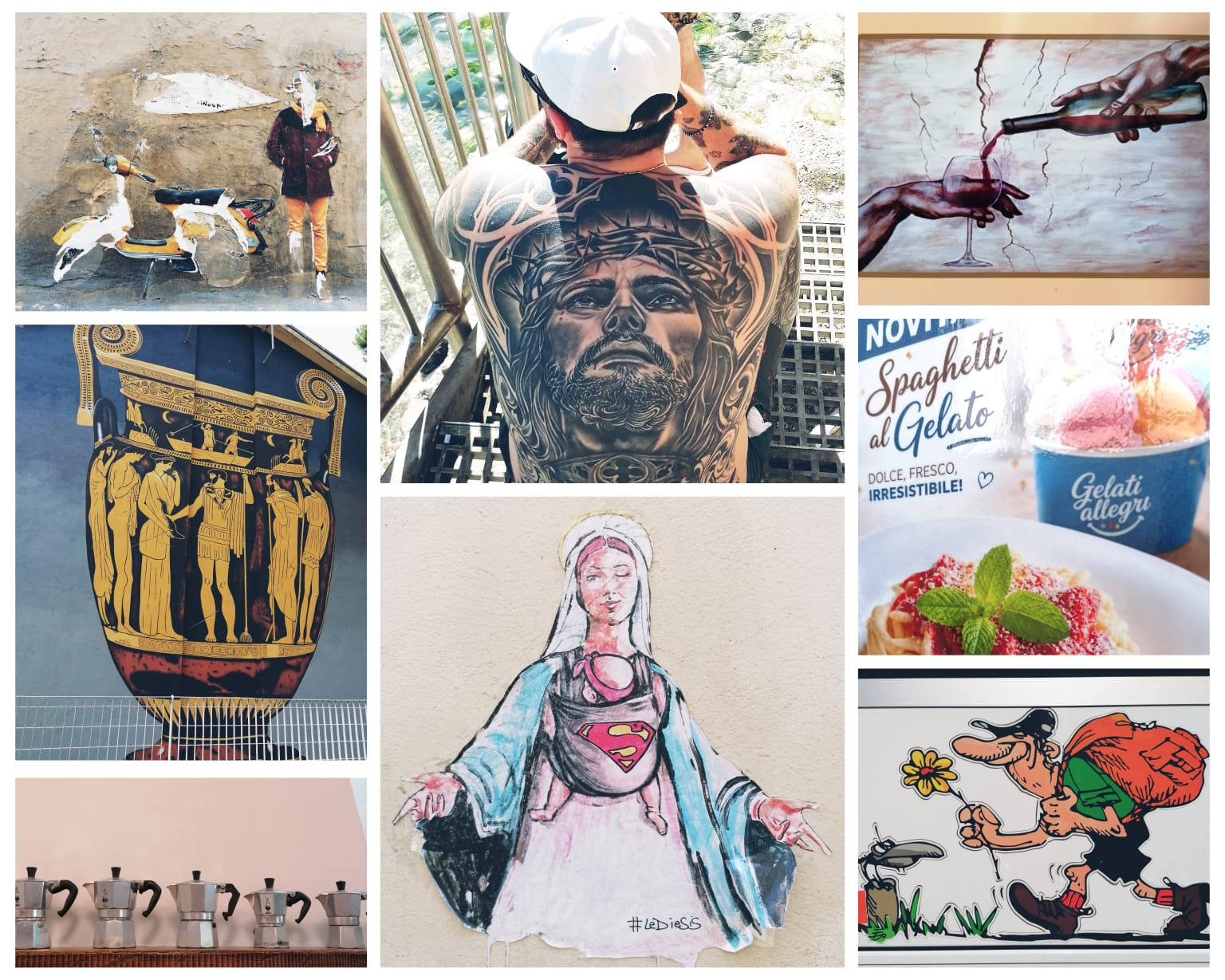
N. ITALY | ARRIVEDERCI: Mountainous, monumental, multi-faceted and memorable, Italy rocks!
Its people embody the old Roman proverb ‘Chi si contenta gode’ (‘The contented man enjoys himself’). Despite 3,000 years of invading tribes, tyrants and tourists, you have retained your serenity and good humour. We have been on the receiving end of your kindness, courtesy and helpfulness more than once.
Grazie for sharing with us your love of life, which embraces family, food, wine, coffee, gelato, music, art, parks and gardens, vistas, views, walks and dogs. This is not an exhaustive list!
Like you, we have hung our washing out the windows of your elegant apartments with their cupboard kitchens, sipped from your espresso coffee mugs the size of egg cups, and squeezed into your tiny showers that make space for the regulation bidet. We can but wish that public toilets were as ubiquitous.
After three months in your natural habitat we have come to understand that the afternoon siesta is a sacred space and even the pay-for-parking metres take a break. We have made do with the 24-hour vending kiosks and the bars that are the only establishments open after 14:00.
We have found our way around Moka pots on induction hobs; we have learnt not to order cappuccino after 11:00, that pizza is not eaten at lunch, and that in Sicily and Sardinia it is not neatly sliced but torn by hand. Like you and the Romans of old, we have eaten gelato “…in enormous quantities … at all hours of the day and night …”
Along with you, we have enjoyed the evening stroll – a ritual observed by all ages: teenage girls in tight denim shorts, young families with babies and/or dogs – in prams or wagons, bags or backpacks, baskets or bikes – old couples, stylishly dressed, and hand-in-hand.
We have ogled your tattoos, remarking on how you make your bodies into an art gallery and marvelled at the many ways in which you extol, extend and expand the best of human experience.
Grazie mille for sharing with us your passion for the past, your delight in the present and your faith in the life to come.
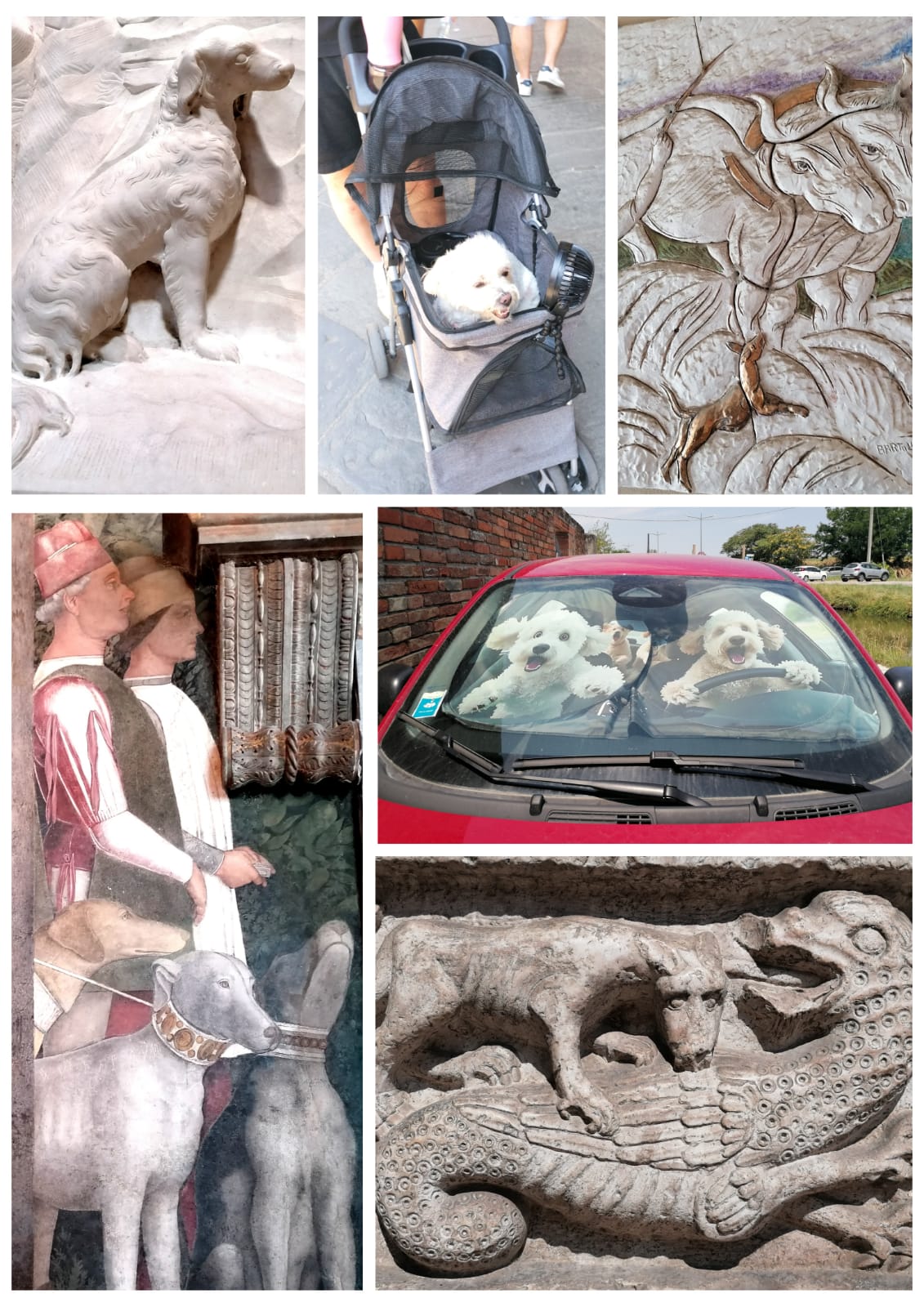
ALBANIA
Day 90: (27 July 2026)
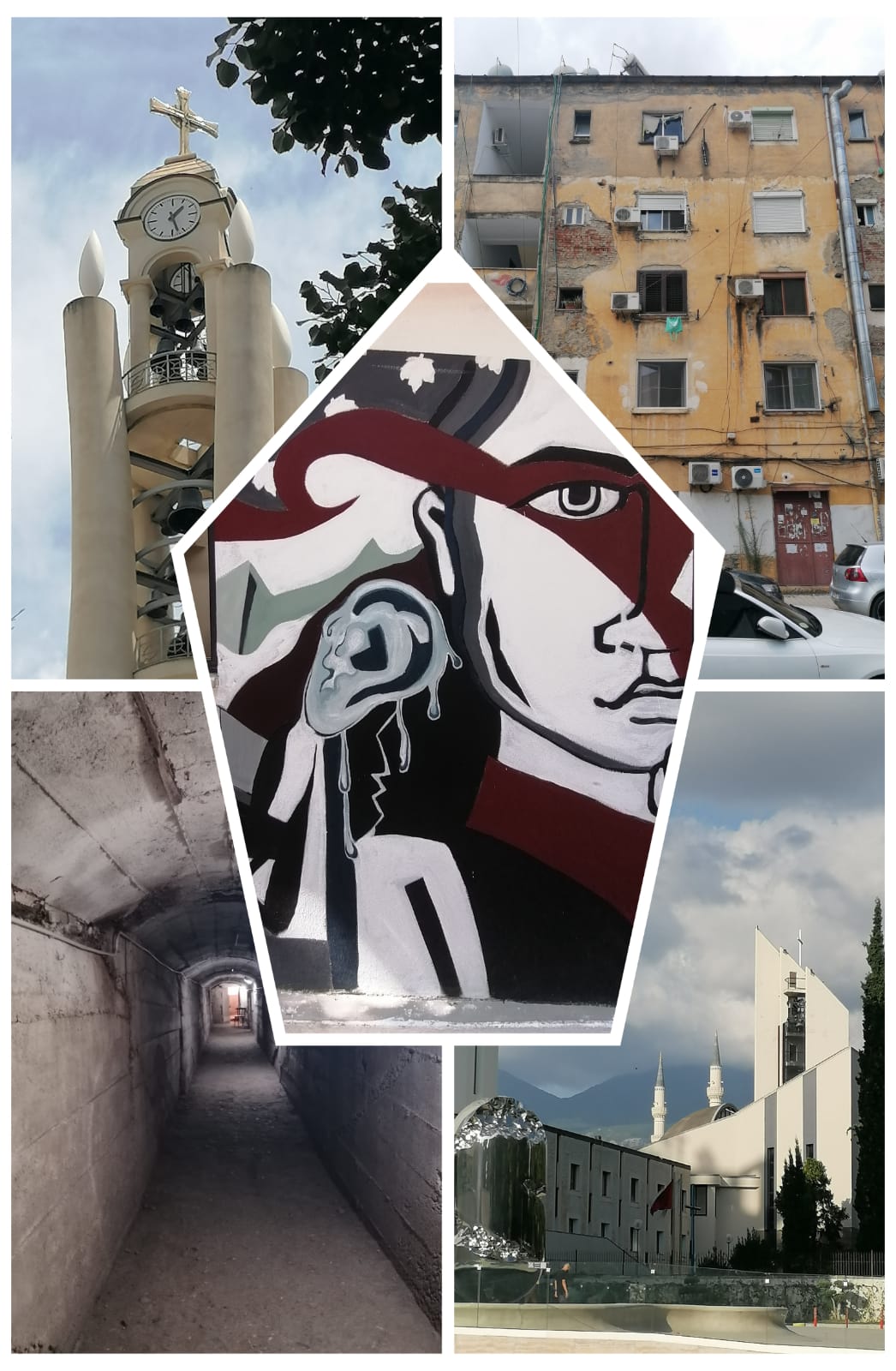
ALBANIA | TIRANË: A quick hop across the Adriatic, and we arrived in a different world. Albania’s capital, Tiranë, is a welcoming, vibrant, eclectic, grubby, dynamic, noisy, bustling mishmash of a city that is home to a quarter of the country’s population of 2,75 million people. Around 51% are Moslem, 8% Catholic, 7% Eastern Orthodox, 4% atheists and the remainder undeclared. The reason for this reticence would soon become apparent.
A country on the up and up, it still bears the scars of its dark past. In the second-oldest language in the world – after Basque – the local name for Albania, Shqipëria, means ‘free’. Yet, for more than 2,000 years, the ancient nation of Illyria was occupied by the Romans, the Ottomans and – after a brief interval of inter-war independence under a self-appointed King – Fascist Italy and Nazi Germany. From 1944, a Communist dictatorship turned Albania into Europe’s North Korea for nearly 50 years. In the country of Mother Teresa’s birth, all religions were banned and 95% of mosques and churches were destroyed.
A paranoid Stalinist fanboy, Enver Hoxha built 175,000 bunkers in case of enemy attack, and created a surveillance state that turned the country into a prison nation, isolated from the rest of the world. Ariana was our walking tour guide of the capital. Her grandmother was interned in a labour camp for over 7 years after her husband escaped by swimming across Lake Ohrid to Yugoslavia.
Five years after communism collapsed in 1991, the country was plunged into civil unrest after a capitalist Ponzi scheme bankrupted 66% of the population and looted guns spawned the notorious Albanian mafia.
Some 26 years on, minarets, steeples and bell towers have returned to Tiranë’s skyline and, from the lone Ottoman mosque that was spared destruction, the call to prayer sounds over Skanderbeg Square. The Albanian people are digging themselves out of a bottomless pit and are reaching for the sky.
Saint of the Day
Anjezë Gonxhe Bojaxhiu was born in Ottoman-era Skopje (now North Macedonia) on 26 August 1910. She, her mother and sister moved to Tiranë soon after. Aged 18, she left to join the Sisters of Loreto in Ireland. Mother Teresa returned more than 70 years later, in 1989, to visit the graves of her mother and sister and to place flowers on the grave of the dictator who had banned her from her homeland and prevented her from seeing her family while they were still alive.
Day 91: (28 July 2026)
ALBANIA | TIRANË: A hundred years ago, Albania was half-feudal, patriarchal and undeveloped. In 1912, the country lost half of its territory following the collapse of the Ottoman Empire.
In 1967, Tiranë had 28 mosques. By the end of the Communist era, eight were left – one of which was the Ottoman-era Et’hen Bey, with a capacity of only 60. The new Mosque of Namazgah is now the largest mosque in the Balkans (excluding East Thrace) and can accommodate 10,000 worshippers. Modelled on Istanbul’s Blue Mosque and funded by Turkey, it opened in October 2024, bringing the Moslem population of Tiranë in from the cold. The Orthodox and Catholic community also have new churches.
Since the advent of capitalism, where Coke cans were prized as flower vases on top of TV sets and bananas were ‘strange fruit’, the capital city has come a long way in finding its own edgy, eclectic, contemporary identity. High-end boutiques ply their trade next to souvlaki takeaways and pavement fruit and veg stands. The pastry shop windows display Greek shortbread and baklava. The smell of spit-roasted meat mingles with the waft of sun-ripened garbage. Crumbling Communist apartment blocks rub shoulders with mirrored high-rises sculpted by Europe’s cutting-edge architects, fuelling speculators who wish to capitalise on Albania’s potential entry into the EU. The past and the present converge at the Komiteti Kafe Muzeum, a vibey bar with a Balkan bazouki beat and a collection of more than 3,000 objects and artefacts from Albania’s different regions and eras.
Day 92: (29 July 2026)
ALBANIA | TIRANË: We took a deep dive today into the black hole that was the mind of Albania’s Communist dictator. For more than 40 years, Enver Hoxha forced an entire country to share his psychosis. Immediately upon coming to power in 1945, he electrified the country’s borders, preventing exit or entry. After falling out with Communist Yugoslavia, Russia and China, Hoxha started building bunkers. Between 1975 and 1983, an average of 21,000 bunkers per year were built by prisoners, miners and soldiers who dug and died digging. “Everywhere he looked, he saw enemies coming. He turned his fear into blocks of concrete.”
Bunk’Art 1 is buried under 100 metres of soil, encased in concrete and cement and accessed by 6 layers of steel-reinforced, iron and concrete air-locked doors to protect against chemicals and radiation. Its 5 floors cover 2,685m2 and encompass 106 rooms and an assembly room, where the top brass could convene in a crisis, protected by an indoor ventilation plant, and a filtration system, with portable oxygenation machines – courtesy of China – in every room. The bunker was never used for its intended purpose.
After so many decades of violent suppression, Albanians are finding their voice and flexing their democratic muscles. Since May 2026, the citizens of Tiranë have been protesting the opaque and corrupt government approval of a proposed luxury tourism development on the south-east Adriatic coast backed by Jared Kushner, Donald Trump’s son-in-law “… because the only development model that the government proposes is to clean the toilets of the rich and the mafia in luxurious resorts, like the one that Trump and Kushner and the national oligarchs and mafia in Albania are constructing,” explains Bora Mema, labour organiser, researcher, activist and founding member of the left-wing political party Lëvizja Bashkë. [Link? https://www.democracynow.org/2026/10/21/albania_protests_edi_rama]
Environmental violations threaten EU accession, slated for 2030.
We bumped into the evening shift. A small, disciplined, vocal and multi-generational group called out the corrupt government of Edi Rama, the Prime Minister since 2013 and Chairman of the Socialist Party since 2005. To avoid being ‘egged’, government officials are sneaking into parliament, and ‘bunkering down’. The protesters show no signs of backing down.
In the last decade, low wages and a high cost of living have propelled at least half-a-million young Albanians to emigrate in search of a better life. By October 2026, the peaceful protests had taken an ugly turn as students boycotted the start of the university year. The next elections are scheduled for 2029.
Day 93: (30 July 2026)
ALBANIA | BERAT: On the road again in a rental car, we headed south for the UNESCO-listed central Albanian city of Berat, passing by the recently revamped NATO Airbase of Kuçova.
En route, we stopped off at the family-run Çobo Winery, which turned out to be the country’s only producer of MCC, made from a single varietal Albanian grape called Puls, which only grows in Berat.
Albania has a 3,000-year-old winemaking tradition, which the Communists deliberately destroyed. Of the >200 grape varieties endemic to Albania, only 40 are left in cultivation. Vlosh is one that was preserved – one of only 12 varietals like it in the world, it is a grape that is red on both the outside and the inside.
Enis, the teenage son, is fourth-generation. From him we got the lowdown on Albanian grapes, history and politics, in fluent and erudite English. His great-grandfather made wine before the Communist era and when Albania’s ‘Granite Curtain’ lifted, his father and his uncle sought asylum in Italy, where they learned the craft, returning to their homeland and opening Çobo Winery in 1998, at a time when Albania was racked by civil war. Expanding from 1 hectare to 40 hectares today, they are in the process of doubling their production facilities – a success story that is but one of many as Albanians strive for a better future.
The winery also produces a raki the colour of chocolate, which is made from freshly picked green walnuts. “Every Balkan family brews raki and keeps it in water bottles,” Enis told us. Speaking from his own experience, accidentally chugging the homebrew seems to be a rite of passage for Albanian kids.
Drink of the Day
Albanian raki, while primarily made from grapes – although plums, mulberries and other fruits are used – differs from the aniseed-flavoured raki of the Turks or the grappa-like raki of the Greeks. It is a clear, fruit brandy unflavoured by herbs or sugar, naturally fermented and double distilled in copper kazanë (stills). The quintessence of Albanian hospitality, it is a welcome in a glass.
Day 94: (31 July 2026)
ALBANIA | BERAT: The hills on either side of the summer-stricken Osum River are clad in walls of ivory stone, framed in dark wood and topped in terracotta. A pair of pack donkeys laden with building supplies trudge up and down the narrow stone alleyways as the temperature climbs to 37° in the shade. Tourists drag their wheeled suitcases over the cobbles of the Ottoman neighbourhood of Mangalem, reconstructed after an earthquake in 1851.
What began as an Illyrian settlement in the 4th century BC, became an Ottoman stronghold for 500 years. Berat is home to one of the oldest mosques in Albania (1492). But the roots go much deeper.
- “Albanians belong to a people older than history. Their grandfathers took part in the Trojan War.” – Mauricio Druon (1950)
- “Albanians together with Basques are the oldest people in Europe.” – Nicole Jorga (1919)
- “Europe has supported and embraced the lands of Greece, Serbia and Montenegro, at the expense of the Albanians; they were betrayed by everyone.” – Alexander Lambert
Seeking to unravel the Gordian knot that is Balkan politics, we followed the intriguing signs plastered on the walls of Mangalem, which led us to Sazan Guri, eccentric geologist, lawyer, environmentalist, author, alternative historian, Albanian linguist, ardent Albanian nationalist and founding member of the Alternative Academy of Science – with a family tree that goes all the way back to Zeus and the abducted river nymph Aegina – the great-grandmother of Achilles, legendary hero of the Trojan War.
Responding to our interest – and my notebook – he delivered an impromptu ‘lecture’ sitting on the steps of his guesthouse. In the time-honoured tradition of baksheesh, we coughed up for the ‘lecture’, the traditional garb and musical instruments in the one-room wonder that is the Ethnographic Museum and he threw in a book for free – the asking price had been €15.
By the time we left, he had us convinced that Albanians are the genetic bank of Europe, that Atlantis was their motherland, that they survived and seeded the world after the Flood and that Albanian was the language of the Tower of Babel.
Day 95: (1 August 2026)
ALBANIA | BERAT: The Turkish Ottomans arrived in Albania in 1385. By 1488 they had consolidated their rule, which lasted until 1912. The state policy of religious tolerance and self-governance for non-Muslim communities – including Jews, who were given sanctuary throughout the Empire after being expelled from Spain in 1492 – held a disparate empire together for centuries.
The ruins of mosques, Byzantine and Orthodox churches, and the Byzantine art, woodcarving and iconography displayed in the Onufri Museum inside the 13th-century castle compound of Berat bear witness to this co-existence. The fact that some of the churches are still standing despite the ravages of time, natural disasters and the Communist regime that declared Albania an atheist state in 1967 is remarkable.
Albanian food reflects this multi-cultural heritage and – as part of our fact-finding fieldwork – we have been diligently sampling the Greek, Slavic and Turkish-inspired clay pot casseroles, cabbage rolls, spicy paprika and garlic sausage, phyllo pastry pies, stuffed peppers, mixed grills, baklava and dhallë – the Albanian version of lassi. Makes a change from pizza, pasta, pesto, parmigiana and Prosecco!
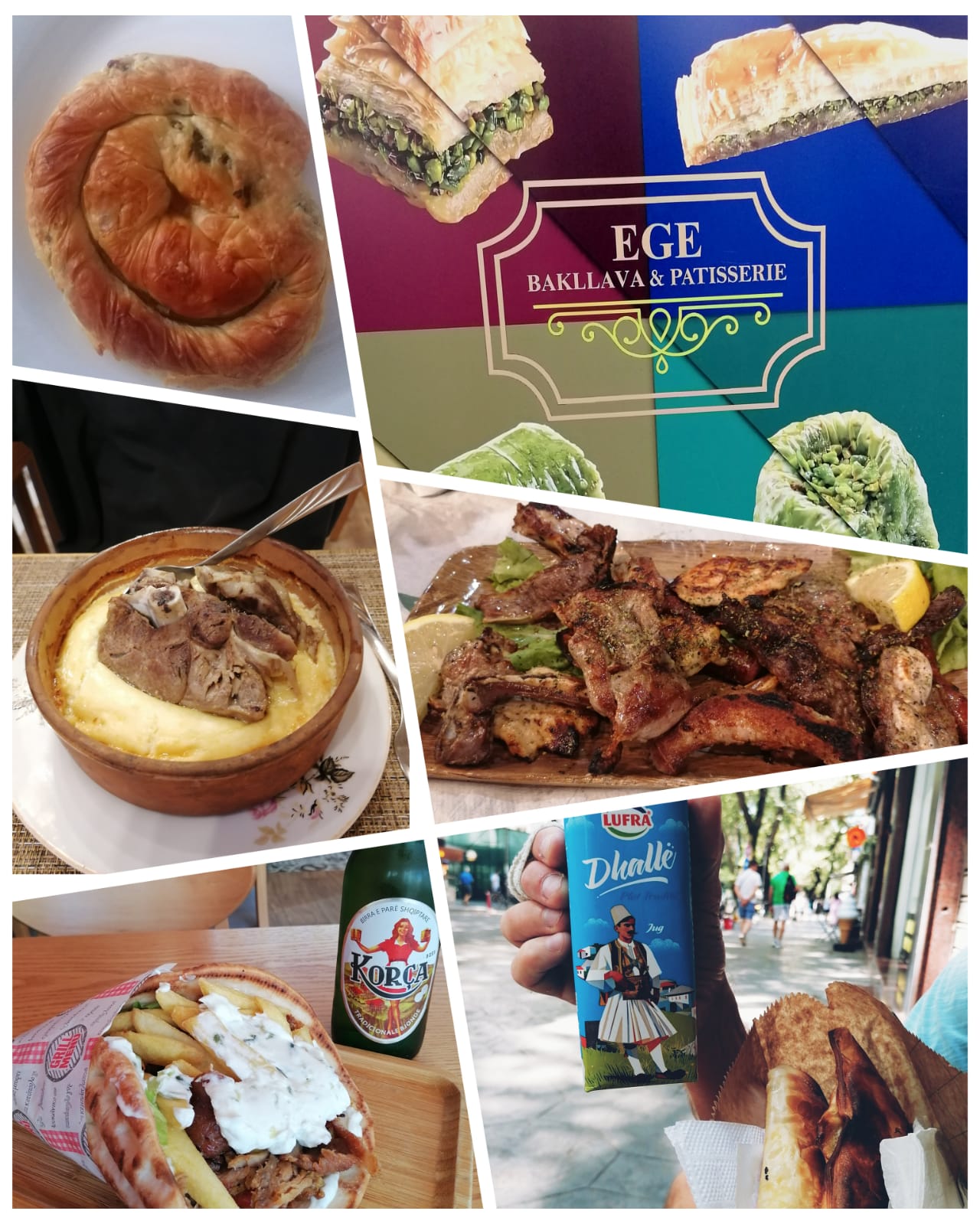
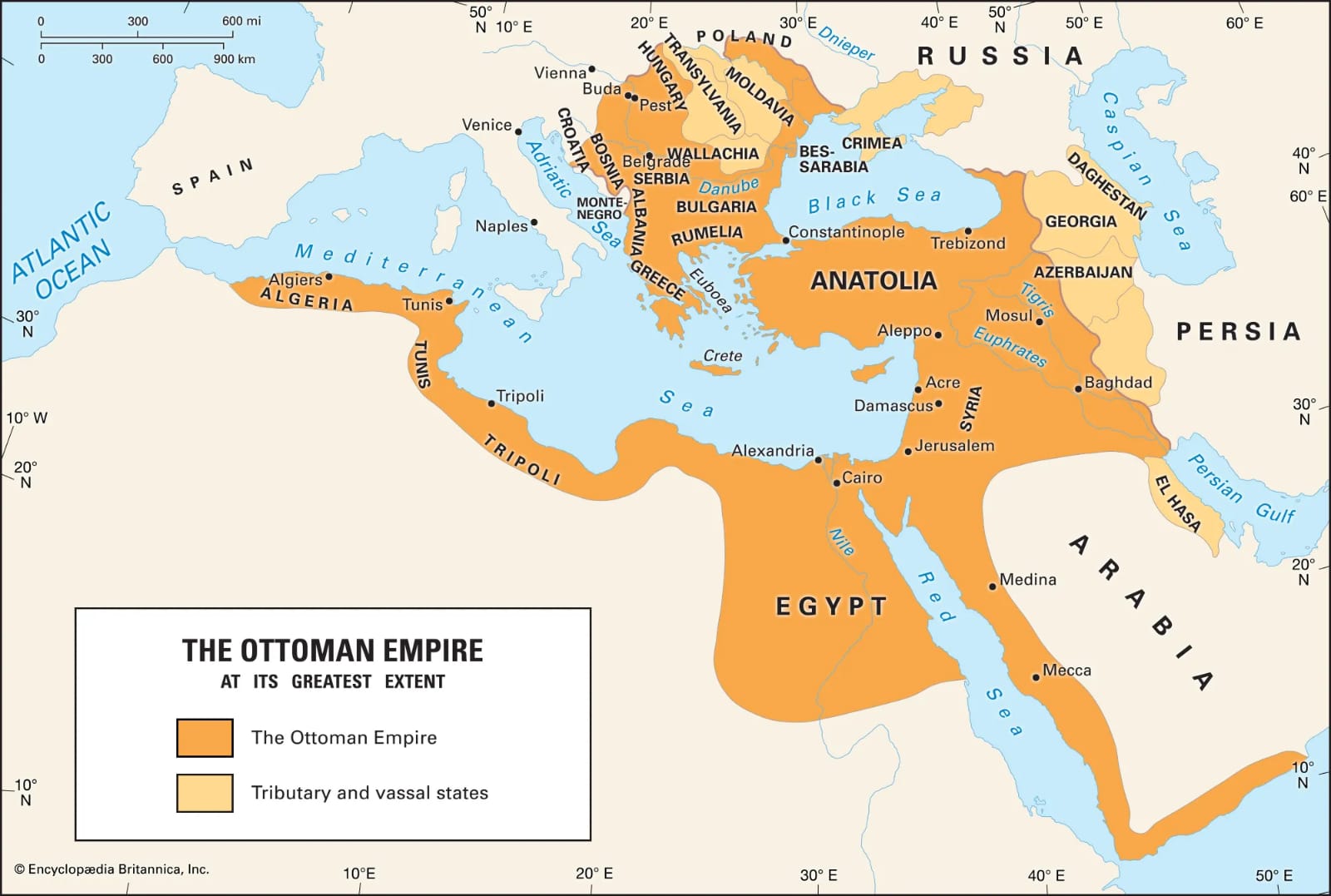
Dish of the Day
Albania has long been a nation of shepherds. As mountains make up three-quarters of the country, livestock farming with goats and sheep has fed the nation and bred the country’s cuisine. White cheese and yoghurt from sheep or cows, tomatoes, onions, peppers and olive oil are also staple ingredients.
Clay-baked casseroles define Albanian cooking. The shallow, unglazed earthenware dishes are called Tavë and in them are produced the unofficial national dish Tavë Kosi (‘yoghurt’) and Tiranë’s contribution, Tavë Dheu (‘earth’). Tavë Kosi is a triple-layered baked casserole of lamb/mutton with rice and a creamy yoghurt and egg souffle-like topping, served at celebratory family get-togethers and important events in the annual calendar. Tavë Dheu combines veal, chicken or lamb liver – or cubed beef – with salted curd cheese, onions, red peppers, tomatoes, garlic, oregano and olive oil. It is first slowly braised and then briefly baked. Fërgesë is the vegetarian version.
Day 96: (2 August 2026)
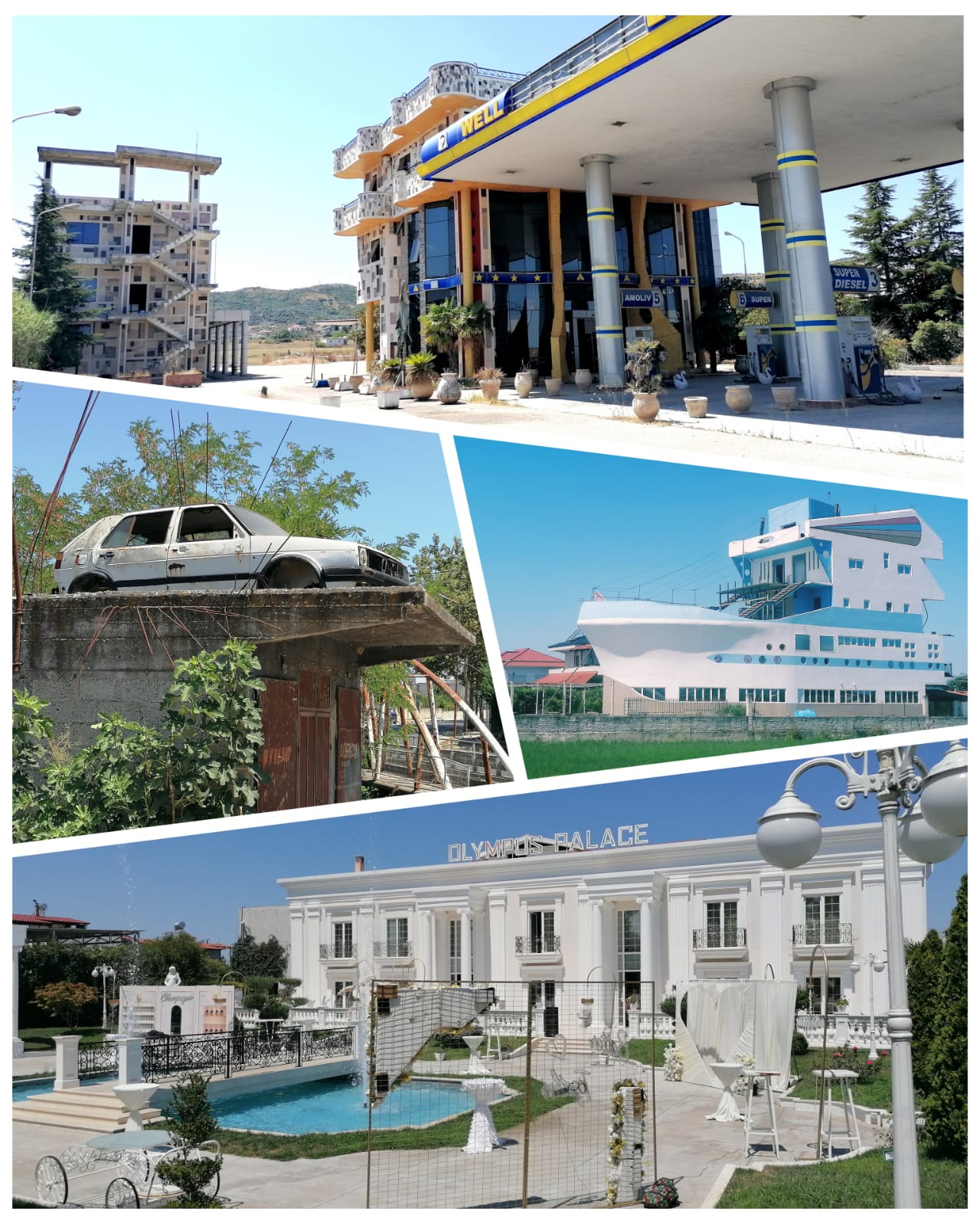
ALBANIA | TEPELENË: We headed south towards the Greek border and the Vjosa River – one of the last ‘wild rivers’ in Europe – past farmland punctuated by grow tunnels, young olive trees and roadside fruit stalls – watermelon is in season.
Granite, marble and building supply stores feed a building boom that is spewing forth new and half-finished industrial, agri-processing and business premises, apartment blocks, triple-decker villas and white wedding ‘palaces’. Hub caps and tyre shops and gas stations every couple of kilometres service the VW and Mercedes Benz SUVs that sweep past us, despite Albania’s extortionate price of fuel, thanks to government taxation.
New hotels and restaurants cater to a tourist influx. In the last 5 years, Albania has become an international destination. Last year, there were 12,47 million visitors, the majority from Southern Europe. The country’s population is only 2,5 million. Another 2.5 million Albanians live abroad, having given up on any chance of political change in their country.
The rampant development speaks to commensurate corruption, with the State in cahoots with organised crime, laundering illicit income through real estate and construction. It helps that Albania is a cash economy, its people having lost faith in the banking sector following the financial implosion at the end of the 1990s, which left its people high and dry. It is well past time for their ship to come in.
Day 97: (3 August 2026)
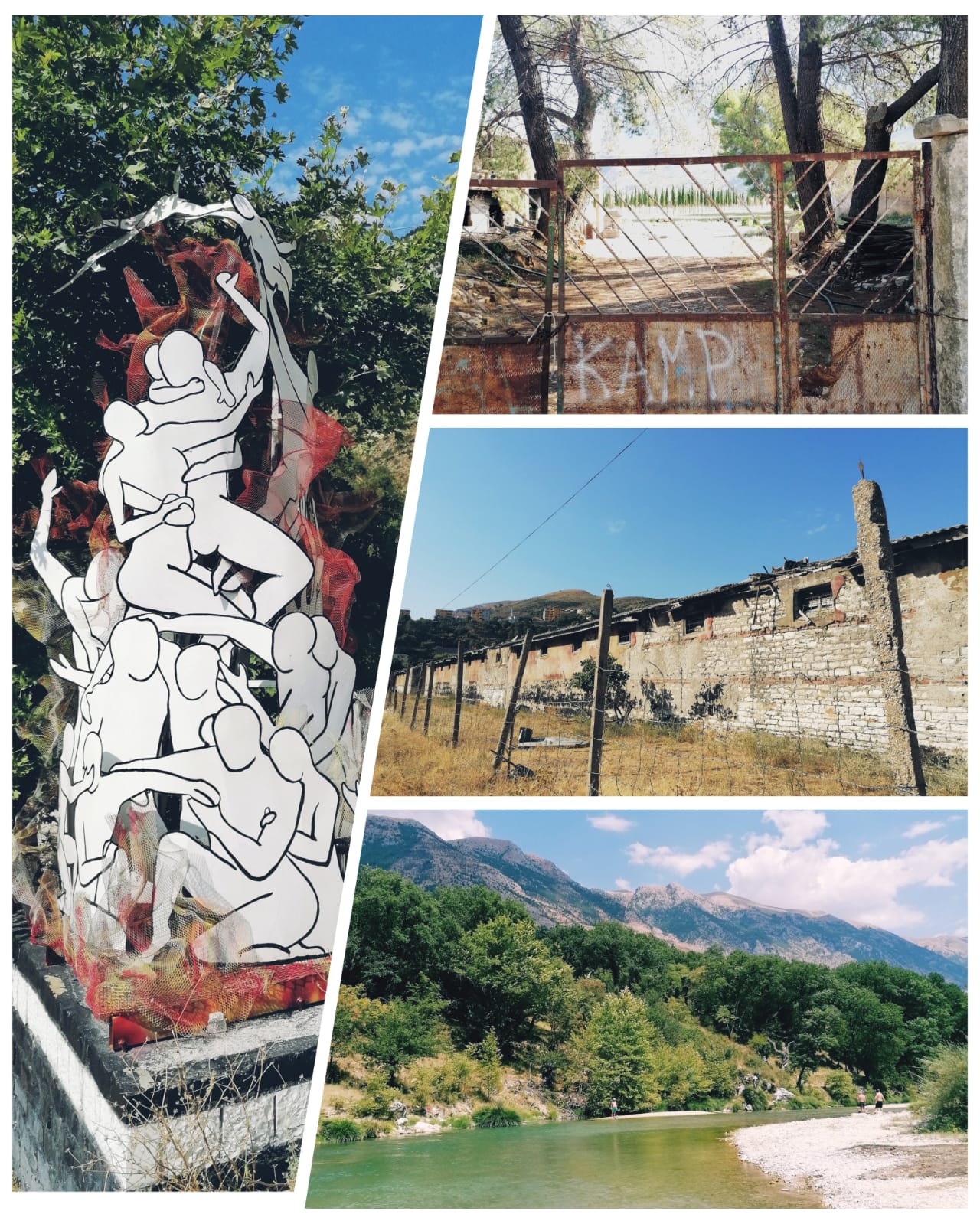
ALBANIA | TEPELENË: Enver Hoxha, the Communist dictator, executed or jailed party colleagues, clerics, ordinary citizens, childhood friends and family members, labelling them threats to the state – in truth, threats to his public persona. There were not enough prisons to house those jailed for ‘political and ordinary crimes’ so 48 internment camps were set up around the country.
Between 1949 and 1954, some 1,500 families were interred at Tepelenë in the former barracks of the Italian occupation (1939-1943). Malnutrition and disease in the barbed-wire labour camp claimed the lives of so many children that even the Communists blanched and shut it down in 1954. Today, behind locked gates and makeshift fencing, the dilapidated buildings slowly decay as goats graze and chickens forage in the dry grass. Kamp Tepelenë is sprayed onto the gate – the only indication of its former function.
We took refuge from the fierce summer heat on the shady, pebbly banks of the glassy, sulfur-rich Bënça River – a tributary of the Vjosa River – into which fresh water springs flow.
Day 98: (4 August 2026)
ALBANIA | TEPELENË: ‘Don’t go chasing waterfalls’ 🎶 – especially in August when inland temperatures can spike to +38°C, even at altitude. A newly paved road has made the once remote Kurvelesh mountains accessible – with their springs and rivers, canyons and Egyptian vulture breeding sites. We drove up, we marvelled, we rehydrated and congratulated gasping hikers who had made the descent – and ascent – to the dry river bed, and then we drove back down again.
We beat the heat with a short scramble down to a river we could see was in flow, and splashed in the icy, rocky shallows, before a rain shower forced a retreat.
Day 99: (5 August 2026)
ALBANIA | KSAMIL: From the mountain villages and the rocky rivers of the highlands, we headed for the Ionian coast on good roads, through new tunnels, excavated from stone hacked out of the adjacent mountainsides.
Shitet means ‘For sale’ in Albanian and with the tourist influx, everyone is looking to make a buck – from selling honey, dried herbs, mountain tea and freshwater fish to services like camping, glamping, RV parks, guesthouses, hotels, car washes, parking lots, restaurants, bars and coffee shops – sometimes all rolled into one. Traffic thickens as we approach the coast. August is high season and Europe is on holiday. The Albanian Riviera is ready for them. You can’t see the coast for the concrete.
Ksamil, 20 kilometres from the Greek border, was a small town between Lake Butrint and the sea, founded by the Communists for olive and citrus production in the 1970s. People from the north were moved here to work the farms.
Post-communism, many southern Albanians found work in Greece, made money and returned home with capital. Our hosts made their home here on the coast and built a modest dwelling. Since 2018, their neighbourhood – and its sea views – have been engulfed in tourist apartments, luxury hotels and traffic. “We walk the streets among the cars,” said Denis, our hosts’ son, matter-of-factly. Given the COVID interruptions, such developments are less than 5 years old and construction shows no sign of slowing. Albanians are taking out bank loans to build, indicating perhaps that opportunity has overridden their distrust of the formal financial sector. Cash is still king, however, and card transactions are the exception.
From the state-driven economy of communism, the current Albanian State – same party, different name – has taken its hands off the steering wheel, loosening regulatory approval, dispensing with any town planning and blithely signing up for World Bank loans. A sign at Ksamil Beach tells the tale:
Investor: The Albanian Development Fund
Object: Civil Works for Integrated Urban Upgrading of Ksamil Touristic Sites and Adjacent Areas: (City Square and Promenade Phase 1)
Period: 12 months.
Value: €6,149,912.55 with VAT
Day 100: (6 August 2026)
ALBANIA | KSAMIL: The World Bank-funded Promenade is still under construction; the water bowser trundles along it at sunset to keep the newly planted palm trees alive. The clubs and restaurants and lidos are undeterred by the parked digger-loaders and piles of building rubble, pink powdered concrete and paving stones. They are open for business and, as night falls, the technicolour neon and disco search lights pulse in rhythm with the electro-beat in a capitalist frenzy of consumerism. The polyglot promenaders eat it up.
The Albanians deliver the goods with an amiable, obliging hospitality. After a meal in a restaurant, complimentary glasses of Raki are delivered, always with the gentle warning to sip not shoot. At our previous guesthouse in Tepelene, a watermelon from our hosts’ garden was left outside our door.
Having seen, we fled, to the quietest beach we could find. None of Ksamil’s beaches are ‘wild’ anymore but Edon-Bina had only 20 thatched sunshades, a beach bar sans beats, a view of the Greek island of Corfu, and a rocky shore entry into clear, temperate waters quick with fish. At a day rate of R400, worth the price. We ducked the tourist tsunami again for dinner, at a quiet tavern on the lake where we dined on miniature mussels fresh from the fish farm to the fork.
Day 101: (7 August 2026)
ALBANIA | GJIROKASTËR: A 3,000-year-old settlement founded by exiles from the fall of Troy was our first port of call today. Five kilometres south of Ksamil, on a forested rise amid wetlands, overlooking a lagoon and the sea, is Butrint, Albania’s star archaeological attraction. First excavated in 1928, the strategic site at the neck of the Straits of Corfu was an ancient Greek health spa, a Roman port, an early Christian bishopric, a Byzantine outpost, a Venetian fortress, and an Ottoman stronghold, briefly held by Napoleonic forces. It was declared a World Heritage Site in 1992 – Albania’s first. We were at the front of the ticket line, aiming to beat the crowds and the heat.
By the time we left Butrint, it was 38°C. We headed inland, bunker-spotting as we went, through citrus orchards, up serpentine roads, past mountain streams and trout hatcheries, abandoned gas stations, mines, marble quarries and road signs in Albanian and Greek. This region is home to the largest minority group in Albania. Tzatziki, olives and kofte seemed appropriate for lunch.
As the sun sets, dance beats, strobe lights and hot pink neon emanate from Gjirokaster’s castle – one of the Communist-era’s most notorious prisons. Here, between 1944 and 1970, a large part of the country’s elite was eliminated. It’s summer festival time in the dictator’s home town and they’re dancing on his grave.
Day 102: (8 August 2026)
ALBANIA | GJIROKASTËR: Precipitous ravines, rugged peaks, a fertile river valley and a derelict industrial wasteland, boutique hotels and bunkers, the biggest castle in the Balkans, skinny cats and bearded goats, sleek cars and donkeys, bee hives, grape vines, rubbish, rubble, ruins and raki, Gjirokastër is not your conventional World Heritage Site.
An administrative centre of the Ottoman Empire, the birthplace of Enver Hoxha, Albania’s Communist dictator, as well as Ismail Kadare, its most renowned literary figure of the 20th century, the City of Stones encapsulates Albania’s blood-soaked past – its slate-roofed tower houses built on family feuds and power struggles, its minarets a reminder of the destruction of the mosques perpetrated by an imam’s son who had attended the madressa. The one mosque that Hoxha spared was used as a training space for circus acrobats who hung their trapeze from the dome.
Today, Enver Hoxha’s image adorns fridge magnets, not town squares, and a 45-year-old collection of local memorabilia occupies part of the nuclear-proof tunnels he had excavated under the castle. The tourist trade is brisk. But strings of garlic, goat skulls and evil-eye amulets still dangle over doorways, for good measure.
Despot of the Day
Another ruthless ruler bred in the Drino Valley, the ‘Muslim Bonaparte’ was born in Tepelenë in 1740. Under the Ottomans, Ali Pasha became the regional governor of a vast territory that included large parts of Albania and northern Greece. He laid the foundation for an independent state, developing infrastructure like bridges and aqueducts while crushing any opposition.
A fearsome warrior, with a passion for armaments – satisfied by the British – and a ‘soft spot’ for Lord Byron, who visited Albania in 1809, Pasha was responsible for the extensive fortification of Gjirokastër’s castle, which, like Enver Hoxha’s bunkers, was never attacked during his lifetime. A victim of his own success, he was executed on the Sultan’s orders, after putting up a two-year-long fight. His head was taken to Istanbul.
Day 103: (9 August 2026)
ALBANIA | PETRAN: From Gjirokastër, we wound through rural valleys to the village of Petran on the Vjosa River. We have a river view room under one of the two restaurants in town. Grilled wild brown trout is the local speciality … and it didn’t get away. Rubber ducks filled with exuberant paddlers drift past – white water season ended in June but the fresh water springs flowing into the river keep it topped up enough to float the boats. Slow and low is the tempo.
Day 104: (10 August 2026)
ALBANIA | PËRMET There is little indication that Albania’s 50 years of living hell began here, in the small town of Përmet, picturesquely set above the Vjosa River. On 24 May 1944, less than three years after the founding of the Communist Party, the Congress of Përmet laid the foundations of the future regime and crowned Enver Hoxha its king. He was 36 years old. He died in office, aged 77.
Despite the public plantings of roses and marigolds, the shiny new coffee shops, bars and cafés, and the outlets selling rafting trips and aqua shoes to the European holidaymakers, the scars are still visible: The soulless, utilitarian apartment blocks in varying stages of deterioration, the cheap, wood-panelled orthodox church tacked onto an abandoned government building, the rotting soft toys skewered on the protruding rebar of a second floor that was never built.
The past was for sale in one bric-a-brac shop: photos, currency, travel permits, and party propaganda. The 40-something owner consented to my request to take photos. As we were leaving, I remarked admiringly, “Quite a collection, you have.”
“This is a shop, not a museum, you understand,” he snapped.
“I understand,” I stuttered, taken aback.
“You don’t understand, this is a shop not a museum.”
We left, unpersuaded to purchase anything by this sales approach but buoyed by the knowledge that capitalism is having the last laugh.
Day 105: (11 August 2026)
Day 105: ALBANIA | GJIROKASTËR COUNTY: In the hillside village of Kosinë, the 12th-century Church of St Mary escaped the fate of the oldest church in the country, which was blown up by dynamite. The 19th-century frescoes of the neighbouring village church in Leusë were not as fortunate, defaced by graffiti dating back as far as 1887.
A man leads three goats up the hill, another walks alongside his pony, its pannier filled with fodder. The age-old rural rhythms of Albania have returned. Under Communism, “Peasants were not allowed to keep their own sheep or cattle and, from 1982, they were not even allowed to keep any ‘private’ chickens”.
Scattered around the country are long, barrow-like bunkers intended as army granaries in the event of enemy attack. ‘Born free’ Altin Kasaj (33), a Biotech and Food Science graduate has turned one such bunker into a slow-food hub. He distils raki, dries fruit, tests and certifies local homemade food products in his on-site lab and offers other home producers an outlet to sell their wares. Funded by an EU and Italian grant, his business is only two years old but is ever-expanding. In its first year he worked every day, he tells us. After a tour and a tasting of his green walnut raki, green fig preserve, dried tomatoes and oranges grafted onto a pomegranate tree, he refuses to let us pay for the dried fruit we sought to buy. “A gift,” he insists.
Half-a-century of Stalinist terror failed to extinguish the Albanian people’s ties to the land and their God, their entrepreneurial spirit, or their generosity.
Day 106: (12 August 2026)
ALBANIA | BOBOSHTICË: Our day started with goat and ended with lamb. We woke this morning to the clang of goat bells under our bedroom window. When we left the Vjosa River Valley, mid-morning, it was 41°C. Tendrils of smoke drifted skywards as wildfires crept up the higher ridges.
The villages disappeared as we climbed through thick beech forests against the backdrop of Mount Gramos, the highest peak in southern Albanian (2,520m). Suddenly, we were in Canada: pine forests and lakes, log cabin resorts and a cool mountain breeze. A new World Bank-funded road carried us past the winter ski resort of Dardhë, Albania’s highest town (1,344m) before we descended through the fruit orchards of Korçë, where things took an unexpected turn.
Old tyres, rusty car parts and rubbish littered the verges and we jostled with the dairy delivery vans in the parking lot of our distribution centre/guesthouse in what turned out to be Korçë’s industrial area. We backtracked, toot-sweet, to Boboshticë, a nearby village known for its traditional restaurants, where we found an elegant, wood-finished double room with terrace, and a 25-year-old restaurant famed for its lamb, if not its decor 😔. We doubled down on roast and chops, with spicy peppers on the side, washed down with an Albanian white wine, serenaded by a three-piece Balkan folk band. Gëzuar!
Day 107: (13 August 2026)
ALBANIA | KORÇË: After two-and-a-half weeks we have finally escaped the humid heat of west and central Albania. Korçë, in the south-east, lies at 850 metres above sea level, its fertile farmland encircled by the Morava Mountains. Although home to the country’s oldest mosque (1496) and the largest Orthodox cathedral (1995), the heart of the city is more Italian than Ottoman.
Up and over the mountains, studded with hilltop crosses and roadside shrines, is Prespa National Park, on the border with North Macedonia and Greece. Red-roofed villages and rose-and-cream churches cluster around the lake; babushkas with head scarves and Greek grannies in black dresses tend their vegetable gardens; donkeys roam the streets and row boats line the shore. In the village of Pustec, other than the new, colourfully-painted villas, it is as though the last 80 years never happened. We were the only foreign tourists in the only restaurant in town.
Korça Brewery, one of the country’s most popular brands, started here in 1928. We went to check out their 20th annual Beer Festival. The open-air venue was the size of a Soviet military parade ground, with room for the tanks to pop wheelies. When we arrived, unfashionably early, there were more police than punters. Neon-lit booths surrounded the perimeter, selling predominantly Albanian beers, with two from Kosovo. We washed down the shish kebab and paprika sausage before rain washed out the festivities, just as the live music was due to start. 😞
Day 108: (14 August 2026)
ALBANIA | MEMËLISHT: We drove 50 kilometres north today, through farmland dotted with new three-storey villas to a small hillside village overlooking Lake Ohrid, some 3,5 kilometres north of the summer holiday town of Pogradec.
Going by what the small-scale farmers and market gardeners are selling on the roadside, red and white onions, tomatoes and honeydew melons are in season. Fresh fruit and vegetables are everywhere in abundance; in the Korçë streets, men were selling Albanian tobacco, mountain tea from horse carts and tomatoes out of the boot of their cars. Free of the shackles of a state-dictated, collective economy, Albania has come a long way since 1984, when it was the third-poorest country in the world, with a malnourished populace subsisting on meagre food rations.
Lake Ohrid is one of Europe’s oldest, deepest and clearest lakes and the site of the continent’s oldest known human settlement – a stilt village built some 8,500 years ago (6,200 BC-4,000 BC). Designated a World Heritage Site, the region is home to 200 endemic plants and animals found nowhere else on earth, of which 17 are fish, including 2 trout species – their thick salmon-pink fillets are the star attractions on restaurant menus.
Day 109: (15 August 2026)
ALBANIA | POGRADEC: The tourist mecca of Pogradec was once the most fortified place in Albania. Nobody other than the dictator and his henchmen were allowed near the 31,5-kilometre-long shoreline that is shared with North Macedonia (formerly Yugoslavia). The Romans knew Lake Ohrid as the Lake of Light. The Communists turned it into the Lake of Searchlights, seeking to prevent Albanians from escaping, although, despite the tightly spaced guard posts, patrol boats and electric fence, some did, including a family of 16 with a 6-month-old. [Add Robert Rado?]
Today, Hoxha’s wood-and-glass lake house is just another restaurant, the ‘Leadership Village’ –the inner circle’s holiday compound – which was destroyed by an angry public in the late 1990s, has subsequently been restored but is little used. We drove up to the border. No shots were fired.
Day 110: (16 August 2026)
ALBANIA | MEMËLISHT: Today was our swansong and we spent it like the locals. Sundays are beach and family days. Men took to the shade playing cards, smoking cigarettes, drinking beer and occasionally providing relief to their partners by playing with their children who are like ducks to water. One middle-aged man looked like he was training for the swim to Northern Macedonia.
We returned home to be ambushed again by our host’s incessant hospitality. This time, sliced watermelon and nectarines were added to the tally of table grapes and unlabelled local red wine surreptitiously left for us on our terrace.
Day 111: (17 August 2026)
ALBANIA | TIRANË: Oil storage tanks, industrial warehouses and electricity pylons detract somewhat from our vineyard views and distant dusky mountains. Urban sprawl is lapping at the 5-hectare estate of Vila Shehi, which has been producing unusual wines – such as a muscat rosé and an orange wine – since 1994.
Tonight is our last night in Albania and it has been a wild ride. We were told, early on in our trip, that ‘mishmash’ is an Albanian word. After 3,5 weeks in the country, we believe it. While Italy is picture-perfect, Albania is not – it is raw, real, heart-warming and horrifying, jarring and joyful, beautiful, bewildering and beguiling, fascinating, friendly, and – in August – fiercely hot 🥵. In Hebrew slang, balagan means ‘chaos’, ‘confusion’, ‘disorder’. Albania is a Balkan balagan with bells on. 🐐 #GOAT
Day 112: (18 August 2026)
ALBANIA | TIRANË: Homeward bound via Rome and Istanbul. Mirupafshim 👋 (Until we meet again.)
€ Travel Tally: Albania
Overall, Albania was 30% cheaper than Italy.
Average expenses (for 2) over 23 nights (ZAR to EUR = R19 to €1):
● Accommodation: €37 (R703)/day (self-catering/private en-suites)
● Food & drink: €38 (R722)/day (restaurants and street food)
● Transport: €39 (R741)/day
– Car rental: €30 (R570)/day
– Fuel, tolls, parking: €9 (R171)/day
● Activities: €7 (R133)/day
● Daily average: €115 (R2,185)/day